Why You Shouldn’t Punish Your Players

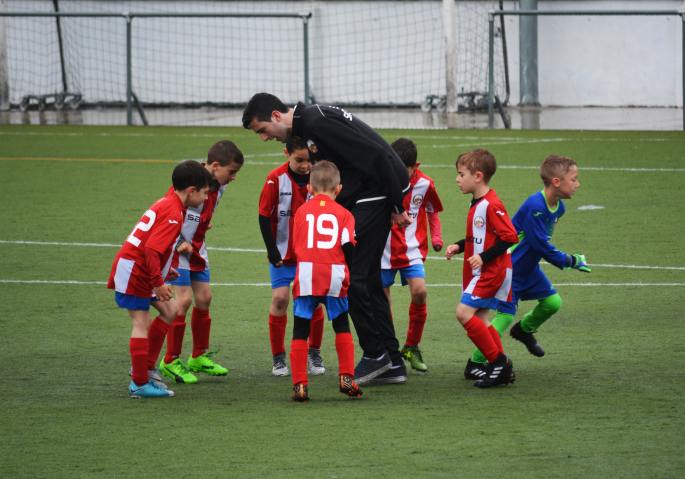
In Canada, there has recently been a move toward the terms "old school" and "new school" to describe a shift in coaching behaviours. The terms have developed as a result of the abandonment of "old school" methods like yelling at kids, focusing on a select few talented players rather than all, and punishments like push-ups, laps or "benching" players. But still, everywhere I go, I still see coaches looking for ways to punish their players. And so today, I write this piece, with the bold statement that you should never punish your players. I am usually one to avoid saying the word "never", especially in respect to coaching. I may want to tell coaches that I mentor and develop to never do elimination games or to never limit a player's number of touches. But there may be a time and a place where it could be beneficial or logical. But when it comes to punishments, unless someone has something really compelling to say and wants to try to convince me otherwise, I believe you should never punish your players. Here are three reasons why!


How To Keep Your Players Engaged During COVID-19

Over the past couple of weeks, much of youth sports around the world have been postponed due to COVID-19 and the ongoing spread of the virus. For both coaches and athletes this presents a unique challenge, as self-isolation and social distancing makes practicing a team sport particularly difficult. That said, it's not as though nothing can be done in this time of self-isolation or as though players must spend all day on their phones. Here are some ways to keep your players engaged during this time.

5 Common Mistakes Coaches Make

Recently I had the privilege of helping teach a coaching course at my university institution to eighty students, most of which had never coached before. Not only was it (hopefully) a valuable learning experience for the students, it was also a great learning experience for me and my development as a coach. Across the course, the students adapted well to the teaching methods of the course. However, a few common mistakes could be found in nearly every single session that the students delivered. As a result, I have developed this list of the most common mistakes coaches (not just beginners) often make. This list should be a helpful reminder to all coaches on how to be better in their roles and ensure participants get the most out of their experience.

5 Things I Learned From Teaching a Coaching Course

This winter, I had the privilege of helping to teach a coaching course at my university institution. The experience was absolutely amazing and better than I could have ever hoped for before beginning the course. Here are five things I learned from the teaching experience.

Restricted vs. Conditioned Games – Coaching Soccer

Many coaches often add restrictions to games. Restrictions like needing to complete three passes before the team can score or players being locked into different zones on the field can be valuable to teaching certain topics to young players. But restrictions need to be used wisely. Instead of restricting behaviours, coaches should look to encourage behaviours and do so more carefully through encouraging something to happen, rather than restricting it. In this article I will outline why restricted games should be more scarcely used, and why the term 'conditioned game' should possibly have a change of meaning to urge coaches to encourage the behaviours of their players in games without restricting their players.

Support in Attack (9v9)

Although players are constantly thrust into 1v1 battles on a football pitch, attacking is something that the whole team needs to engage in as a unit. As a result, players need to learn how to support each other in attack, even if they are not directly involved with the play. This article will explore support … Continue reading Support in Attack (9v9)

Support in Defense (9v9)

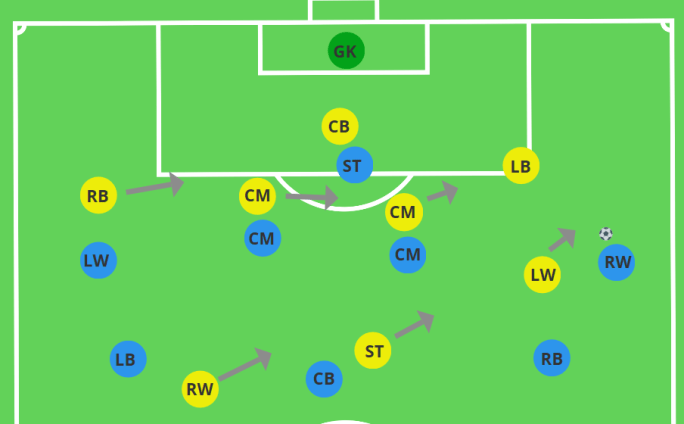
Although players are constantly thrust into 1v1 battles on a football pitch, defending is something that the whole team needs to engage in as a unit. As a result, players need to learn how to support each other in defense, even if they are not directly involved with the play. This article will explore support in defense for 9v9 teams through diagrams involving the 3-2-3 and 3-4-1 formations.

Playing Forwards vs. Backwards Session Plan and Coaching Tips

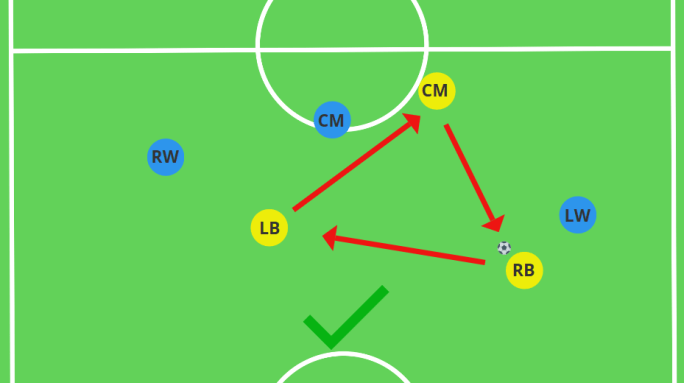
One of the key skills to learn in the modern game, particularly for young players, is the art of composure. Many young players have the habit of kicking the ball up the field without looking or thinking that they always have to go forward because that is where the goal is. However, if players can harness the ability to know when the right time is to go forward and when the right time is to keep possession and maybe go backward, their ability as a footballer will skyrocket. Here is an entire session plan all about playing forwards vs. backwards and some coaching tips along the way.