The art of effective communication

Communication is one of the most important skills for young players to develop. It can sometimes be difficult for players to see past their own role on the pitch, but effective communication can propel the entire team forward and lead to a better team spirit. Here are some of the key words and phrases for players to remember in their quest to better their communication. 

How to organize the defensive line as a goalkeeper

With a wonderful view of the action, goalkeepers must be more than just shot stoppers, and participate actively and vocally in communicating with their mates. They should not be solely responsible for organizing the entire team, but have the ability to do so through the vantage point they have on the field, and often the fearless nature they behold. I've often found that some of the best communicators that I coach are in fact goalkeepers. But before answering the question, let's first discuss whether or not it is actually necessary for the goalkeeper to organize the defensive line.

Keira Walsh – Player Analysis

Keira Walsh is brilliant. You know it. I know it. And thanks to the Women's European Championships, the whole world knows it too. In today's masterclass, I dissect that brilliance in a long-form Player Analysis, helping you and I come to a greater understanding of how you too can play (or coach) with the brilliance of Keira Walsh. Here is our analysis.

Session Plan – Spatial Awareness & Switching Play

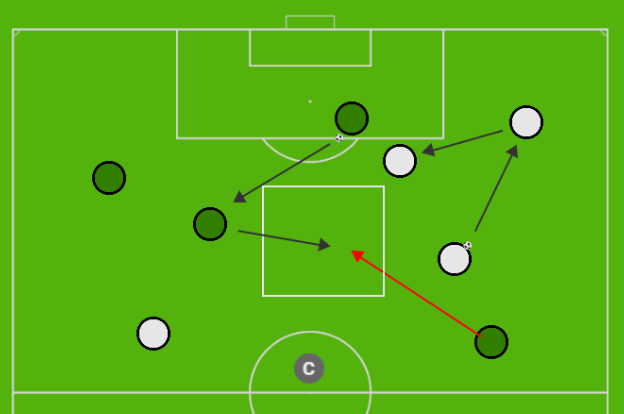
Recently I have heard much in the way of what I would classify as "misinformation" regarding the readiness of youth players to learn tactical concepts like switching play. Switching play as a tactical concept ultimately comes down to recognizing space and making decisions based on that spatial awareness. Switching play doesn't mean crossing a long-ball forty/fifty yards from one side of the field to the other. It is about recognizing the space to see the opportunity of when space is condensed, versus when space is available and what to do in both of those situations. It is therefore an essential concept that can be taught to players of just about any age. Here is a session plan and key coaching points to match, all about spatial awareness and switching play!

Play with Your Brain – Travis Norsen Book Interview

That quote, from one of football's greatest ever players, is the opening statement by which Play with Your Brain: A Guide to Smarter Soccer for Players, Coaches and Parents, predicates itself upon. The book serves as a wonderful guide for anyone involved in the beautiful game to learn how players can become better, smarter soccer players. Author of the book Travis Norsen gives TheMastermindSite.com an exclusive interview about his thoughts on the book and what players, coaches and parents can learn from reading his guide. Be sure to check out the book on Amazon.

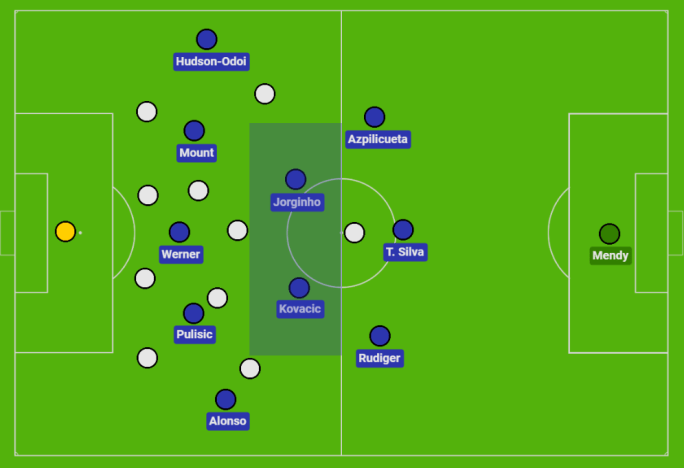
How To Boss The Midfield Like Kovacic and Jorginho – Tactical Analysis

Thomas Tuchel currently remains unbeaten in his first three matches in charge of Chelsea. During that time his team have kept over 70% of the possession and haven't conceded a single goal. One of Tuchel's most impressive tactical implementations has been his reliance on Jorginho and Mateo Kovacic as a double-pivot in a highly functional 3-4-2-1/3-4-3 system that transforms into a 3-2-5 in attack. Jorginho and Kovacic are playing just about as well as any central midfielders in the world at the moment, and might just be the pair of players that can bring Chelsea to greater times. This article will explore how players of any age can boss the midfield like Kovacic and Jorginho.

Innovation in Community Sport Organizations during COVID-19

Innovation can be defined as the adoption of a new idea or behaviour. It is an important function of organizational effectiveness and an organization’s ability to survive CSOs often need to innovate a result of changes in the environment or societal pressures. This may include changing technologies, demographics and a multitude of threats that could arise in an organization’s external environment. In the context of the COVID-19 pandemic, it is inevitable and important that organizations adapt their programming to meet the changing needs of society. But the ability of CSOs to return to play in any fashion, let alone implement new programming and engage in innovation during the COVID-19 pandemic, was dependent on directives from their governing organizations and the organization’s ability to acquire and utilize critical resources, such as human support and external funding. Clubs that did not have the capacity to meet the guidelines set by their governing bodies or the capacity to create new innovations within those guidelines, may not have been able to successfully complete those changes.