How good is Scott McTominay? – Player Analysis

Throughout the past five to ten years of watching Manchester United, I had thought of myself as one of Scott McTominay's biggest fans. The Scotsman is often over-criticized when he doesn't play well, and under-praised in the big matches where he's always a central figurehead. But then out of nowhere, at the height of Scott McTominay's resurgence, a fairly well established Twitter account tweeted about the glory of Scott McTominay, causing quite the stir among the tactics and analytics community. . So with that, I analyze just how good Scott McTominay actually is, and whether or not we should be thinking of the Scottsman along the lines of @EBL2017, in line with the outrage sparked from the tweet, or somewhere in the middle. Here is my analysis of how good Scott McTominay might just be.

Osaze De Rosario – Player Analysis

Still only 21 years of age, Osaze has much to look forward to in an illustrious career surely set to come. So with that, we analyze the rising star, and assess his potential future for greatness in the sport. Here is our analysis.

Khvicha Kvaratskhelia – Player Analysis

Taking the world by storm in 2022-23, Khvicha Kvaratskhelia has come from relative obscurity to join one of Europe's most famous clubs, and now leads their charge toward the top of Serie A. The direct and dynamic wing wizard has been in remarkable form since joining Napoli from Rubin Kazan, contributing to 5 goals in his 7 matches so far this campaign, already close to bettering his tally from 2021-22 in Russia. Here is our analysis of the remarkable rise of Khvicha Kvaratskhelia this season.

Woobens Pacius – Player Analysis

At the start of the 2022 CANPL season, Woobens Pacius appeared to have lost his place at the top of Forge FC's attack. The Hammers had brought in Pacific icon Terran Campbell, who had haunted Forge among many other Canadian Premier League teams en route to Pacific's Playoff victory in 2021. But Forge's attack didn't fully click in the opening weeks of the season, and they struggled to find the right chemistry, particularly with Campbell's desire to engage lower on the pitch and support the play. In came Woobens Pacius to restore faith to Forge's fervid attack, and the Hammers immediately went on a stunning run of form.

Explaining the Inverted Winger – Player Role Analysis

Unlike their name might imply, 'Inverted Wingers' are far more than just wingers that cut or drift inside. That is only one small part of an overarching role that prioritizes playmaking in the final third, and dynamically linking play between the other members of the front-line. The best of the art will often post high numbers in goals and assists, but 'Inverted Wingers' need to be so much more than just creative goal-scorers - generally tasked with creating space, rotating with teammates, and moving off the ball to exploit the half-spaces at the right moments.

Game of Numbers #6 – Lucy Bronze as a Floating 8

FC Barcelona Femení had a slow start to their first match of the season, initially struggling to find avenues forward in Tenerife's 5-4-1 defensive block. UD Granadilla Tenerife compacted the lines both vertically and horizontally to stunt Barcelona's progress forward, but in an abnormally high-line that spurred Giráldez's team to hit long passes over the top. They were caught offside from these attempts time and time again, particularly in their quest to spray in behind for Geyse's speed. But then, everything changed.

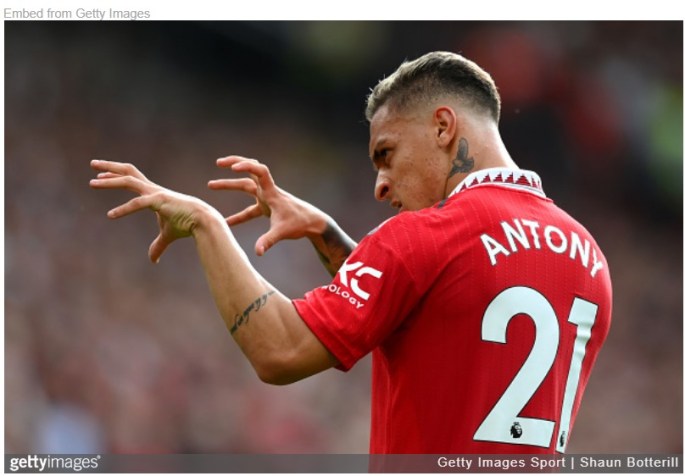
Why Antony can transform Manchester United – Match Analysis

The Brazilian winger played a formidable role in United's 3-1 win over Arsenal, and showcased promise that he could be the man to propel the club to that next level this season. Here is our analysis of United's 3-1 win over Arsenal, through the lens of new-signing Antony.

Explaining the Creative Ten – Player Role Analysis

When we say 'Creative Ten', I'm sure you immediately conjure up an image of a classical painter of a player, who wonderfully creates art with their passing and incisiveness in the final third. But as has been well documented over the past few years, that type of player does not tend to exist in the modern game. The Mesut Ozil's, David Silva's and Cesc Fabregas's of this world no longer tend to exist as they once did, or play in the same positions that they once held. Nowadays, 'number ten's' must not only be capable contributors in the final third, but highly active in pressing from the front, and contributing to rotations that spread the width of the pitch.