Sean Dyche's Burnley have managed to stay in the Premier League for five seasons in a row now, even reaching the Europa League in 2017-18. Despite that, many providing commentary over the game consistently pick the Clarets as favourites to go down each and every single season. In reality, Burnley never look in any danger of going down. This season it appears as though it's going to be another one in which Sean Dyche's men will steer clear of the drop with relative ease. Dyche's men play a gritty, unconventional brand of football, and their resilient 4-4-2 low-block has troubled even the best of teams and managers. Most recently, they became the first side to win at Anfield for over a thousand days. Here is an updated tactical analysis of Sean Dyche's Burnley, their tried and tested 4-4-2 system and their compact, long-ball style of play in 2020-21.
Kylian Mbappe – Player Analysis
After his incredible performance against FC Barcelona, many now regard Kylian Mbappe as the next coming of Lionel Messi, with some even suggesting he's already taken over as the world's greatest player. It was clear as day that Mbappe was going to be a world beater when he first stepped onto the scene with AS Monaco as a seventeen-year-old. But the Frenchman has progressed just as many hoped he might, which cannot be said about most of the seventeen-year old's who have burst onto the scene like Mbappe. Now a well established front-man for PSG, Mbappe is once again leading his team's charge toward the UEFA Champions League final just as he did last season. This is a tactical analysis all about PSG's Kylian Mbappe.
Liverpool 0-2 Everton – Tactical Analysis
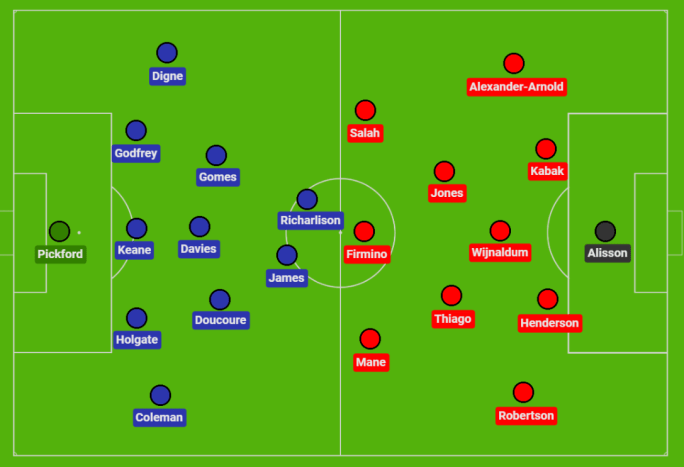
The last time Everton won at Anfield, Trent Alexander-Arnold had just had his first birthday. September 1999 was the date, a match that lives long in Don Hutchinson's memory and almost no one else's. But even though it had been more than twenty-one years since Everton last won at Anfield, you just got the feeling that it might happen again this season. In the end, Carlo Ancelotti put on a tactical masterclass and his team put on a defensive clinic, but Liverpool were also woeful in attack and looked on different wavelengths at times. It all culminated in a historic win for the Toffees and an embarrassing defeat for Jurgen Klopp as things continue to go from bad to worse for the Reds. Here is a tactical analysis of Everton's historic 2-0 win over Liverpool.
Scott Parker – Fulham – Tactical Analysis (2020-21)
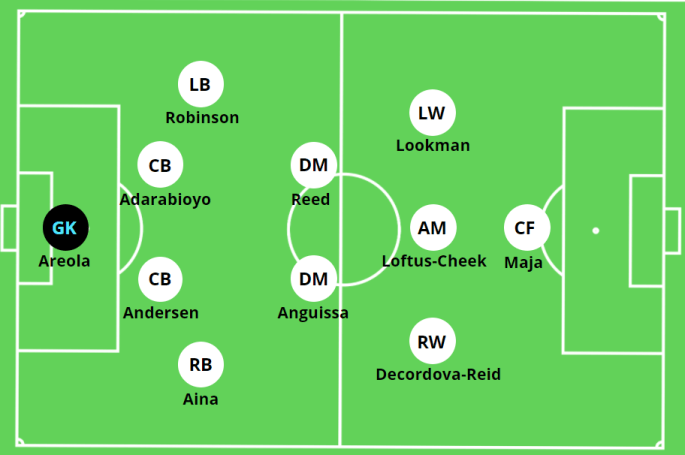
Although Fulham currently sit in the relegation zone, it could be argued that Scott Parker's start to his managerial career could hardly have gone better. After retiring from the game in 2017, Parker took over toward the tail-end of their horrendous 2018-19 season. He then secured the full-time managerial role for the start of the 2019-20 EFL Championship season, earning promotion via the playoffs in his first season at the club. Although 2020-21 might end in relegation, Scott Parker has immensely improved Fulham from the last time they were in the league and has kept them within a fighting chance of survival throughout the season. This is a tactical analysis of Scott Parker's Fulham.
Julian Nagelsmann – RB Leipzig – Tactical Analysis (2020-21 Edition)
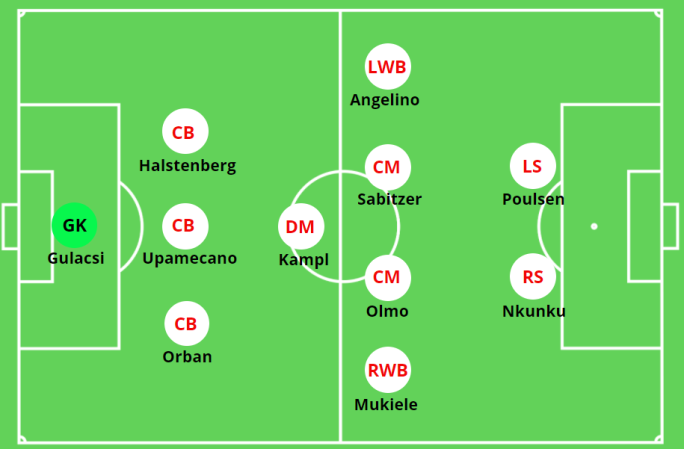
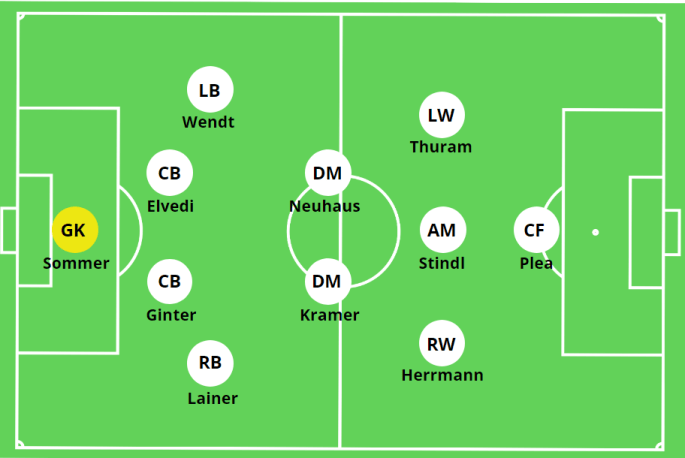
Julian Nagelsmann never made it as a player, thanks in large part to knee injuries that forced him to retire before his career even got started. However, that change of path allowed the German manager to take up coaching at a young age and after briefly working under Thomas Tuchel at Augsburg, Nagelsmann worked his way through the ranks at 1899 Hoffenheim, leading them into the UEFA Champions League for the first time in their history. After three incredibly successful years with Hoffenheim, Nagelsmann departed the club in 2019 for RasenBallsport Leipzig. Due to his fantastic success with a club that is now firmly one of Germany's elite clubs, Nagelsmann is now one of the most sought after and respected coaches in the world, at 32 years of age. This is a Tactical Analysis of Julian Nagelsmann's revelations with RB Leipzig, as he looks destined to become the next big thing in football management.
The 5 Best & Worst Premier League Goalkeepers by Saves per Goal (2020-21 Edition)
Season after season in the Premier League, two of the biggest topics of debate involve refereeing and goalkeeping. We've already written about one of those two debates in our rant about the handball rule at the beginning of the season, and now it's time to examine the good and the bad of the Premier League's goalkeepers this season. Jordan Pickford, David De Gea and Alisson have all received criticism and attention for their recent performances, but this article attempts to assess how these players have actually performed, using data analytics. This is our analysis of the five best and worst goalkeepers in the league this season, utilizing saves per goal conceded as a statistical metric for our assessment.
Marco Rose – Borussia Monchengladbach – Tactical Analysis (2020-21 Edition)
After two successful years with Red Bull Salzburg, German coach Marco Rose made a return to his home country to take on the role as Borussia Monchgengladbach manager for the start of the 2019-20 season. Rose has continued his success with Gladbach so far since taking charge and has only enhanced his reputation as a manager, with 50% of his matches won and his team well within the hunt for the top for again. Under Dieter Hecking, Gladbach had a win percentage of 43%, and played primarily in a 4-4-2 Diamond or 4-3-1-2 shape. Rose has since changed Gladbach's formation to primarily a 4-2-3-1, focusing more on quick transitions and the importance of fullbacks in build-up phases. His side haven't been spectacular this season, but they've been missing a few key figureheads and at the very least have continued to play some fantastic football. Now that Rose looks prepared to take over at Borussia Dortmund in time for next season, we take an in-depth look at the tactics he's deployed in 2020-21. Here is our updated 2020-21 tactical analysis of Borussia Monchengladbach under Marco Rose.
Creating Unstructured Sporting Environments – TMS Podcast
COVID-19 has presented a unique opportunity for community sports organizations and their coaches to rethink their practices and work toward greater inclusivity. In Canada, few opportunities exist in the community for youth to practice on their own through unstructured play and unstructured learning environments. This episode explores how we can create these unstructured sporting environments in Canada, using programs like Kicks in the UK as an example. We also explore how to inspire youth to achieve greater individual involvement in the sport, both in terms of participation and individual involvement within games.