The number one aspect that separates elite players from amateur is the ability to make quick decisions under pressure. Elite athletes are better able to process information, and frequently take in more information when scanning their surroundings, even if scanning for shorter periods of time. But scanning, information processing and attention to detail are all skills that can be worked upon by athletes at any level, in any sport.

Category: Sport Psychology
Understanding the five corner model for player development & performance
As coaches, we must recognize that players have an array of qualities that make them unique on the pitch. We must also recognize that each of these unique pillars need to be paid attention to with dedicated attention and care.
Personal development to become the best coach you can be
You cannot create a positive culture for your athletes if you cannot create a positive mindset for yourself. They will see right through you. They won't buy into what you're putting down. They won't trust that your coaching will lead them to success.
The successful throw-in playbook (ft. Forge FC)
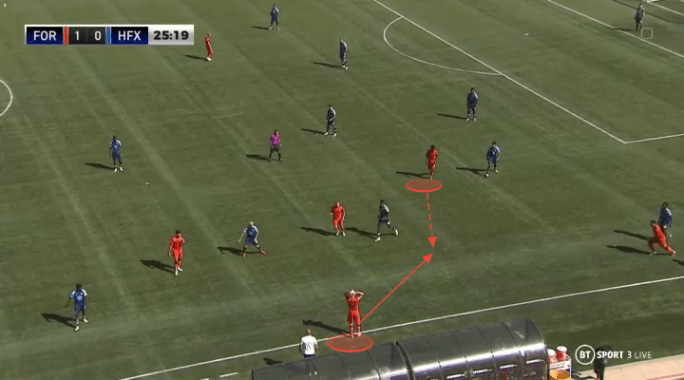
CPL Winners Forge FC ranked second in successful throw-ins across the 2022 season - at 90.9%. They exceled through movement off the ball to create space, and a series of meticulous routines to unbalance the opposition. Here is how they achieved success.
Keira Walsh – Player Analysis
Keira Walsh is brilliant. You know it. I know it. And thanks to the Women's European Championships, the whole world knows it too. In today's masterclass, I dissect that brilliance in a long-form Player Analysis, helping you and I come to a greater understanding of how you too can play (or coach) with the brilliance of Keira Walsh. Here is our analysis.
Why the technical, tactical, physical and psychological sides of football are deeply intertwined
The game is deeply rooted in all five aspects of the common coaching model, and in fact, every decision a player makes boils down to all five elements simultaneously. Here's why the technical, tactical, physical and psychological aspects of football are all deeply intertwined.
Understanding ball, opposition, teammates and space
Nothing can exist in football without perceptions of ball, opposition, teammates and space (BOTS for short if you want!). While there may never be one unequivocally correct answer to any given footballing problem, players can more adequately assess for decision making through muscle memory, experience, automatisms, sheer intelligence, and studying the tips in this article. But those same players, analysts and coaches must also recognize the deeply-rooted tandem bike quadracycle nature of the four elements of the game, and how they all co-exist to work in harmony.
Football is more about psychology than tactics
This is not a headline that you would expect to see from a website so devotedly focused on tactics and analysis. But as complex and debatable as this may sound, football is more about psychology than tactics. The best coaches are not always the best tacticians. But the best coaches are always the best motivators. The likes of John Herdman, Emma Hayes, Jose Mourinho and even Jurgen Klopp, rarely ever speak about tactics when expatiating about the game. Instead, they pontificate about the psychology of their teams and players, and their attempts to get the best out of their mentality.