5 Common Mistakes Coaches Make

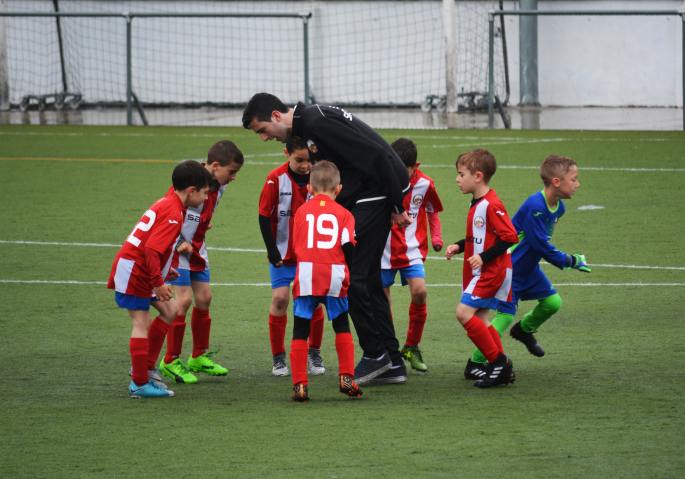
Recently I had the privilege of helping teach a coaching course at my university institution to eighty students, most of which had never coached before. Not only was it (hopefully) a valuable learning experience for the students, it was also a great learning experience for me and my development as a coach. Across the course, the students adapted well to the teaching methods of the course. However, a few common mistakes could be found in nearly every single session that the students delivered. As a result, I have developed this list of the most common mistakes coaches (not just beginners) often make. This list should be a helpful reminder to all coaches on how to be better in their roles and ensure participants get the most out of their experience.

Teaching First Touch in Youth Soccer

The first touch that a player makes after receiving the ball is a highly underrated skill. The first touch can often make or break an attack and in some cases make a break a player's ability to score a goal. Here is a quick-fire guide to teaching young players how to take their first touch.

Communication in Youth Soccer

Communication is one of the most important skills for young players learning their trade in the beautiful game to develop. Communication is not just all about players shouting at each other and calling for the ball. It goes far beyond that to non-verbal communication, body language, and even knowing when not to communicate. Here are some of the key words and phrases that young players can communicate to their teammates during games.

La Pausa – Tactical Analysis

La Pausa - Spanish for 'The Pause' is a fantastically useful skill for players looking to fool their opponents. La Pausa is a skill whereby players in possession pause on the ball, drawing in defenders and enticing them to make a movement toward the ball. After the defender makes a movement toward them, the player in possession will often quickly speed up play or then make their pass or movement in a direction that exploits the fact that the defender has approached them.

Counter Attacking and the Death of Tiki-Taka Football

For a while, tiki taka, highlighted by the intricate triangles created in Spain's Xavi-Iniesta years, prevailed as the dominating tactic of the beautiful game. However, with Spain's struggles in recent tournaments and the much talked about "possession without purpose" that has haunted many teams in recent modern day matches, I pronounce the death of tiki taka.

How the Best Managers in the World Used Formations to Gain an Advantage

At the end of the day, a team can win playing any formation and there isn't necessarily any formation that is superior to another. However, some of the best teams in the modern era have perfected certain systems and styles of play, guided by the formation they use. Here is an examination of some of the best teams in the world and how their formation has led to their success.

4-3-3 vs. 4-1-4-1: Tactical Flexibility

In the post 4-4-2 era, teams all over the world play a variety of different formations. These formations change game by game or even within games, so it is becomingly increasingly difficult to nail professional teams down to just one single formation. That being said, two of the most popular formations in the world right now are the tactically flexible 4-3-3 and 4-1-4-1, both of which have been used heavily by Pep Guardiola throughout his career. Ultimately the formation has to suit the players that you have and their developmental, psychological and physiological characteristics. But the 4-3-3 and 4-1-4-1 are two very similar formations. The 4-1-4-1 is perhaps a little more physically demanding and tactically complex, while the 4-3-3 is perhaps more rooted in wing-play and the collaboration of the midfield triangle. Although these formations are very similar, they can offer a team a completely different dynamic, depending on how a manger or coach wants to implement them. 

5 Myths of Youth Sport

Sports have the potential to create several positive outcomes for children and adults alike (Crocker, 2016). However, sports do not always create positive outcomes. This article explores the five biggest myths surrounding youth sports and consequently what parents and coaches can do in order to ensure children stay in sport for life.