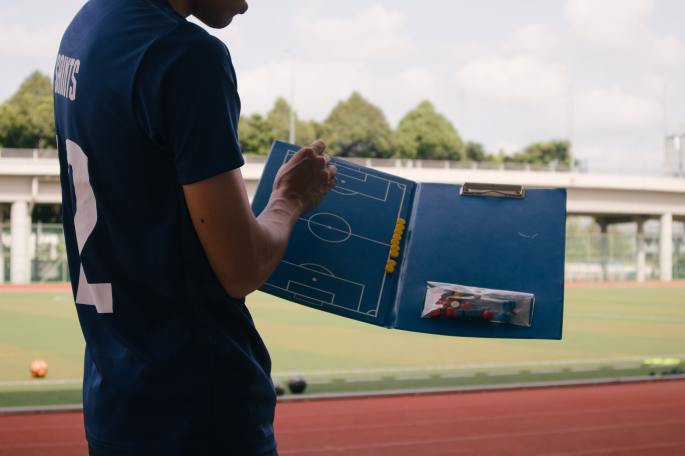
Communication is one of the most important skills for young players to develop. It can sometimes be difficult for players to see past their own role on the pitch, but effective communication can propel the entire team forward and lead to a better team spirit. Here are some of the key words and phrases for players to remember in their quest to better their communication.
Tag: Player Education
How to move off the ball like a world class winger
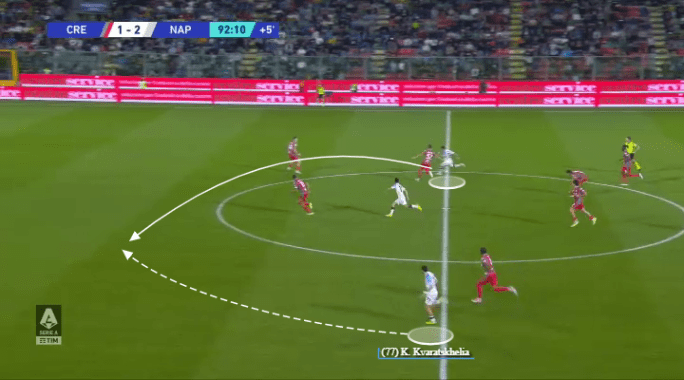
In the modern era, wingers can be as vital to scoring goals and creating chances as any other position on the pitch. Elite superstars like Mohamed Salah and Khvicha Kvaratskhelia have illustrated this to a tee this year, for both their goal scoring prowess and chance creation supremacy. But most young players aspiring to be the world's best struggle to see the finer details of exactly how the likes of Salah and Kvara find themselves in those scoring positions. With that, we break down how to move off the ball like a world class winger, with real examples from the likes mentioned above, in addition to Raheem Sterling, Marcus Rashford and Alex Morgan.
Finding your fit as a player
Even if a coach has not clearly communicated how they see the player fitting into the grander scheme, any footballer can come to a realization about the type of role they fulfill for their team and how they work as part of the team to achieve success on a grander scale, beyond just the individual facets of their game.
When to press, and when not to press in football
Pressing has been one of the most commonly discussed topics in the past decade or so of the detailed scrutinization of football. Ideas around gegenpressing, and the high-control philosophies of managers like Guardiola and Klopp allowed pressing to come to prominence for all to see, and induced a belief that pressing must be the only proper way to defend.
Recognizing and playing to your teammates’ strengths in football
Each situation in football is unique, and that means every player must endeavour to scan the field at every turn, allowing for appropriate adjustments to each specific situation in the quest to properly perform the next action. But beyond the act of scanning the field, players must have a keen understanding of their own teammates' strengths and weaknesses.
Improving your tactical understanding as a player
Historically, we've tailored our content toward coaches and fans of the beautiful game, attempting to use our content for practical application in the game. But more and more we find ourselves interacting with players wanting to take their tactical understanding to the next level. On the one hand, it's amazing to see players taking initiative, and recognizing the intertwined nature of the tactical side to superiority in all other "corners" of the game. But simultaneously, this points to somewhat of a hole in coaching practice and common dogmas, where the technical and physical components are still prioritized, without enough regard for the tactical elements of football. Here is how to improve your tactical understanding as a player.
The simple task anyone can do to improve their tactical knowledge
As coaches, analysts, players, fans, and football obsessed individuals, we all want to grow our tactical understanding of the game. In fact, it's one of the top five questions I get thrown my way on social media or email (links at the end of the article), where people either want to know how I developed my degree of tactical knowledge, or want to know how they too can take their tactical and analytical understanding to the next level. Here is a structured process that you can follow to develop your own tactical knowledge, and continuously learn about the game on repeat.