

It’s time for our Monthly Magazine of January 2022! In this month’s edition of Fox in the Box, we find the next Liverpool front three, explore Dean Smith’s massive leap off the bottom of the Premier League table, and answer your questions about the January Transfer Window. Subscribe to our premium subscription for $4.99 per month or login to your account, to view the magazine.
Kick off
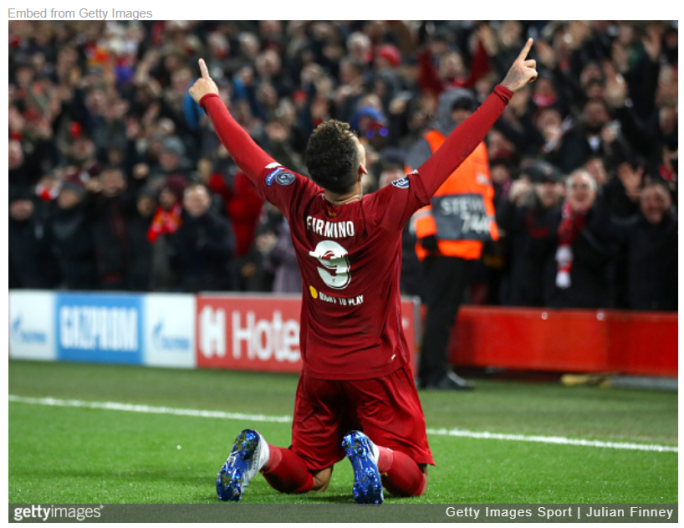
FINDING THE NEXT FIRMINO, MANE & SALAH
Roberto Firmino, Sadio Mane and Mohamed Salah, the poster boys of a modern day football front three and all that can be accomplished, are all out of contract at the end of the 2022-23 season. The electric trio defined Liverpool’s success in the late 2010s, including a Premier League and UEFA Champions League triumph, and a runners-up medal in both competitions. But now approaching or already hitting 30 years old, Liverpool need to start to prepare for life without their illustrious front three. So with that, in this tactical transfer series, we attempt to identify the next Roberto Firmino, Sadio Mane and Mohamed Salah. We’re looking for players not only capable of leading the Reds to more title triumphs, but players young enough to do so over the next five years.
SADIO MANE <-> CHRISTOPHER NKUNKU
Embed from Getty ImagesHe may not have as much versatility in skillset as Firmino and Salah, but Sadio Mane’s talent levels are supreme. Out of all the candidates, Emmanuel Dennis might be the closest clone. The Nigerian forward is just sheer speed and scoring power, which, without underselling all of this, is Mane to a tee. Then you have Rafael Leao, who is so much more skillful than the Senegalese striker, but lacks the exact trait we would most want to find in a future Mane replacement (better scoring and shooting accuracy). So with that, we have to go with Leipzig’s one and only Christopher Nkunku.
You wouldn’t be able to ‘go fish’ in a game of cards with Christopher Nkunku and Sadio Mane, but the Frenchman is the most talented of all shortlisted players. In fact, there are very few players on earth (Declan Rice would certainly be one of them), who are better than Nkunku without already playing for one of Europe’s elite. While the Reds would love to have someone like Kylian Mbappe or Vinicius Junior, we have to be realistic, and not break Liverpool’s bank account. So before anyone else snatches up the press-resistant Frenchman, Jurgen Klopp needs to get on the phone with Nkunku and make him an offer he can’t resist (or press-resist). The best thing about the Leipzig man, which is also a characteristic of Mane himself, is that he’s never quiet. Even when not as his best, he’s always busy, making things happen for his team. Out of all his stellar statistics, Nkunku’s impressive 83 shot creating actions this season speaks for itself, especially given the next highest in our case study was Leao on 58.
According to Transfermarkt, the 24-year-old would cost Liverpool around £46 million, which seems like a bargain. When you consider his career could only go up from here, and that he could easily play anywhere in Liverpool’s attack, Christopher Nkunku has to be one of Jurgen Klopp’s top transfer targets, all ends up.
ROBERTO FIRMINO <-> LAUTARO MARTINEZ
Embed from Getty ImagesFinding Roberto Firmino’s replacement at Liverpool is a tough task. He’s a strangely unique player, who does just about everything in the game to great effect. The closest comparisons like Amine Gouiri and Georginio Rutter are likely not ready for the step up to Liverpool, and close clones like Kelechi Iheanacho will likely never be ready for that kind of step up. On the other side of the coin, capable goal-scorers and the players most capable of filling Firmino’s boots in terms of talent, usually play in a very different ways for their team. With all of this in mind, we suggest Lautaro Martinez be the top target for Liverpool. Like Firmino, he’s good at just about every aspect of the game. What he lacks in passing percentage and build-up play, he makes up for in providing a greater goal-scoring threat. Diogo Jota could be the man dropping in deep instead as Liverpool’s tactics evolve, as Lautaro comes alive in the eighteen yard box. This would be a fantastic signing for the Reds, but also an expensive one. The Argentinean is currently valued by Transfermarkt at £72 million pounds, with several years under his belt now as one of Serie A’s top scorers. So if they’re not willing to splash the cash, they could easily go for the young 19-year-old Georginio Rutter, who will likely develop into something special, but in a Firmino-esque way where he’ll be more about work off the ball than about banging in the goals. Amine Gouiri would be the third choice, given that he plays like a carbon copy of Roberto Firmino with the ball at his feet, but falls slightly short when it comes to the defensive side of the game.
MOHAMED SALAH <-> JARROD BOWEN
Embed from Getty ImagesNobody will ever replace Mohamed Salah’s goal-scoring presence for the Reds, and that much always needs to be taken into consideration. So with that, we’ve done something a bit crazy. We think the man that most closely resembles Salah at this current time is in fact, West Ham United’s rising star Jarrod Bowen. West Ham are not a high pressing team, but they have been pressing more and more this season, higher and higher up the pitch. Bowen’s goal and assist tallies are also extraordinary, and he’s an exceptional ball carrier, progressive passer and tackler. Being the oldest on our shortlist, Liverpool may want to go for someone younger like Saka or Diaby. But we think Bowen still has room to grow under the influence of Klopp, and could be purchased for the best value.
According to Transfermarkt, Bowen would cost Liverpool around £32 million, which happens to be the exact fee they paid for Mohamed Salah when he signed from AS Roma back in 2017. It would be a fantastic value buy for Liverpool to take advantage of, and it would instantly improve their next title charge. Jarrod Bowen fits everything Jurgen Klopp could ever want in a footballer, with his tireless, heavy metal energy exuding both confidence and poise. It’s so crazy, it just might work.
THE DUGOUT
DEAN SMITH – NORWICH – TACTICAL ANALYSIS
Embed from Getty ImagesINTRODUCTION
At the time that Dean Smith took over from Daniel Farke at Norwich, the Canaries were rooted bottom of the table with just 1 win. They looked destined for relegation without any hope of survival, regardless of how Smith might do in charge. But now, after two back to back wins against Everton and Watford, Norwich suddenly have a real chance of survival. Here is a quick tactical analysis of Dean Smith’s 4-2-3-1 with Norwich City.
OUT OF POSSESSION
Norwich defend in a 4-4-2 shape, with Adam Idah joining Teemu Pukki in defending from the front. They don’t press with much intensity or electricity, but will shape up to be very compact between the lines regardless of the phase of the game. Occasionally, their high-block may look like more a 4-2-4, with Josh Sargent and Milot Rashica stepping out from the midfield line to press higher. Sargent is a willing and energetic presser, and has accumulated the highest volume of pressures in the opposition’s attacking third other than Teemu Pukki, who leads the line decently well. The red-haired American has also won more tackles in the attacking third than any of his teammates, making him an important member of the front-line press.
Lower on the pitch, the Canaries hold their compactness and shape, narrowing the field in their two banks of four. One winger may occasionally step out to press when the ball reaches their side, but otherwise the shape is fairly rigid and structured, with an emphasis on zonal marking.
Among the back-four, Grant Hanley is the organizer and the one in charge of steadying the ship. As opposition teams break down the wide areas and work the ball into the box, Hanley’s needed to be strong in the air. He’s been up to the task in winning 79% of his aerial duels, which makes him a potent threat from set-pieces going the other way too.
Norwich still have a lot to sort out defensively, with 45 goals against in just 22 matches, but the signs under Smith show some positive improvement in defensive solidity, shape and structure to keep out the goals.
IN POSSESSION
In possession, Norwich look to play quickly through the thirds, breaking lines both through vertical passing and intelligent ball carrying. Adam Idah for example is an excellent ball carrier, and will look to drive through the centre of the pitch quickly on counter attacks. Teemu Pukki meanwhile is a powerful runner who constantly wants to seek out space and venture beyond the opposition’s back-line. Having players who are good on the break is particularly key for Norwich this season, as they’ve only accumulated 44% of the possession this season.
The one key facet to their game in possession is in the role of the attack-minded fullbacks – Max Aarons and Brandon Williams. On loan from Manchester United, Brandon Williams might be the most capable defender Norwich have on their roster, while Aarons is critical to the way the Canaries attack, as susceptible as he’s been this season in defense. He’s completed more carries, dribbles, passes into the penalty area, and been the target of the most passes for his team. All of this points to an important role for his team, to which Norwich have been slightly reserved in taking full advantage of. Only one fullback is allowed to go at a time, giving the shape somewhat of a 3-3-4 look in attack as Aarons overlaps. Given that Williams is also energetic and plays well in give and go situations down the wide areas, Norwich could consider getting both of their fullbacks up the pitch at once.
Finally, in their quest for survival, Norwich also need to take greater advantage of the attacking presence of Teemu Pukki and his powerful running in behind. The wingers narrowing in attack and fullbacks overlapping means he can get into the box to get on the end of crosses, but they could get the ball to him quicker in their attacks, allowing him to sprint in behind and take control of the situation.
CONCLUSION
Norwich remain in serious trouble this 2021-22 Premier League season, but Dean Smith’s side deserve some credit for their recent form, and their surprising escape off not only the bottom of the table, but the bottom three altogether. Smith has some work to do in getting a tune out of his best players, but Norwich are showing clear signs of form as he finds his footing at his new club.
To see how Dean Smith compares to Daniel Farke’s Norwich, see our 2020-21 Daniel Farke – Norwich – Tactical Analysis.
top 100 footballers – JANUARY 2022
100. Tomas Soucek
99. Domenico Berardi
98. Sergej Milinkovic-Savic
97. Antoine Griezmann
96. Bukayo Saka
95. Jamie Vardy
94. Dusan Tadic
93. Gerard Moreno
92. Marcelo Brozovic
91. Michail Antonio
90. Dusan Vlahovic
89. Paul Pogba
88. David De Gea
87. Luke Shaw
86. Raphael Guerreiro
85. Raphinha
84. Paulo Dybala
83. Sergio Busquets
82. Florian Wirtz
81. Jordan Henderson
80. Youri Tielemans
79. Presnel Kimpembe
78. Gabriel Jesus
77. Christopher Nkunku
76. Federico Chiesa
75. Pierre Emile-Hojbjerg
74. Mateo Kovacic
73. César Azpilicueta
72. Benjamin Pavard
71. Reece James
70. Lucas Hernandez
69. Jack Grealish
68. Patrik Schick
67. Angel di Maria
66. Luka Modric
65. Diogo Jota
64. Kyle Walker
63. Phil Foden
62. Kalidou Koulibaly
61. Memphis Depay
60. Dayot Upamecano
59. Thiago Silva
58. Harry Kane
57. Vinicius Junior
56. Jan Oblak
55. Antonio Rudiger
54. Edouard Mendy
53. Jude Bellingham
52. Raheem Sterling
51. Nicolo Barella
50. Toni Kroos
49. Marquinhos
48. Leonardo Bonucci
47. Fabinho
46. Marco Reus
45. Leroy Sane
44. Ciro Immobile
43. Declan Rice
42. Frenkie De Jong
41. Luis Suarez
40. Marco Verratti
39. Lautaro Martinez
38. Thibaut Courtois
37. Cristiano Ronaldo
36. Achraf Hakimi
35. David Alaba
34. Lorenzo Insigne
33. Mason Mount
32. Leon Goretzka
31. Andrew Robertson
30. Alisson Becker
29. Rodrigo
28. Ilkay Gundogan
27. Manuel Neuer
26. Ederson Moraes
25. Romelu Lukaku
24. Heung Min-Son
23. Serge Gnabry
22. Gianluigi Donnarumma
21. Casemiro
20. N’Golo Kante
19. Joao Cancelo
18. Neymar
17. Bernardo Silva
16. Alphonso Davies
15. Sadio Mane
14. Ruben Dias
13. Trent Alexander-Arnold
12. Bruno Fernandes
11. Virgil Van Dijk
10. Kevin de Bruyne
9. Thomas Muller
8. Jorginho
7. Joshua Kimmich
6. Lionel Messi
5. Kylian Mbappe
4. Erling Haaland
3. Karim Benzema
2. Mohamed Salah
1. Robert Lewandowski
SERIE A-BSERVATIONS
Serie A Observations: Juventus Quick Take Tactical Analysis
Written by Jeremy Barnes
This past weekend, Juventus squared up against fellow Serie A heavyweights, AC Milan, at San Siro for a much-anticipated clash of top-four hopefuls. Despite its potential, the match played out as a midseason stalemate, with players from both sides looking a little listless. But past the lack of goals (or shots on goal in the case of Juventus), the more measured pace of play offers one distinct advantage to viewers: a clear view of formational repositioning based on phase of play. In other words, a game model at work.
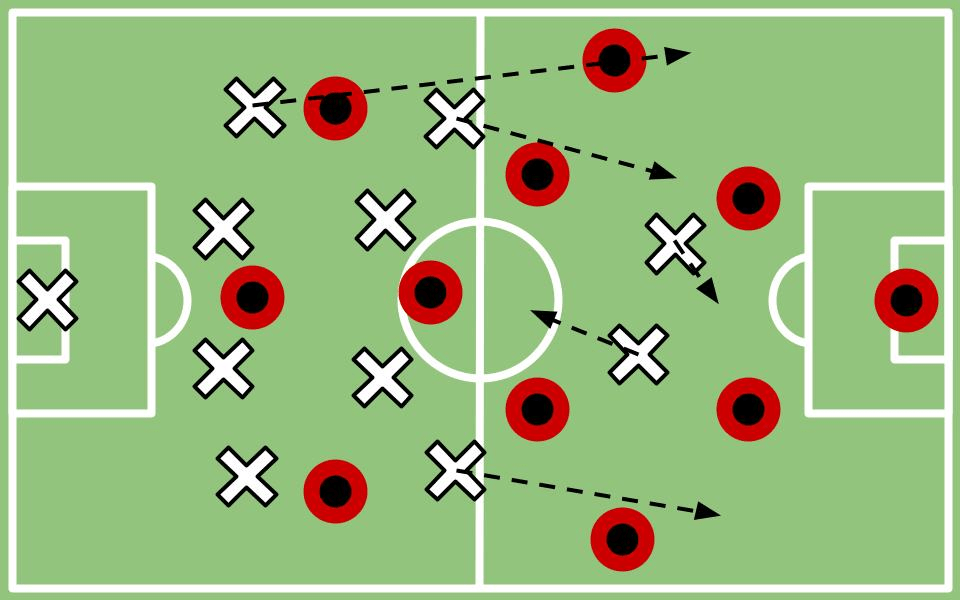
On paper, Juventus set up in a 4-4-2. However, Juventus’ shape only resembled a 4-4-2 when out of possession. With the ball, Juventus adapted to the area of the pitch and opposition pressure. In the defensive third, the center backs would split, utilizing the goalkeeper as an additional passing option and allowing the full-backs and wide midfielders to push forward, like a 2-4-4. During this phase, the second striker frequently drops deep to offer a combination option out of pressure. In doing so, the striker looks to find their fullback or central midfielder in space, providing a release from pressure and facilitating ball carrying from the defensive to the mid/attacking third. As part of this transition, Juventus would move as pictured above: left midfielder to forward position, right midfielder to right wing, left back to left wing, striker remains advanced, and second striker roams in playmaker role. These movements result in a final formation in the attacking third of 2-3-5 or 3-2-5 (depending on positioning of the other full-back).
After studying these transitional movements, two key takeaways are clear. First, when managers make player selections they should be in the context of their projected model. At its core, these tactics are built on players leaning into their strengths. Fielding two defensively-minded wide midfielders would be nonsensical in a system like this, that demands they offer an attacking threat. Secondly, a football team’s “lineup” remains an analytical oversimplification of the way they play. The average positions of Juventus could have easily been characterized as a 4-2-3-1, 4-3-3, 3-5-2, etc. In fact, many teams in the world will adopt these same attacking positions regardless of published formation, placing players in a manner that meets their unique philosophy, style of play, game model and game-plan. To truly understand a side’s predispositions, a game model incorporating phases and areas of play offers a far more accurate and comprehensive view than where they stand at kickoff.
Serie A Observations: Empoli’s 4-1-3-2 vs. AC Milan (Quick Take Tactics)
Written by Jeremy Barnes
On Serie A’s Matchday 19, mid-table Empoli faced off against title hopefuls AC Milan at Carlo Castellani Stadium. Despite AC Milan being heavy favorites, Empoli gave themselves every chance to come away with all three points, further proving their recent statement win against Napoli was no fluke.
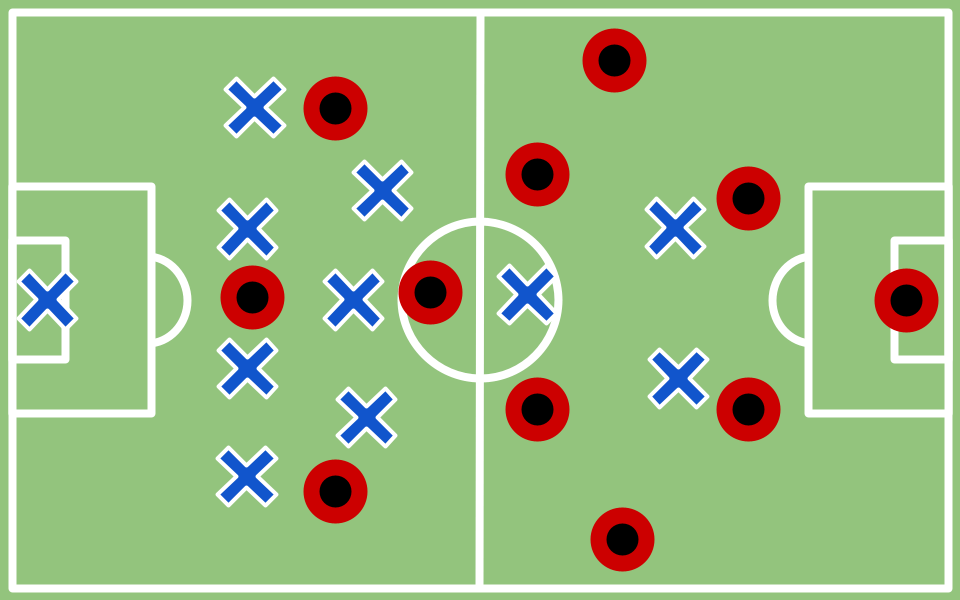
Tactically, Empoli’s 4-3-1-2 was fascinating to watch. While bearing this formation largely out of possession, when they had the ball Empoli shifted to a 2-3-3-2, with two central midfielders pushing high and full backs providing advanced width. This approach led to some excellent chances, largely built upon dynamic runs off the two strikers’ hold up play, as both functioned as quintessential number nines. While the true and apparent risk with this system is on the flanks (arguably where AC Milan have some of their strongest stars lined up in a 4-2-3-1), Empoli worked hard to address this threat through quick shifting of the shielding midfield trio. Surprisingly, it was either side of that 3-man defensive midfield line that looked to step towards any advancing AC Milan outside back, a tactic that fared all the better considering Milan’s somewhat sluggish build up and switches of play. Empoli’s back line also stepped hard to pressure the back of Milan’s forwards, congesting the center of the pitch and limiting passes into dangerous areas in front of the box on many occasions.
All in all, this was a fun watch since the underdog spent more time on the front foot than anyone would’ve wagered. The final shot tally of 16(5) -18(8) really does tell the story. For those pondering a 4-3-1-2, Empoli have provided a noteworthy rendition of its potential utility, sticking to task admirably and finding more joy on the wings than one would think possible against Milan. In the end, primarily through moments of individual influence rather than collective brilliance, AC Milan left Empoli as comfortable 4-2 winners.
q&A
Q: Why do you think Leeds concede so many shots from turnovers and how has the injury to Kalvin Phillips played into that?
@hamza1
Man-marking systems like Bielsa’s are actively bad for defensive transitions. Essentially, what you want in a defensive transition is to focus on the first action of counter-press or retreat immediately after possession has been won. You focus on what the player closest to the new ball carrier should be doing, and the close others around them. So the problem with a man-marking system then means that can become very disjointed. For example, Kalvin Phillips may be closest to the situation, but if he’s supposed to be marking Bruno Fernandes and the Man United man is suddenly out on the left wing instead of defensive midfield, it means there’s space for someone else to quickly move into if Phillips leaves his normal zone, or it means Bruno can find more space. This is why we always think the game should be more zonal than man-to-man. Some defenders may have the responsibility of a single player and this can work to great effect, but the entire team should not have the responsibility of marking their own single opposition player. It simply doesn’t work like that in football. Pieces move around the chess board far too much, in ways that you don’t necessary expect or can’t script.
So then you have the injury to Kalvin Phillips, who is undoubtedly their best player just in general, but also in transition. He’s able to cover ground quickly, and he’s generally well-positioned even within the marking schemes. He’s a big miss and it’s why we would suggest Leeds focus on bringing in a defensive midfielder in January. Santiago Ascacibar from Hertha Berlin would be the perfect fit, as he has an abundance of energy, is an elegant passer, and performs well in defensive transitions. Harrison Reed would be another option after a solid season at Fulham last season. He’s a very good tackler of the ball, and another player who roams around the field with a tireless energy, just with an added combative edge. Great question, and something Leeds definitely need to sort out.
Q: What do you make of Newcastle’s January Transfer Window so far?
@KaceyfromCanada
Newcastle United have gone about their business incredibly shrewdly so far this January. I feel vindicated in squashing all the suggestions that they’d splash the cash on players like Coutinho and Martial, who might still have something in them, but are evidently past their best.
The Chris Wood signing in particular is an incredibly underrated move. Newcastle have essentially examined their squad to identify what’s missing, and correctly identified that to be a target-man like striker, who can offer something different. He can be an excellent Plan B to Callum Wilson, allow the former Bournemouth man to bounce off of him in a front two, or hold the line all on his own. The Burnley man will give the Magpies a different dimension in holding up play, bringing others into the game, and allowing Howe’s side to get up the field with greater fluidity now that they have a focal point, and someone they can target with Shelvey’s long passing range. I’ve said this before in the Howe analysis, but pairing up one of the Premier League’s best scorers of headed goals with one of the world’s best deliverers in Kieran Trippier – whether that be crosses or set-pieces, was a genius decision. Trippier himself will be a great player for Newcastle to have, and can play on either side of defense. That’s important, again, considering Newcastle desperately needed a fullback. He’s also just an exceptional, experienced player who does everything in the game well. He’s small, yet still good in the air. He’s lightning quick despite now approaching his thirties, and he offers so much more in possession and passing range than 90-99% of the players in the squad.
Then they’ve been linked with players like Bruno Guimaraes, Diego Carlos and Duvan Zapata, rather than overly expensive new signings that will only fail to justify their price tag. They’re strengthening in exactly the right areas before the deadline, picking up players in the exact positions they desperately need most. So to answer the question – I think Newcastle have had just about the best January transfer window they could have asked for, and have gone about it all in a supremely smart way.
Q: Why do you think Vlahovic chose Juventus over Arsenal?
@McTommyMay
The Arsenal suggestions were always strange to me, as it just feels like Vlahovic can attain so much more at this time, with all due respect to Mikel Arteta‘s resurgence. Let’s first talk about style of play, as this is always important when assessing player recruitment situations. He certainly fits the bill in terms of youth, and the direction Arteta wants to go with his heavy emphasis on younger heads. He can hold it up, he can link up with others. He can press. BUT, Vlahovic is more of a target man, he’s more Chris Wood than he is Alexandre Lacazette. It’s almost like two opposite ends of the spectrum. So if you’re looking at the success Arteta has achieved since he took over, especially this season, it’s all been with essentially a false nine type of striker. Someone who can come deep in build-up, someone who presses well from the front. Someone who is not the focal point of the team. So what you want if you’re smart, which I think at this point Arteta will be, you want someone who is a Lacazette type, but who will score more goals. I suggested Jonathan David for the role in my first ‘Why _ is a perfect fit for _’ series. Stylistically, David is as close to a Laca clone as you might get. He’s not quite as good at build-up play yet, but very good on the ball. His first touch is phenomenal, and so is his awareness of when to take a first time finish versus when to take a touch or two, shift it onto his left and bang. Goal. Really smart player. And I think you need a smart player, rather than a big man who is going to be a focal point for a team. Arsenal have other focal points on the wings, it’s not their striker and that’s the direction the game is already going in the Premier League. So would I love to see Vlahovic in the Prem? Of course. Is it the best fit for Arsenal? No. Now let’s talk about Juventus. Staying in Italy makes logistical sense, and causes less upheaval to a player’s entire life. This is an underrated aspect of recruitment situations, and something fans overlook in the whole ‘Football Manager’ of it all. Moving to another club in Serie A is more likely to guarantee Vlahovic immediate success. Stylistically for them, they’re also in desperate need of something different going forward, and in replacing Cristiano Ronaldo’s aerial ability. He won’t be the same focal point he was at Fiorentina, but he will be a focal point, and that’s important. So with all of these things working in tandem, I think it’s an excellent signing for Juventus, and one that fits the former Fiorentina man better than Arsenal.
podcasts
TMS INTERVIEWS
LONGBALL PREVIEW + DEADLINE DAY
Brought to you by Rhys Desmond as part of TheMastermindSite.com.
the mastermind monthly magazine – fox in the box – JANUARY 2022

Sports Analysis for Journalism & Content Creation – Ebook
I’m sure you’re already familiar with the world of sports media and journalism. You’ve probably grown up watching sports channels, seen Instagram reels, and witnessed the new wave of media begin to replace a lot of the traditional outlets. With that, I want you to think of a typical person that you’ve seen in sports…


Benjamin Šeško is United’s best striker in years
With four goals in his last five matches, Šeško earned himself the Premier League’s Player of the Month award for February. This, in just 85 minutes of making an impact off the bench. If he can continue to grow from here, the 22-year-old will almost certainly stake his claim as United’s best striker in years.

Michael Carrick has given Manchester United their joy back
At the time of Ruben Amorim’s shock sacking, Manchester United sat sixth in the table. There were signs of hope and progress, but also much in the way of disappointment and misalignment. Since Carrick entered the frame at Old Trafford, the Red Devils have won four in a row, closing the gap on City in…
Discover more from TheMastermindSite
Subscribe to get the latest posts sent to your email.
 TheMastermindSite