In the coaching community, there's often a discourse around how the technical elements of the game must be prioritized in the early stages of development, typically between the ages of 4-10. But that does not mean that tactics become a mute point. Simply helping to elucidate positioning and roles, and how to perceive space can all be considered "tactical" elements of the game. These can be taught without players needing to have technical foundations in place. Game awareness and game intelligence from understanding basic information around their role, position, and how to react to the space around them, will help a player to perform well on the pitch. This can be taught in combination to the development of techniques and skills. It does not have to be an 'either/or', nor does it have to be a matter of one coming before the other.
Category: Masterclasses
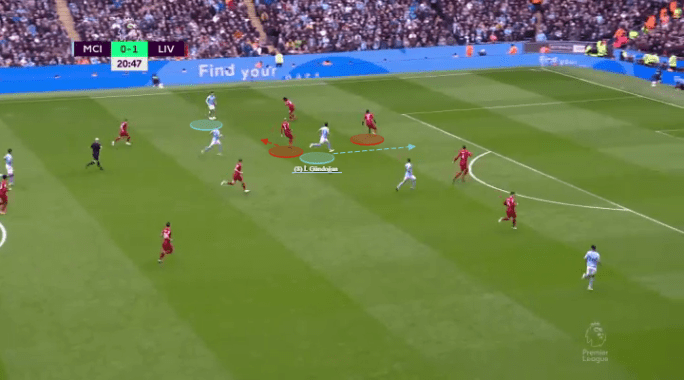
Game of Numbers #14 – Ilkay Gündoğan’s Movement Masterclass
İlkay Gündoğan had a masterclass of a performance against Liverpool, playing a massive part in their commanding 4-1 win over their title challengers from last season. It was vintage Gündoğan at his best, and showcases City's potential to continue putting on top quality performances even without the presence of Erling Haaland. Here is Game of Numbers #14, illustrating Gundogan's movement masterclass!
Personal development to become the best coach you can be
You cannot create a positive culture for your athletes if you cannot create a positive mindset for yourself. They will see right through you. They won't buy into what you're putting down. They won't trust that your coaching will lead them to success.
The changing nature of coaching to online formats
Next week, I wrap up my second time teaching a Coaching & Leadership course at the university level for a class of enthusiastic undergraduate students. I haven't had much control over the syllabus or in-class learnings either time I've taught the course, and one of the key areas missing happens to be the only form of coaching I currently do - online coaching. More coaches could take advantage of the online formats available to them, even if still working in club environments. Many endurance coaches, mental skills specialists, therapists and counsellours are already coaching almost exclusively online. Other sports and realms will start to catch up. It's only a matter of time before the online coaching boom begins to blossom, so you might as well start to practice your skills in this realm while it's still relatively new.
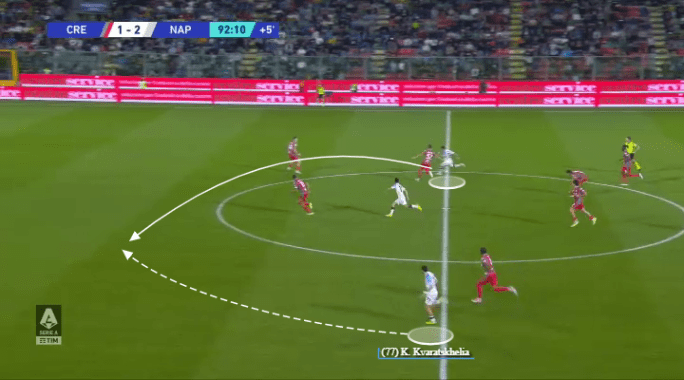
How to move off the ball like a world class winger
In the modern era, wingers can be as vital to scoring goals and creating chances as any other position on the pitch. Elite superstars like Mohamed Salah and Khvicha Kvaratskhelia have illustrated this to a tee this year, for both their goal scoring prowess and chance creation supremacy. But most young players aspiring to be the world's best struggle to see the finer details of exactly how the likes of Salah and Kvara find themselves in those scoring positions. With that, we break down how to move off the ball like a world class winger, with real examples from the likes mentioned above, in addition to Raheem Sterling, Marcus Rashford and Alex Morgan.
Game of Numbers #13 – Guerreiro as a ’10’
With both Julian Brandt and Marco Reus out for the all-so-crucial Revierderby against FC Schalke, many Dortmund fans wondered what Edin Terzic would concoct. The logical solution would have been to play Jude Bellingham further forward in that '10' slot, utilizing his powerful dribbling further forward. But Terzic opted for a more natural 'creative' outlet, shifting Raphaël Guerreiro into the '10' slot. The move worked like a stroke of genius, with the Portuguese full-back scoring a beautiful goal and assisting the other, against Dortmund's bitter rivals. He was far and away the best player on the pitch, and did all he could to help his team achieve victory, despite BVB ultimately falling short come the final whistle.
Conducting opposition reports for pro clubs
In creating a thorough report for a pro club, your inclination might be to include all the information you can possibly find. I often thought the same way, writing 4,000 word articles detailing insights into every player. But contrary to popular belief, you don't need to detail everything there is to know about a particular team when writing a report. It's important to distill the most relevant information for the team, taking into account their own style and principles of play.
The benefits of consulting with a performance analyst
Clubs, and certainly professional players, are not currently accessing this to the extent that would truly take their game to the next level. Yet so many youth coaches and younger athletes at the youth level remain unafraid to make that leap. Soon it will be those coaches and players who are already investing in their development as they work through the game, that will leapfrog those that continue to fall behind. Whoever takes the shot first will reap the rewards, and it's now up to the clubs and players to see the value.