Why Manchester United should play 3-4-1-2

The current dialogue around Manchester United is boring. Every week, it's the same story in the media, whether or not they win, lose or draw. It's obvious that Manchester United are not at their best, but very few are discussing tangible ways for the Red Devils to fasten their seatbelts and shift the car into overdrive. So with that, today we take a look at why Manchester United should shift away from a back-four, and into a 3-4-1-2. Don't get us wrong, United need to drill several loose bolts. But, a change to the formation may help to mitigate several of their greatest issues.

How to play with a False 9 like Guardiola and Klopp

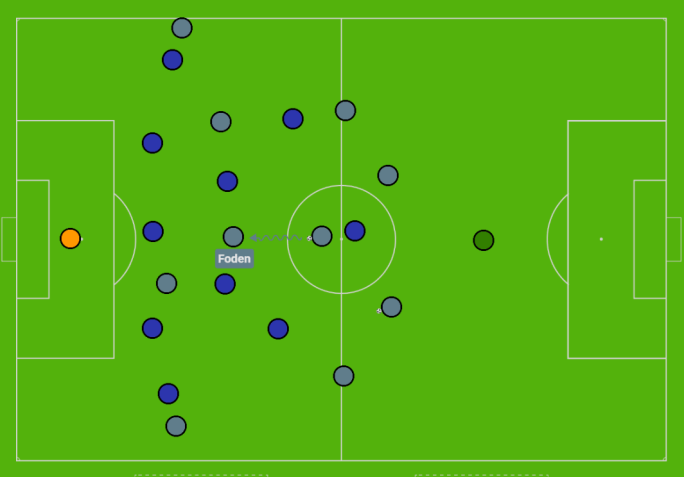
Following its popular use for Vicente del Bosque's Spain at Euro 2012, the role of the false nine has continued to evolve in the modern era of the Premier League, accompanied by a shift in mannerisms, behaviors, and positional patterns of strikers on a football pitch. Pep Guardiola's Manchester City and Jurgen Klopp's Liverpool have been two of the dominating forces in world football since the mid-2010s, and both have operated throughout that time without a recognized out-and-out goal-scoring striker. For any possession-based team attempting to emulate Klopp and Guardiola, deploying a false nine presents a unique and innovative way of breaking the opposition down, and reaching new levels of performance. Some tactical experts have suggested that in the future we may see a formation without a striker at all, but truthfully, we may already be there.

Identifying players to fit your team’s style of play

In the process of recruitment & scouting, an essential piece to the puzzle is in finding players to fit the team's style of play, rather than just the very best players. Without a game model that specifies how a team wants to function in each phase of the game, this is difficult to achieve. But beyond studying a game model, a recruitment & scouting analyst could use a few other methods for finding the right players, that would allow them to transform their team and achieve new heights.

How Southampton used positional automatisms to gain advantages v. Man United

Ralph Hasenhuttl's Southampton used intelligent positional patterns (or automatisms) to gain crucial advantages against United, and come out with a massive away draw. Particularly vital on the day to finding space and gaining tactical victories were Oriol Romeu and Mohamed Elyounoussi, who took on various roles over the course of the match away from their 'normal' position.

Why Dortmund are so bad in defensive transitions

Any time Borussia Dortmund look like they might be in with a shot of challenging Bayern for the Bundesliga title, they go and mess it up with an abysmal performance. Marco Rose's time in charge of the Black & Yellows has been characterized by a series of questionable tactical decisions (to say the least), and an utter lack of desire to fix the team's most pressing defensive concern - their disastrously poor positioning, speed and aptitude in transitions. After the club's shocking 5-2 loss to third place Bayer Leverkusen, we take an in-depth look at why Rose's Dortmund are so poor in defensive transitions, and what they can do to fix this.

Conceptualizing positional play, positional rotation and positional interchange

The footballing universe is littered with terminology that only exists to us in our realm, and our game, and our sport. It can therefore be difficult for inexperienced onlookers or even just the average fan, to understand what we mean we discuss different footballing concepts and terms. So today, I take a look at the differences between positional play, positional rotation and positional interchange.

Goalkeepers in the build-up – a new meaning to the ‘Sweeper Keeper’

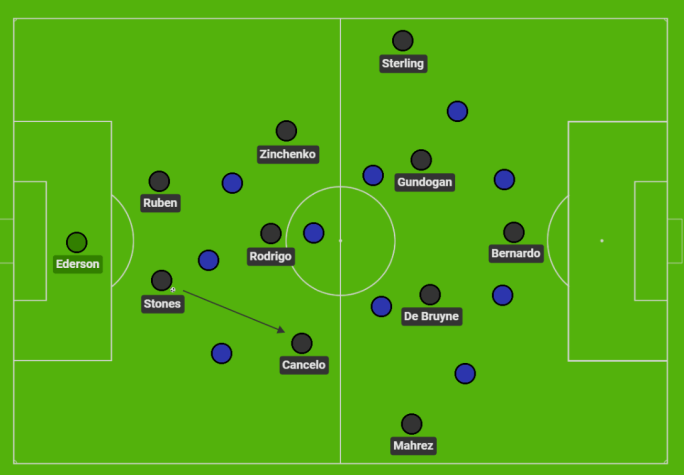
The role of the goalkeeper continues to evolve in the modern game, with keepers becoming better with their feet by the year. Not only are goalkeepers now a crucial part of their team's build-up structures, but they're coming higher and higher out of their penalty areas to contribute. We recently discussed how Robert Sanchez often joins the Brighton defense as an auxiliary centre-back when the Seagulls play out from the back. But Sanchez is not alone in the art. The likes of Alisson, Ederson and Manuel Neuer all perform a similar function for their teams, adding another number by which their team can shift the ball around and make the opposition sweat. But why exactly is this happening and what are the advantages? Let's explore.

How to beat a low-block like Antonio Conte’s Spurs

Antonio Conte's Spurs, as expected, have gotten off to a flying start. Conte's team have gone unbeaten in their eight Premier League matches so far, playing some fantastic, easy on the eye football in the process. The variety in their attacking play has helped the team to 14 goals in 8 matches, with just 5 conceded in the process. In our recent analysis of Conte's team, we posited that the team only had one key dilemma to solve - what to do against low-blocks who want to sit very deep against them. As opposition teams sort Tottenham out, Conte's quest to combat the low-block appears to be growing all the more difficult by the match. They failed to claim victory against 10-man Southampton earlier in the week, and yesterday had to wait until stoppage time for Davinson Sanchez's winner. So with that, we take a quick look at how teams like Antonio Conte's can disrupt a low-block and generate scoring chances, taking examples from Spurs' own 1-0 victory against Watford at the weekend.