Game of Numbers – #3 – The Evolution of the Target Man

Target Men are often seen as the bottom of the barrel centre-forward in terms of footballing ability. But increasingly, it's becoming more difficult to quantify 'Target Men', recognizing the vast skillsets they employ. The likes of Aleksandar Mitrović and Sasa Kalajdzic are easier to distinctly categorize as 'Target Men' for their physical, imposing frame that allows them to score headed goals for fun. But it becomes more difficult to keep the likes of Erling Haaland and Darwin Nunez in that same specification, recognizing the vast array of traits they possess, particularly speed on the break. Target Men have historically been seen as slow, technically inept individuals who use their physicality, whether that be height or strength, to get one up over the opponent. But more and more, we are seeing an evolution of the 'Target Man' in 2022, to include a vast array of traits.

Game of Numbers – #1 – Lucas Paqueta & The Bernardo Silva Role

In our latest analysis series: Game of Numbers, we break down the various tactical undertones of the modern game, most notably the roles that individual players hold on the pitch to help their teams explore avenues for greatness. Positions are often broken down into 'numbers' to describe the areas of the field that a player may operate. This series aims to illustrate the ever-changing, fluid nature of those roles, and the ways in which various footballing teams may use the same players in the same roles to completely different effect. This is Issue No. 1, featuring the following: Lucas Paquetá & The 'Bernardo Silva Role', Joachim Andersen's 'Quarterback' Role vs. Arsenal, and Musiala's Masterclass vs. Eintracht Frankfurt.

Explaining the Deep-Lying Playmaker – Player Role Analysis

The 'Deep-Lying Playmaker' is one of the already attributed player types that we have adopted within our system. Also known by its Italian name 'Regista', the 'DLP' is tasked with setting the tempo of the match from build up to progression, all the way to creation. They sit in front of the defensive line as an 'Anchor', but hold a more offensive, progressive and possession-oriented role than the other two 'number 6' types within our 'Anchor' persona. Their role is in both helping create space between the lines, and then breaking lines, recycling play, or even changing the point of attack upon receiving the ball, so that their team can advance up the pitch, beat an opposition's press and seek spaces closer to goal.

Explaining the Anchor – Player Role Analysis

Anchors tend to play at the base of a midfield three, holding the midfield together, and allowing others to work their magic up ahead. Their role is in both screening in front of the defense to disallow progressive passes forward, particularly into the opposition's striker, and to 'anchor' the midfield by holding everything together as other members step out of position or drift into the half-spaces. Unlike the 'Midfield Destroyer' they do not need to be overly active in defensive phases on sheer statistical contributions, but should be equally active on the hard work done off the ball to shift, shuffle and slide with the play.

Explaining the Midfield Destroyer – Player Role Analysis

The 'Midfield Destroyer' continues to be alive and well in the modern game, and encapsulates some of the most highly regarded and sought after defensive midfielders on the planet. The 'Destroyer' is essential to defending in transition and stunting attacks before the opposition reach the final third, within the wider umbrella of 'Anchoring' the midfield and screening in front of the back-line. Casemiro and Yves Bissouma would qualify as some of the best around, with Óscar Valentín and Benjamin André performing as two other fantastic emblems of the fearless persona behind the 'Midfield Destroyer' player type.


Explaining the Shuttler – Player Role Analysis

Not all 'Shuttlers' get the credit they deserve, even despite being absolute engines and motorcyclists for their teams. They respond brilliantly at all ends of the pitch through that tireless energy and appetite for the game, whilst prioritizing a defensive approach to life in football. N'Golo Kante serves as a perfect reminder of what 'Shuttlers' should strive to be - a player who wonderfully goes box-to-box with ease and admiration, without mitigating their resolute defensive responsibilities.

Explaining the Sweeper – Player Role Analysis

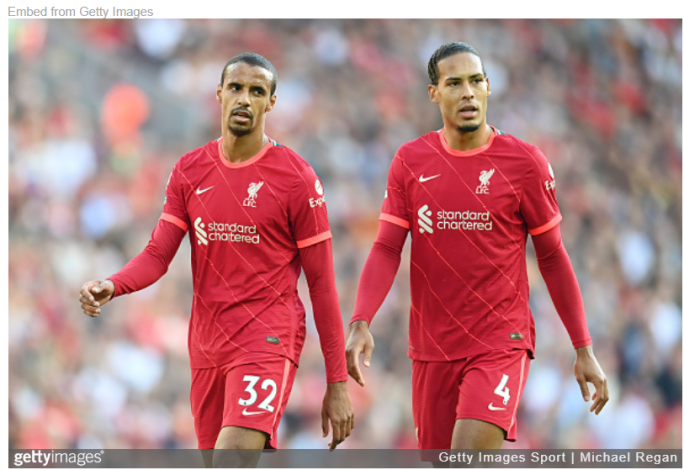
The term 'Sweeper' has existed within the game for decades. The traditional usage encourages the contrasting relationship between one centre-back who steps out (the 'Stopper'), and one that sweeps in behind. The modern game has evolved in such a way where centre-backs typically perform both roles simultaneously, and it's rare to find clear-cut examples of 'Sweeper-Stopper' partnerships. In fact, I'd go as far to suggest that they typically exist more in back-threes in the modern game, with one clear-cut 'Stopper' angling higher than an obvious 'Sweeper' cleaning up the messes in behind. This Player Role Analysis is all about the modern day 'Sweepers', as we break down the tasks, functions and over-arching role of a 'Sweeper' in 2022.