
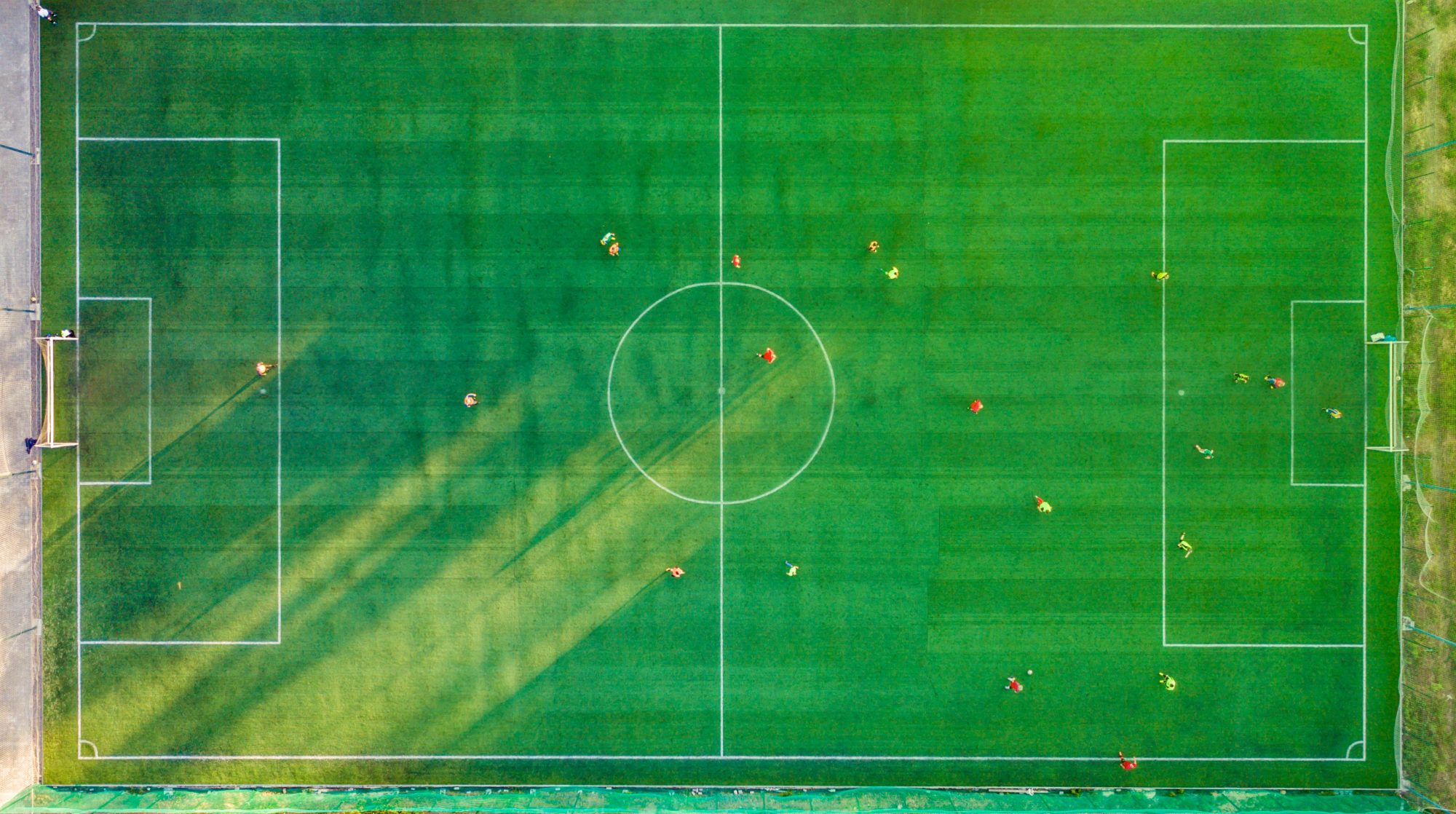
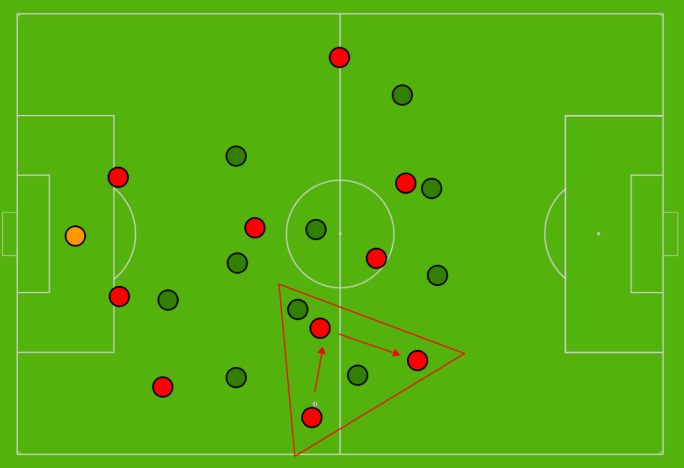
In the past few years, I have adopted an almost entirely games-based approach to coaching. Everything is based within scenarios and situations players encounter in the game, and related to rehearsed actions on where to be in different situations players encounter on a football pitch. These are what the footballing world call “patterns of play”, and what some top managers in the game (see Ralph Hasenhuttl) have dubbed “automatisms”. The success of relying on this games-based automatizations approach recently helped take a team I coach to an unbeaten season over the summer, and it’s a mystery to me why players are still stuck behind cones and waiting in lines at other teams and other clubs. Here is how to coach with automatisms.
what are automatISMS?
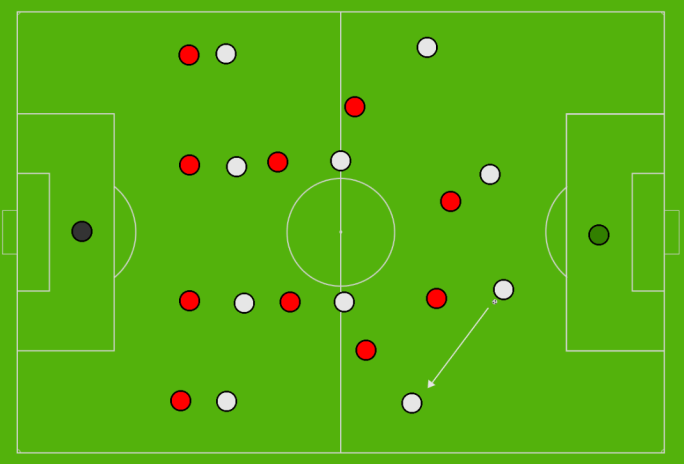
Automatisms are an increasingly popular training method in the world of coaching. Essentially, these are rehearsed patterns of play based on the four key moments of the game: in possession, out of possession, defensive transitions, and attacking transitions. Within each of those, automatisms are also based on the principle that every decision a player makes in a game should be based around four things: the opposition, the space, the ball, and their teammates. So if you can rehearse actions on a training pitch that can directly replicate what players will see in relation to these four things, in each of the four “moments” of the game, you can essentially allow players to know exactly where to be in any single situation they encounter in the game. While this may seem like controlling behaviour of a joystick coach who does not want to give players freedom to make decisions, it is not about that at all. Within this approach, players are still free to make decisions on their own accord, but they are able to more quickly recognize what correct actions to take, without neglecting the fact that a number of different actions can be correct in any one given moment in the game. For example, we are training players to recognize that when they have space, carrying the ball forward is a correct action to take. But if a teammate is in a wide open position further up the field, that is also a correct action, and perhaps a more advantageous one. It all comes back to the ball, teammates, opposition and space, and it’s up to the player to scan the field and see what they see. Not what the coach sees. It’s a perfect happy medium to instilling a playing philosophy, a game model, a systematic way of playing, while also giving players freedom to make choices based on what they perceive in the moment. And how do they know what choices to make based on what they see? Through these rehearsed patterns of play, in which they can directly see the positive or negative consequences of the actions they take on the pitch.
how to coach it

The beauty of coaching within this philosophy is that it is incredibly simple. My teams usually begin with a possession based warm-up, focused on our two key principles of play – keeping the ball through quick combinations, and winning it back through quick, collective efforts. After that, we will move into what is essentially a small-sided game, where players play to the halfway line of their playing size. One team will be attempting to score on the large goal at the end of the field, and the other will be defending the goal and attacking toward the halfway line by trying to score on pugg nets, squares, knocking down balls on cones, crossing the halfway line, finding a target player, etc. The variety of this is actually more key than it might sound, as different targets can have different outcomes for players based on your coaching topic (what it is you specifically want to work on that day). But no matter what our coaching topic is (e.g. pressing, playing out from the back, quick transitions), we always relate it to this design. From coaching a technique or skill like how to properly take a first touch, to team tactics like switching play, we make it directional, with methods of scoring at both ends of the pitch, and have players set-up in their positions so they continuously encounter situations that will come up over and over again in games.
the benefits
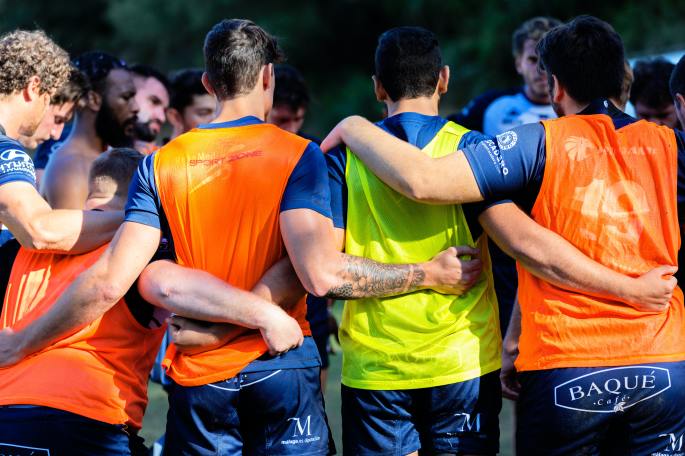
While some of these concepts may seem radical, the benefits are clear. First, players practice in the positions that they will be playing in the game. So that means automatically, they are already going to have a greater knowledge base as to how to specifically play their favourite positions. And when I say their favourite positions, I mean it. Players play in their 2-3 favourite positions, rotating around throughout the session into different slots, or even to different teams. For example, if the topic is pressing, the vast majority of players on the team will rotate in and out of the pressing team (attacking the large goal), to make sure everyone gets a chance to learn the same concepts, techniques and skills.
Second, using half of the field means that players are needing to now make quicker decisions, and think faster than they would in a full field game. The game moves at such a pace that players need to be able to recognize correct actions quickly. It’s one more reason why everything I do with my teams focuses on the concept of quickness – both in transition and longer spells with or without the ball. But having this smaller sized area will train players to make quick decisions under pressure, and begin to outthink their opposition.
The other awesome benefit with this is that you can start to get your players to buy into a way of playing. Your team can start to develop an identity for how you play, very easily, as players will be able to recognize moments that directly apply to your playing philosophy and utilize their learning right away when it comes to the game. Having an identity with your team is absolutely instrumental to success. But it is one thing to have that written down on paper and claim you want to play “possession-based attacking football.” It’s another thing to actually ingrain that in your training methods. Using automatisms allows you to do exactly that, and get players to understand their role within the team – helping every single player feel valued and a part of things.
When you’re coaching through having players waiting in lines, standing at cones, or going through passing sequences of one player to the next, not only is it boring for players, it doesn’t actually help them apply what they’ve learned to the game. Automatisms directly apply to the game, and teach players exactly where to be, when to be there and why to be there for virtually any moment of the game you want to teach.
COnclusion
Using automatisms in your training could be a revolutionary method to take your coaching to the next level. If you want to hear more about my playing philosophy, be sure to check out more from our Coach Education. If you want to learn more about how to coach a team at the 9v9 level, be sure to see our Coaching 9v9 Soccer – Ebook. If you want to develop your own playing philosophy, see Creating a Game Model – with Sam Holmshaw, and the top tactics of professional teams from our Premier League Tactics 2020-21 – Ebook. Thanks for reading and see you soon!
more coach education

The big questions for Canada ahead of the World Cup
Jesse Marsch might have been hoping for more from his team against Iceland and Tunisia, but they put up a decent fight in both matches, and gave plenty of fringe players a chance to stake their claim for the World Cup. This team have been hit by so many injuries over the past few months…


Ali Ahmed: The £1.4 million steal powering Norwich’s revival
Norwich might not be in the hunt for Premier League football next season, but they are slowly rebuilding their squad back to one that can challenge toward the top of the Championship. And in Ali Ahmed, they didn’t just sign a useful squad player. They may have found their next star.

Sebastian Berhalter has become the Whitecaps’ most important player
With his all-around quality, it’s abundantly clear. Sebastian Berhalter is the Whitecaps’ most important player right now. His performance against Portland was one of the finest individual performances of any player so far this season, and continues to help cement the ‘Caps as one of the most cutthroat teams in the league.

Michael Carrick has given Manchester United their joy back
At the time of Ruben Amorim’s shock sacking, Manchester United sat sixth in the table. There were signs of hope and progress, but also much in the way of disappointment and misalignment. Since Carrick entered the frame at Old Trafford, the Red Devils have won four in a row, closing the gap on City in…

Why Hugo Ekitiké has worked when so many big money signings have flopped
Every summer, Premier League clubs spend £80m–£100m chasing the next superstar forward. Every season, the league humbles them. But Hugo Ekitiké has been the exception. Ten goals, instant adaptation, and a playing style that personifies Liverpool’s identity. Here is why he’s worked when so many other big-money signings have stalled.

United’s attacking depth the difference against Arsenal
Manchester United may have been second-best for long stretches against Arsenal, but the match ultimately exposed a growing truth about Carrick’s team: they can score from anywhere, at any moment, through anyone. While Arsenal controlled the possession, United’s depth in attack – spread across the squad rather than one star, proved decisive. In a season…

Manchester City’s dominance is being challenged — and this time it feels different
Manchester City have won eight of the past twelve Premier League titles. They’ve been the dominating force in the league, and the drivers behind many modern tactical innovations. But they are no longer an unstoppable force. With some questionable decisions in the transfer market, this golden era at City has essentially evaporated. They now find…
PURCHASE OUR 4-3-3 GAME MODEL EXAMPLE –
They are not to be taken literal, although ideas can certainly be taken from this resource and implemented within your own team’s system and style of play. This game model example showcases what Rhyspect FC looks to do in each third of the pitch in all three defensive phases, and all three attacking phases. The game model also provides a brief look into set-pieces and player characteristics.
Discover more from TheMastermindSite
Subscribe to get the latest posts sent to your email.
 TheMastermindSite
12 thoughts on “Coaching Automatisms – Rehearsed Patterns of Play”