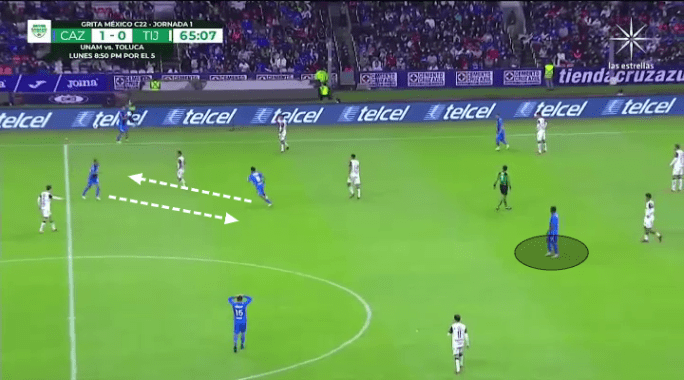
We often look at a player who doesn't defend as a detractor. Players are told from a young age that they must defend, regardless of their position on the field. In many respects, this is true. But when you get to the professional level, roles can evolve in novel ways, and even incorporate a player who has limited defensive responsibility. It was refreshing to see two teams so clearly implementing a tactic around their attack-minded superstars at the 2022 World Cup, simply by having them prioritize the attacking side of the game. With that, I wanted to provide a potential argument into why having this type of tactic can actually be a valuable feature to a team going forward, without ruining their chances in defense.
Tag: Tactical Theory
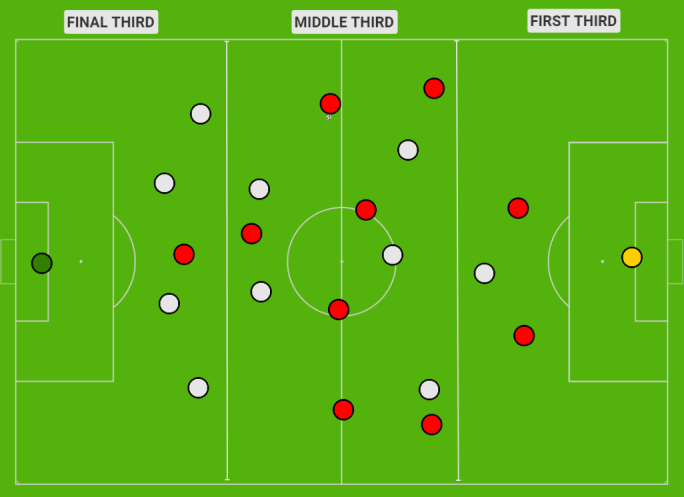
How to organize the defensive line as a goalkeeper
With a wonderful view of the action, goalkeepers must be more than just shot stoppers, and participate actively and vocally in communicating with their mates. They should not be solely responsible for organizing the entire team, but have the ability to do so through the vantage point they have on the field, and often the fearless nature they behold. I've often found that some of the best communicators that I coach are in fact goalkeepers. But before answering the question, let's first discuss whether or not it is actually necessary for the goalkeeper to organize the defensive line.
My top ten articles of 2022
2022 was another record-breaking year for TMS, and a great year of firsts for my work and the site. In 2022, we launched our Role Continuity Evaluation System, a batch of brand new Game Model Ebooks, and our Introduction to Football Analysis Course. This year was also the year that I had multiple clients from inside the professional game as part of my Mentorship Masterclass, which will be transitioning into the Consultation Masterclass in 2023. Along the way, I wrote some of my best work yet, that I can't wait to celebrate with you to close off the year. Here are my ten favourite articles on TMS in 2022.
The half-spaces as a key chance creation channel
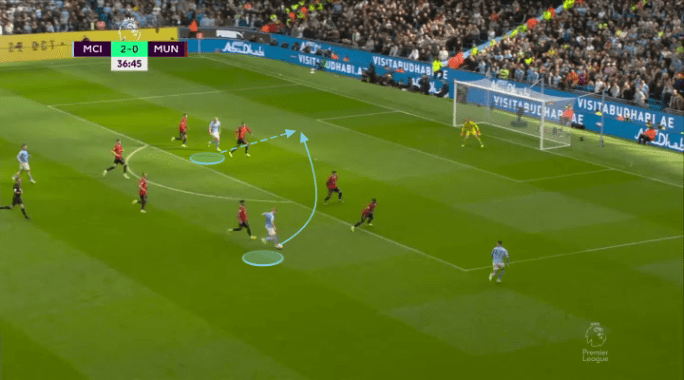
It has long been hypothesized that 'Zone 14' is the holy grail of chance creation. The ideas around this concept were built around a study from the late 1990s that specified that successful teams had a higher frequency of getting into this zone when compared against their peers. Since opposition clubs often compact central channels out of possession, it's logical to reason that teams who are more successful in advancing into one of the most congested areas of the pitch are more successful overall. But while everyone conducting public analysis is busy studying 'Zone 14' (not all that well), the best chance creators are consistently conjuring up magic from a different area of the pitch, due to the desirable outcomes that follow
The multiple layers of Trent Alexander-Arnold
Trent Alexander-Arnold is one of the best right-backs in the world of football, and possibly one of the greatest the Premier League has ever witnessed. So for all the extremities that he accomplishes in attack, it becomes very normal for fan-bases across the globe to try and poke holes in his game and conjure up reasons that go against his greatness.
Why Erling Haaland scores so many goals
Let's not get overly simplistic about this. Erling Haaland is the best footballer in the world at the moment. But how he scores so many goals can be scrutinized in far greater depth than simply saying he's an alien. So with that, here is our latest analysis on the great Erling Haaland, and how he scores so many incredible goals.
The art of dismarking
Dismarking is not that complicated of a process when you really boil it down. Sound movement, corresponding with appropriate timing of decision making on behalf of the players around the situation (such as the player on the ball) will always lead to imbalances in the opposition, particularly if the players scan the field and assess aspects of ball, opposition, teammates and space. With the tips in this article, players can now take their craft to the next level, and become dismarking gurus.