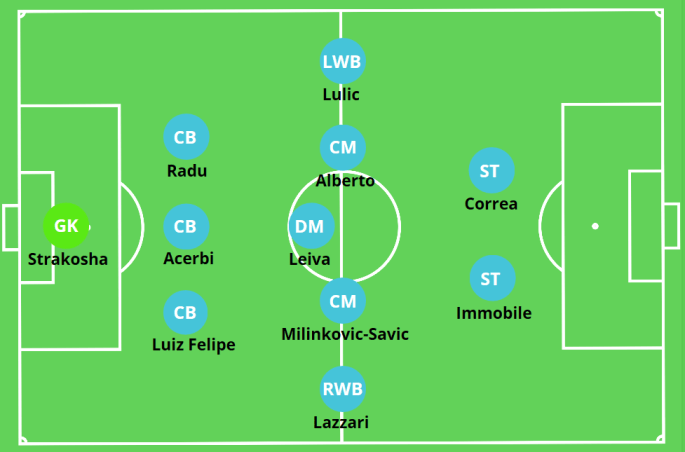
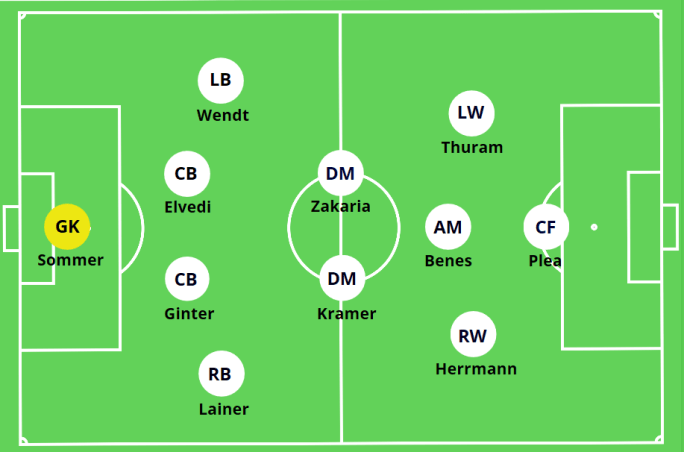
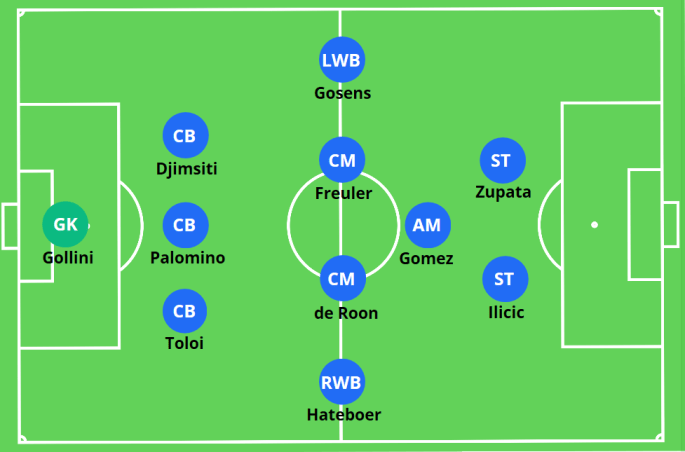
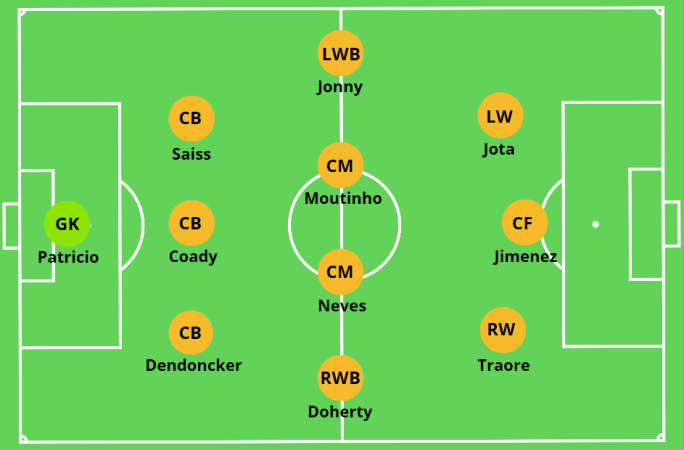
After two successful years with Red Bull Salzburg, German coach Marco Rose made a return to his home country to take on the role as Borussia Monchgengladbach manager for the start of the 2019-20 season. Rose has continued his success with Gladbach so far since taking charge and has only enhanced his reputation as a manager, with 54% of his matches won and his team well within the title race for the first time in years. Under Dieter Hecking, Gladbach had a win percentage of 43%, and played primarily in a 4-4-2 Diamond or 4-3-1-2 shape. Rose has since changed Gladbach's formation to primarily a 4-2-3-1, although has remained tactically flexible to at times deploy back-three formations and the 4-4-2 Diamond / 4-3-1-2 that he deployed at Salzburg. Here is a tactical analysis of Borussia Monchengladbach under Marco Rose.
Category: World Football
Lucien Favre – Borussia Dortmund – Tactical Analysis
The suspension of all football activity has been a unfortunate for Borussia Dortmund as they were on a stunning run of form in the Bundesliga before the break. Favre's newly introduced 3-4-2-1 has changed the way Dortmund play for the better, while simultaneously providing more defensive support, the area of the field in which they needed reassurances the most. The formation has given the likes of Achraf Hakimi and Raphael Guerreiro the freedom to go on and create more magic and has also given Jadon Sancho and Thorgan Hazard a necessary boost at a crucial time in the season. This formation suits the players and personnel that Lucien Favre has at his disposal tremendously well and it will be very interesting to see if they can continue to play to such great heights when the season comes to a conclusion. Check out or Tactical Analysis of Lucien Favre's stellar 3-4-2-1 formation with BVB.
Gian Piero Gasperini – Atalanta – Tactical Analysis (2019-20)
Be sure to check out the updated 2020-21 Atalanta Tactical Analysis. If you had told Gian Piero Gasperini at the start of his reign in charge of Atalanta that he'd make the Black and Blues into one of the most lethal attacking sides in European football within three years, he probably wouldn't have believed you. … Continue reading Gian Piero Gasperini – Atalanta – Tactical Analysis (2019-20)
Chris Wilder – Sheffield United – Tactical Analysis (2019-20 Edition)
Sheffield United have been the surprise package not only in the Premier League in 2019-20, but arguably anywhere in Europe's top five leagues. The recently promoted side went from 2nd place finishers in the 2018-19 EFL Championship to one of the most resilient Premier League sides in 2019-20, currently sitting in 7th place in the table with a game in hand. Chris Wilder meanwhile has gone from a manager virtually unknown, to one of the most celebrated in European football this year. His 3-5-2 system of play has been consistently one of the most well-set-up systems in the Premier League this season and every single player just seems to fit into it like a puzzle that has come together better than anyone could have dreamed of. Here is a tactical analysis of Chris Wilder's robust 3-5-2 formation and style of play with Sheffield United.
Nuno Espirito Santo – Wolves – Tactical Analysis (2019-20 Edition)
Wolves finished last season in 7th place, an admirable finish for a team who had just come up from the EFL Championship. This season they've fared even better and as things stand have a real shot at securing European football for another year. Portuguese manager Nuno Espirito Santo has been absolutely essential to their success since taking over and deserves an immense amount of credit for everything that he has brought to this team since 2017. Despite being in the Premier League for over a season and a half now, Santo has won over 50% of his games as Wolverhampton Wanderers' manager. This is a Tactical Analysis of the wonders of Wolverhampton Wanderers and their manager Nuno Espirito Santo.
Switching Play – Session Plan and Key Coaching Points
The popularity of switching play as a tactical concept has long been a dominating strategy in the world of football. Its popularity is exemplified by the many different forms and names it has taken on over the years such as changing the point of attack or playing across the direct game channels. Even at the younger ages, switching play can be an essential tactic to deploy with any team. Concepts like maintaining width, crossing, and shifting the ball from left to right are universal to the sport, regardless of age.
Attack-Minded Fullbacks – Full Session Plan and Key Coaching Points
All of the best professional teams in the world have attack-minded fullbacks deeply rooted into their system and style of play. The likes of Liverpool have achieved much success with Trent Alexander-Arnold and Andrew Robertson bombing down their respective sides from their positions as fullbacks. Between the two of them, they've assisted 42 goals in the last two Premier League seasons, breaking records left and right as Liverpool have completely dominated the league. But it's not just Liverpool. The growing importance of fullbacks further up the field has been one of the most popular revolutions of the modern game and it is no longer just the very best of the best that deploy these types of players. Defenders at the youth level often see themselves as only defenders. They tend to believe that there is an imaginary line that they simply cannot cross. But this is not the case! Fullbacks can make a massive difference to the attacking prowess of a team and if our youth teams are to achieve greater attacking success, the fullbacks need to be more heavily involved. This session plan provides coaches with an opportunity to start to develop that attacking-mindset in fullbacks.
Restricted vs. Conditioned Games – Coaching Soccer
Many coaches often add restrictions to games. Restrictions like needing to complete three passes before the team can score or players being locked into different zones on the field can be valuable to teaching certain topics to young players. But restrictions need to be used wisely. Instead of restricting behaviours, coaches should look to encourage behaviours and do so more carefully through encouraging something to happen, rather than restricting it. In this article I will outline why restricted games should be more scarcely used, and why the term 'conditioned game' should possibly have a change of meaning to urge coaches to encourage the behaviours of their players in games without restricting their players.