The multiple layers of Trent Alexander-Arnold

Trent Alexander-Arnold is one of the best right-backs in the world of football, and possibly one of the greatest the Premier League has ever witnessed. So for all the extremities that he accomplishes in attack, it becomes very normal for fan-bases across the globe to try and poke holes in his game and conjure up reasons that go against his greatness.

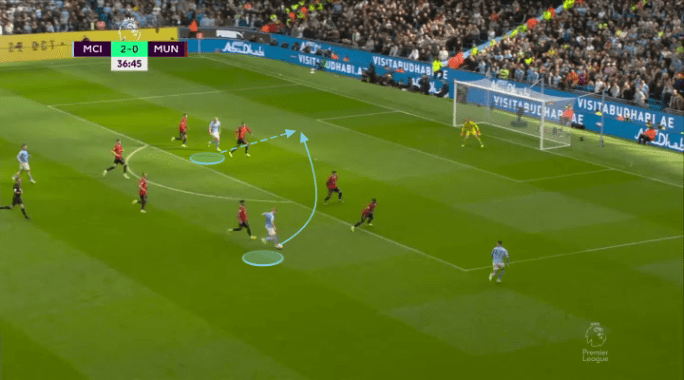
Why Erling Haaland scores so many goals

Let's not get overly simplistic about this. Erling Haaland is the best footballer in the world at the moment. But how he scores so many goals can be scrutinized in far greater depth than simply saying he's an alien. So with that, here is our latest analysis on the great Erling Haaland, and how he scores so many incredible goals.

Explaining the Inverted Winger – Player Role Analysis

Unlike their name might imply, 'Inverted Wingers' are far more than just wingers that cut or drift inside. That is only one small part of an overarching role that prioritizes playmaking in the final third, and dynamically linking play between the other members of the front-line. The best of the art will often post high numbers in goals and assists, but 'Inverted Wingers' need to be so much more than just creative goal-scorers - generally tasked with creating space, rotating with teammates, and moving off the ball to exploit the half-spaces at the right moments.

Finding your fit as a player

Even if a coach has not clearly communicated how they see the player fitting into the grander scheme, any footballer can come to a realization about the type of role they fulfill for their team and how they work as part of the team to achieve success on a grander scale, beyond just the individual facets of their game.

The art of dismarking

Dismarking is not that complicated of a process when you really boil it down. Sound movement, corresponding with appropriate timing of decision making on behalf of the players around the situation (such as the player on the ball) will always lead to imbalances in the opposition, particularly if the players scan the field and assess aspects of ball, opposition, teammates and space. With the tips in this article, players can now take their craft to the next level, and become dismarking gurus.

When to press, and when not to press in football

Pressing has been one of the most commonly discussed topics in the past decade or so of the detailed scrutinization of football. Ideas around gegenpressing, and the high-control philosophies of managers like Guardiola and Klopp allowed pressing to come to prominence for all to see, and induced a belief that pressing must be the only proper way to defend.

Explaining the Creative Ten – Player Role Analysis

When we say 'Creative Ten', I'm sure you immediately conjure up an image of a classical painter of a player, who wonderfully creates art with their passing and incisiveness in the final third. But as has been well documented over the past few years, that type of player does not tend to exist in the modern game. The Mesut Ozil's, David Silva's and Cesc Fabregas's of this world no longer tend to exist as they once did, or play in the same positions that they once held. Nowadays, 'number ten's' must not only be capable contributors in the final third, but highly active in pressing from the front, and contributing to rotations that spread the width of the pitch.

Explaining the Midfield Maestro – Player Role Analysis

As the ball-dominant magic-wand sorcerers in central midfield, 'Midfield Maestros' accomplish feats that few other players would be capable of showcasing to the world. They ooze class every time they touch the ball, always looking dangerous as they dribble, carry or skillfully dance their way around the opposition. But beyond technical precision and pizzazz, 'Midfield Maestros' might be some of the most tactically adept out there, possessing the awareness of space that very few have mastered. Here is our analysis of the Midfield Maestro.