Explaining the Sweeper – Player Role Analysis

The term 'Sweeper' has existed within the game for decades. The traditional usage encourages the contrasting relationship between one centre-back who steps out (the 'Stopper'), and one that sweeps in behind. The modern game has evolved in such a way where centre-backs typically perform both roles simultaneously, and it's rare to find clear-cut examples of 'Sweeper-Stopper' partnerships. In fact, I'd go as far to suggest that they typically exist more in back-threes in the modern game, with one clear-cut 'Stopper' angling higher than an obvious 'Sweeper' cleaning up the messes in behind. This Player Role Analysis is all about the modern day 'Sweepers', as we break down the tasks, functions and over-arching role of a 'Sweeper' in 2022.

Explaining the Stopper – Player Role Analysis

Over the past few decades, centre-backs have only grown in importance to attacking phases and playing out from the back, becoming some of the preeminent quarterbacks for their clubs. But the 'Stopper' is still alive and well, providing an 'old-school', throwback approach to defending that relishes the physical side of the game. Every team must find the balance in their defensive unit, and sometimes that may mean deploying a rock-solid, proactive defender that can win possession higher up the pitch. It's not the prettiest of roles, but when played correctly, 'Stoppers' can be absolutely imperative to a team's success.

Bethany Balcer – Player Analysis

Out of all the 'Target Women' around, Bethany Balcer might be one of the very best in the modern game. Frequently used as an outlet for progressive passes, Balcer's back-to-goal incisiveness remains a threatening endeavour for her team, and one that is frequently useful in advancing OL Reign up the pitch. But now, after the arrival of Jordyn Huitema, Balcer's even upped her scoring game, ensuring Huitema has very little room to work with in stealing a spot in the squad at the start of her Reign career. Here is an analysis of Bethany Balcer's exceptional hold-up play, and the vast array of traits that make her one of the best forwards in the NWSL.

Game Model Example: 3-5-2

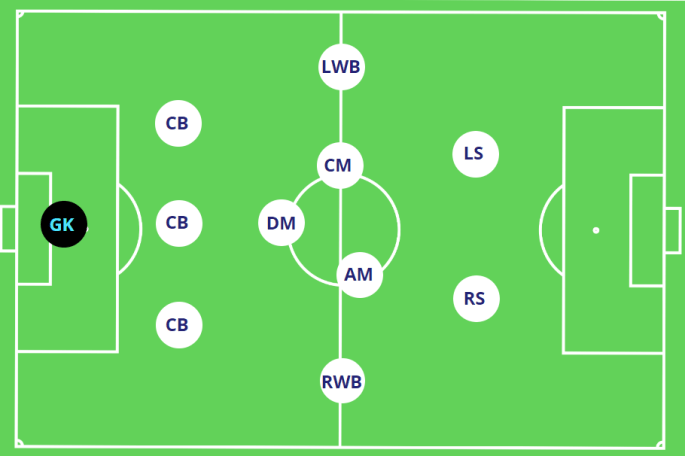
Struggling to know where to start when it comes to creating your own game model? Well look no further than TheMastermindSite.com, where we're bringing you game model examples in each of the game's most popular formations. These game model examples are exactly as the name suggests - resources for you to rock on and create your own game model. This specific 3-5-2 game model showcases the style of play and key player characteristics that Rhyspect FC would emphasize in each phase of the game. To see a preview of the game model, click the download preview button below. To purchase the game model, click the 'Purchase' button below.

Why the technical, tactical, physical and psychological sides of football are deeply intertwined

The game is deeply rooted in all five aspects of the common coaching model, and in fact, every decision a player makes boils down to all five elements simultaneously. Here's why the technical, tactical, physical and psychological aspects of football are all deeply intertwined.

Understanding ball, opposition, teammates and space

Nothing can exist in football without perceptions of ball, opposition, teammates and space (BOTS for short if you want!). While there may never be one unequivocally correct answer to any given footballing problem, players can more adequately assess for decision making through muscle memory, experience, automatisms, sheer intelligence, and studying the tips in this article. But those same players, analysts and coaches must also recognize the deeply-rooted tandem bike quadracycle nature of the four elements of the game, and how they all co-exist to work in harmony.

The difference between seeing and understanding in analysis

When it comes to analysis, it's no secret that the goal is to think on a deeper level, scrutinizing over the finer minutia beyond what you see at first glance. But it's also no secret that this skill takes dedicated time and energy to learn. A lack of deep tactical understanding about the game often comes at a cost to coaches and amateur analysts. They are adequately able to perceive events on a football pitch, but they may be unsure of how to change what they are seeing for the better, or even fully comprehend what they are seeing to the level required. Coaches in my Mentorship Program often ask me - "How do you go from seeing to understanding?" Well that, my friends, is what we're after today. In this series of notes, I'm going to give you a series of images and videos, where you can go from seeing, to understanding. If you've been doing analysis for years, no worries, this will still be an excellent way for you to practice and refine your skills.

Explaining the Ball-Playing-Centre-Half – Player Role Analysis

As the name suggests, a 'Ball-Playing-Centre-Half' is a centre-back that excels in possession of the ball, from passing to long passing to carrying to dribbling. They can simultaneously exist as 'Sweepers' or 'Stoppers', providing another interesting asterisk to the role not found in many other positions. Unlike say a fullback or goalkeeper where we have created clearly defined separations and almost polarizations on a style scale, 'Ball-Playing-Centre-Halves' can also be 'Stoppers' or 'Sweepers'.