

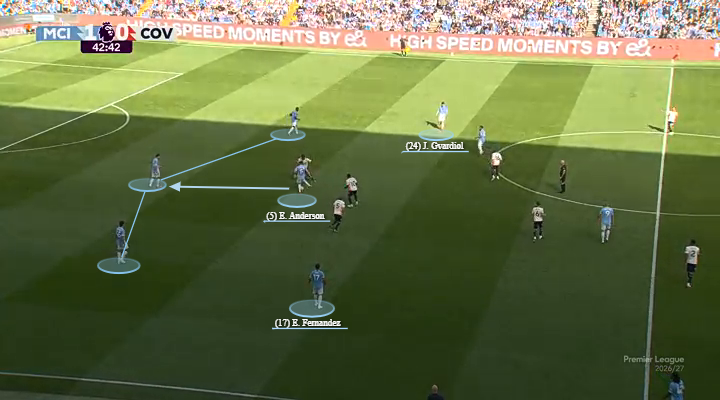
Just over four years ago, I wrote How I watch football matches for tactical analyses. Since then, I’ve done a significant amount of work for professional clubs, coaches, and players. Much of my approach has stayed the same, but as time evolves, so does knowledge, expertise and systems. So I thought now seemed like as good of a time as any to detail what’s changed and evolved over the last four years.
Here is how I watch football matches for my tactical analyses, and how you can too!
STEP 1: CHOOSE A THEME

Whenever you’re sitting down to watch a football match, or even just clips, know exactly what you want to see. Are you analyzing a specific player? If so, what are you looking for?
If it’s a team, what do you want to see? Their build-up patterns? Their pressing structures? How their shape changes in and out of possession? Make a mental (or physical!) list of the things you might want to know. Now when you go to watch, you will know exactly what you’re looking for.
Once you have that theme, remember to focus on three key things:
1. WHAT IS HAPPENING OFF THE BALL?
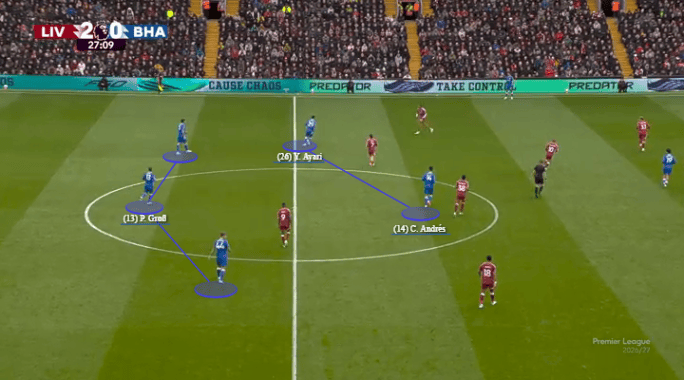
Don’t follow the ball. Scan for what’s happening around and off the ball. What are the shapes and structures? What are the movement patterns? Who is engaged? Who is disengaged? How does this relate to the opposition? Why might the team be doing these things? These are just some of the questions you can ask when you shift your focus away from the ball.
2. FOCUS ON ONE TEAM ONLY
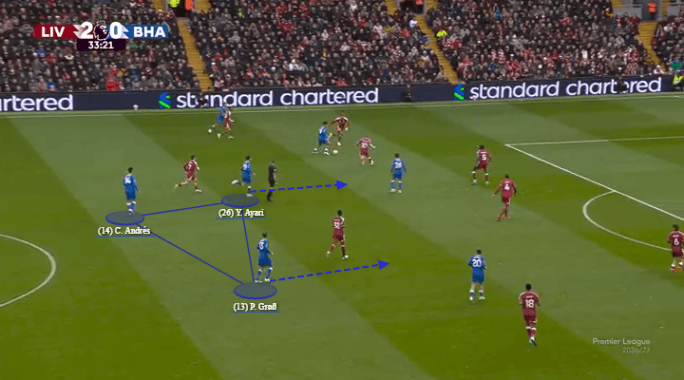
Unless you’re doing a specific match analysis studying both teams, choose just one team to explore. If they lose, write about how they lost. If they win, write about how they won. If it’s about a specific team in a specific setting, even better. If it’s about a specific player on a specific team, make sure to work in the context of how all their teammates support their endeavours.
But you can’t possibly try to pay attention to everything. So get super specific about what you’re looking for, and look for as many examples of that thing as possible.
3. PUT YOUR THOUGHTS INTO CONTEXT
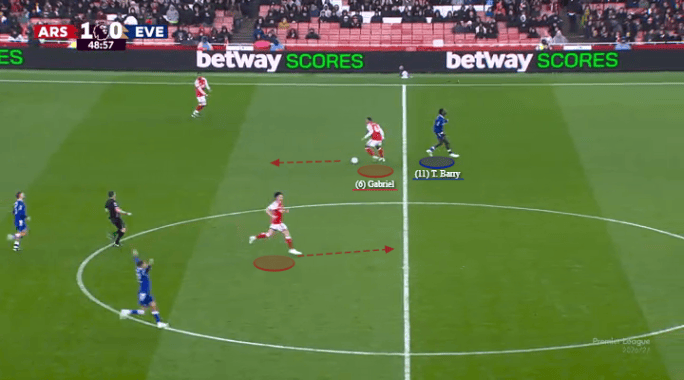
Before going any further, you must first understand one key thing: How a team plays in their own third of the pitch (in their build-up) is very different from how they create chances in the final third. How a team defends from the front is very different from how the team defends close to their goal.
You know this inherently. But many people still get this wrong when they’re analyzing the sport.
They’ll say things like “Chelsea defended in a 3-4-2-1”. But that might only occur in their highest, most intense pressing moments. Closer to their own goal, it might be a 5-2-3, a 5-4-1, or highly dependent on man to man marking – without a clear and consistent shape or structure. So you always need that context. Where is this taking place? That matters.
Once you fully understand this discrepancy, everything will make more sense.
STEP 2: TAKE DETAILED NOTES

The mistake that most people make when analyzing football is that they neglect to take any notes. Taking notes will not only help you remember what’s most important, but help you gather more information and stay focused on the task at hand.
When taking notes, remember to scan for what’s happening off the ball, and provide the context of what phase / third of the pitch you’re describing.
You want the “who”, you want the “where”, you definitely want the “what”, and if you have the time – think about the “why”. Who is involved with what? Where/when are they involved? And why are they doing this?
Don’t try to take notes on everything that happens. Take notes on what is most important to you. Wait for the ball to go out of play, and then jot down those thoughts.
Further, to make it seamless and quick, short-form everything in a way that makes sense to you. Here’s a translation from my most recent note to the actual meaning.
– 2 MFs never on the same line OFB.
– The note
– CB’s attract pressure? Jump line OFB. Then step from FBs or CMs to rec. 3-man pass.
– The two midfielders will never receive the ball on the same line out from the back. They will stagger their movement and positioning for the purpose of receiving third-man passes and passes in between the lines.
– The actual meaning
– If the centre-backs attract pressure toward them, they will bypass the central midfielders entirely, and play passes directly toward players further ahead. Then the full-backs or central midfielders must step up to receive the third-man pass.
I’m sure you can guess which one took less time to write, so that I could focus on the match as it played. (Bonus points if you can guess the team this is about.)
I get it. Not everyone’s a note-taker. Not everyone’s a writer. Some of you are doing this for YouTube, podcasts, or other forms of media. But I’d encourage everyone who wants to watch football with a more analytical eye to take detailed notes. Otherwise, how are you going to remember what felt important at the time?
3. GATHER YOUR CLIPS AND EVIDENCE

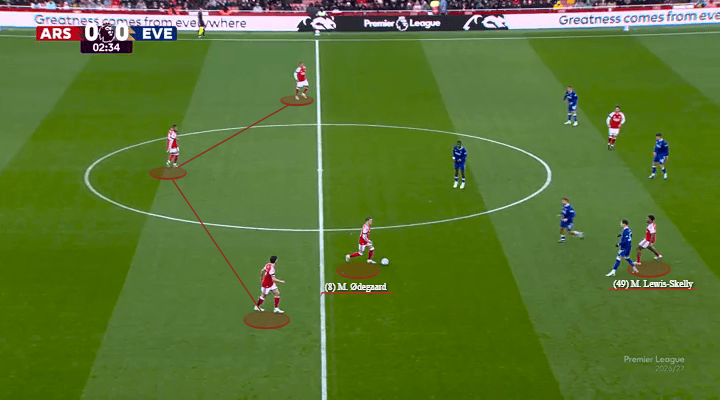

Now that you have all your notes, you can gather all of your clips and evidence to support your thoughts. This is one of the reasons why timestamping is important, allowing you to seamlessly find the exact moments that stood out to you.
For my purposes, I use a range of resources to compile my thoughts together, and illustrate them for the audience. First, I use Wyscout. I like using Wyscout because I can quickly scan for what I want to see, and then clip and telestrate beautifully through the platform.
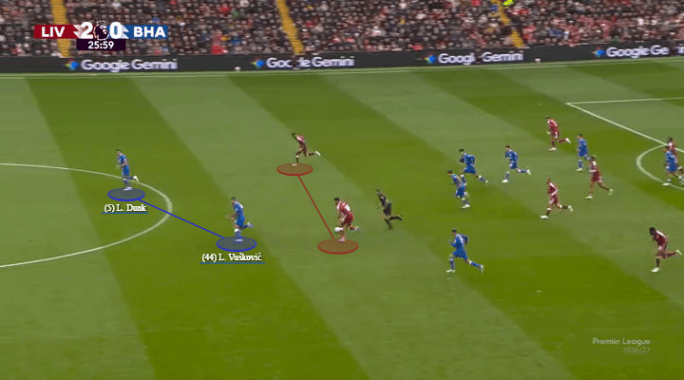
I have more detailed explanations of Wyscout and how I use it in my football analysis course.
Wyscout is the most expensive football platform on earth, and totally not affordable for just anyone doing this. So instead, what you will often need to rely on is highlight videos on YouTube.
Look for ‘Extended Highlights’ of the match you want to see. Next, you’re going to screenshot a moment. Then you can telestrate your image (arrows, circles, diagrams, etc.) using something like Microsoft Powerpoint or Google Slides.
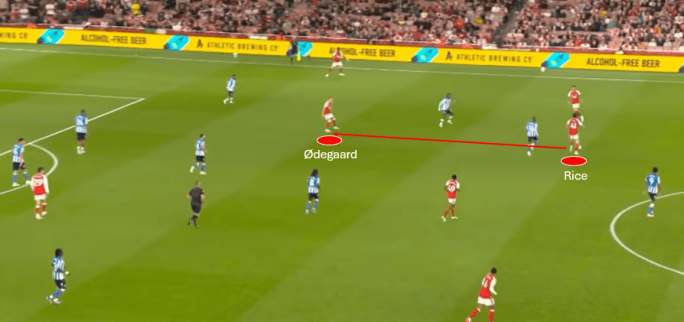
That’s it. It’s really that simple. As far as copyright goes, this is fair use for educational purposes. If you’re doubly concerned, you can also create images using ‘training platform’ tools like Planet Training. This is an example of an image I created before I had the funds for Wyscout.
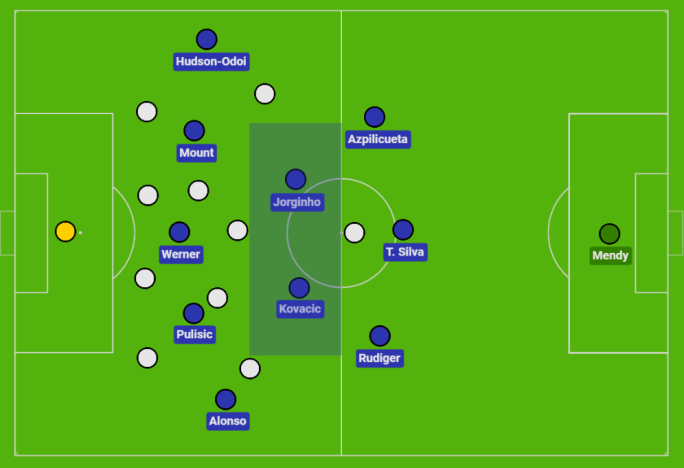
You get the picture.
Again, for a more detailed description of how to do all of this, I outline how to use different platforms like this in my course.
For now, know that you want to gather a variety of examples. This might include screenshots from the match(es), but also statistics from sites like FotMob or SofaScore (two of my favourites), heatmaps, and other diagrams or graphs you create. Here’s an example of a graph I created earlier this year using Microsoft Excel.
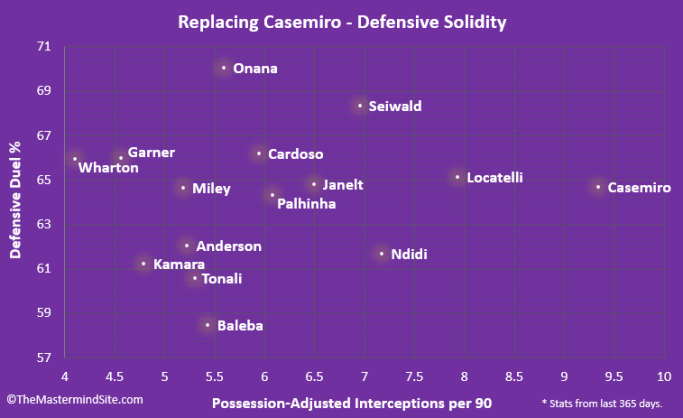
No wonder United couldn’t replace Casemiro. He’s a defensive outlier!
Filling in some of those gaps, Getty Images‘ embeds also work great for print material. They allow you to directly embed images onto your site, since clicking on the image links back to them. Like this:
Embed from Getty ImagesFor concrete examples of how I incorporate different types of images and ‘evidence’ into my work, see an article like: The new Martin Ødegaard is the Premier League’s best player. All of those images were created with Powerpoint, proving that anyone can do this at a low cost if they have the drive to do it.
Whatever you do, just make sure to get two things right:
1. ALIGN THE COLOURS
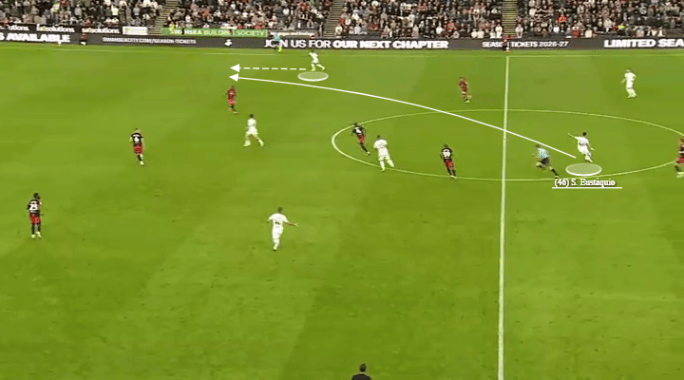
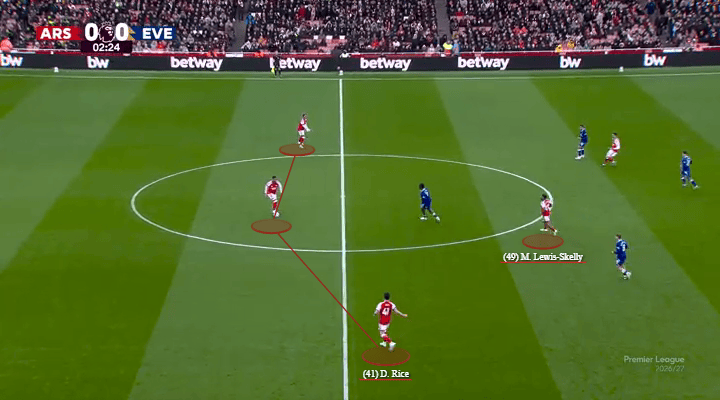
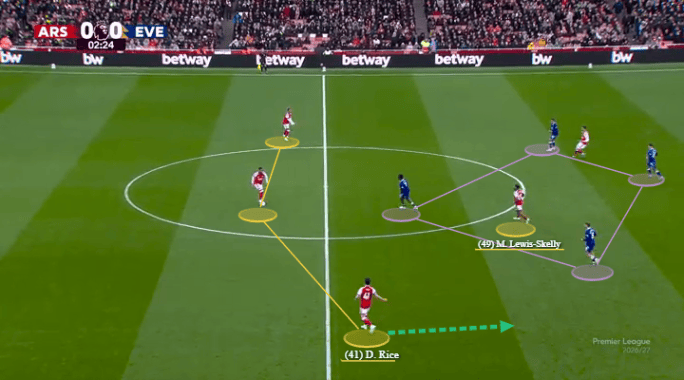
If Arsenal play in red and white, make your telestrations red or white. Don’t make them yellow. Don’t make them black. It’s not rocket science. But I see work all over the place that gets this part wrong.
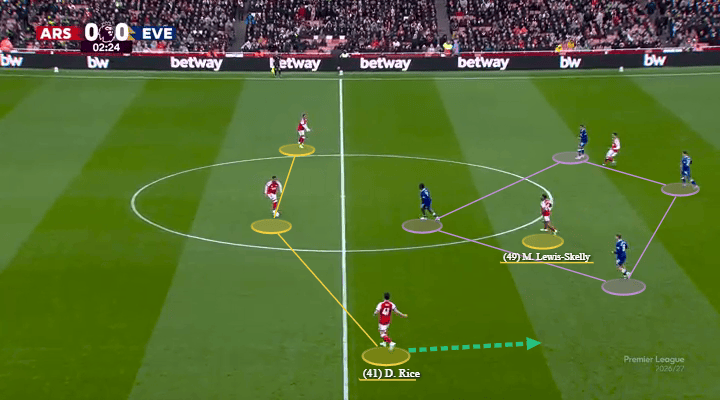
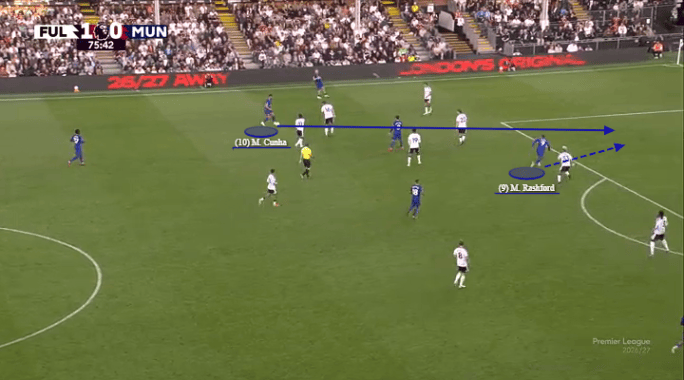
Let me ask you plainly: which image looks better? Which one would be easier for an audience to grasp immediately, without even needing to hear you describe your point?
2. DON’T OVERLOAD WITH INFORMATION
If we compare the first example to the second, you can clearly see that I’m talking about how Arsenal build out from the back. You may have also noticed that I only highlighted the names of Rice and Lewis-Skelly. I’m specifically talking about those two midfielders and their role in that process.
But what I often see is an image that overloads the viewer with far too much information. The second image includes a diamond shape attached to the Chelsea players, everyone in the wrong colours, and an arrow so big that it’s the first thing you see.
Genuinely, this is my greatest pet peeve when reading online analysis work elsewhere. An image with a few arrows and highlights allows the viewer to know exactly what you’re talking about. Don’t put in massive arrows pointing in every direction. Don’t highlight too much. Highlight the most important parts.
So next time you’re watching football and trying to analyze every moment, slow down and simplify it for yourself. Don’t try to do too much. Instead, remember these tips for advice, and reach out to me if you need help. Thanks for reading and see you soon!
YOU MIGHT ALSO ENJOY…
How rest-defense continues to evolve in the modern game
Rest-defense continues to evolve with the best teams in the modern game. It’s become so much more than just what happens behind the ball. It’s also much to do with the structures and shapes teams use at the very back-end of their possession in the attacking half. As you will see, “resting” players aren’t really…

How to coach pressing & the five most common pressing triggers
Pressing was all the rage from the late 2010’s to the early 2020’s. Some of the most successful teams across that period played a “high-pressing” game, including Liverpool, Borussia Dortmund and Bayern Munich. But today, press and possess styles of play have started to die out. Brighton have been the best example of a team…

Bruno Fernandes isn’t helping
This season, the Portuguese playmaker has been underwhelming to say the least. On paper, Bruno’s start to the season looks okay. He’s scored 3 goals with 1 assist inside those 7 matches, and he’s still producing a high output when it comes to things like line-breaking passes, accurate long passes, and shots. Unfortunately, stats like…

This article makes reference to my Introduction to Football Analysis – Online Course. Consider supporting the site and getting the chance to have my feedback as you work through these topics through the course.
See the entire course curriculum here:
Introduction to Football Analysis – Online Course with Rhys Desmond
Discover more from TheMastermindSite
Subscribe to get the latest posts sent to your email.

