

In 2022, I established my ‘Role Continuity Evaluation System’, on the basis that players should be assessed by the metrics and traits important to their specific role on the pitch. Through this understanding, players are then classified into what is now 20 different roles, and assessed accordingly to see how they stack up to other players fulfilling the same player type. Here is an explanation of my scouting & analysis system, why I’ve coined it ‘Role Continuity’, and how I use the system to analyze centre-backs.
WHAT ARE YOU TALKING ABOUT, RHYS?
Embed from Getty ImagesRole Continuity might sound like a term from organizational psychology, but it’s actually taken from personality psychology. The theory is that personalities are formed not through the physical environments in which we live, but through the various roles we take up in society within our environments. The tasks that we do everyday become a major part of our identities, and even shape our personalities that we present to the world.
Embed from Getty ImagesTaking this over to a sporting context, the idea is that player traits, identities, and even “personalities” are formed through the roles they take up on the field of play for their teams. They develop those traits from being put into positions and roles to repeatedly harness them.
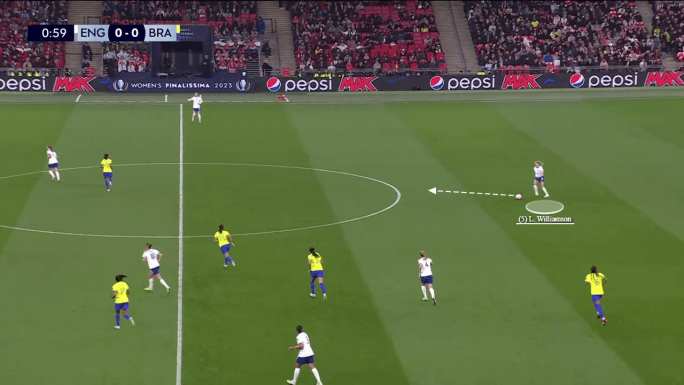
Further, when assessing these players and their actions on a pitch, we should not do what the free statistical websites do (I love many of these sites, don’t get me wrong!). A centre-back should not be expected to perform the same actions as a striker. Their performance in a match (or over the course of a season for that matter) should not be assessed in the same way as a central midfielder. Instead, we should be assessing their metrics and performance based on what is actually important to them and their role.
Embed from Getty ImagesSo how do we then put players in specific roles, when a player’s role might change over time?
Through ‘role continuity’. Through what roles they frequently adopt for their team over time. Since we have metrics that are important to each role, this can be assessed both through data, and the eye test. The goal is then to provide quality analysis and in-depth player assessments that adequately cover the vast array of different tasks that they are to fulfill within their job description. Those ‘job descriptions’ have been formed via what players in those roles have been asked to do over time, and their repeated perpetuation of reaching higher on certain statistics over others.
Embed from Getty ImagesIn this series, I’ll be breaking down how I analyze and compare players within each of the twenty roles. This article is all about the discrepancies between the different centre-backs in our player role system.
HOW I ANALYZE/COMPARE CENTRE-BACKS
Embed from Getty ImagesCentre-backs are broken down into two categories:
This is a slight modification from the 2022 articles, that had ‘Physical Centre-Backs’ broken up into the old-timey terms: Sweeper & Stopper. I never loved this separation, because most central defenders in the modern game prioritize an ability to either play short passes out from the back, or spread long passes from deep. Most have tendencies to be that ‘Ball-Playing Centre-Half’. Having it then be separated into two more roles wasn’t leaving much to work with. So we’re lumping the remaining Centre-Backs, those that prioritize the defensive side of the game, into the ‘Physical’ persona.
Embed from Getty ImagesI still like the terms ‘Sweeper’ and ‘Stopper’ and think that they are useful in separating what kind of ‘Physical Centre-Back’ a player might be. Are they more likely to cover ground in behind the defensive line, or actively step out of line to make challenges higher up the pitch?
Embed from Getty ImagesMany defensive partnerships are still built on the basis that you have a balance between a ‘Stopper’ (like Millie Bright), and a ‘Sweeper’ (like Leah Williamson or Alex Greenwood). But all three of these players are actually more important for what they accomplish on the ball. They are all within that ‘BPCH’ category.
Embed from Getty ImagesTeams that need to prioritize the defensive side of the game often have no choice but to prioritize physical centre-backs, like Sean Dyche’s reliance on James Tarkowski at both Burnley and Everton. Tarkowski’s still a decent long passer of the ball, but he’s more important for what he gives on the defensive end. His role is to knock the striker about and use his imposing physicality to keep attackers away from goal.
Embed from Getty ImagesMany possession-based teams still want that ‘physical’ presence in their back-line, especially if their ball-playing centre-back lacks pace and power. Or even if that more ‘physical’ player possesses a fantastic ability to progress the ball, they might still hold more of an emphasis on their defensive capabilities to bring out the best in players who are even better with the ball at their feet.
Embed from Getty ImagesTo some extent, this is what we’ve seen with Liverpool’s use of the imposing Ibrahima Konaté, operating alongside players like Trent and Virgil Van Dijk, who hold more importance in possession.
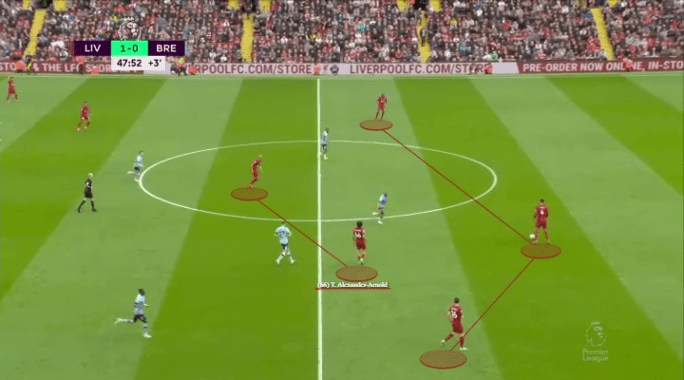
In figuring out who classifies where, we are primarily looking at a player’s possession statistics. This might include total passes and carries to assess just how active they are in-possession, but also the success of those actions. We’re also assessing just how active they are on the defensive end, including the number of defensive actions, defensive duels, and the success of those actions.
Embed from Getty ImagesWhile there are usually thresholds players should meet on either end of the spectrum (e.g. a certain number of passes, a certain passing %, or a certain number of defensive actions), the eye test becomes quite important in making distinctions. I’m sure we could all agree that Mats Hummels is a ‘Ball-Playing Centre-Back’. Those that only watched Hummels at the Euros a couple of years back think he’s rubbish when it comes to physicality aspects like speed and strength. But what if I told you he’s still more than capable covering ground in behind a defensive line, reading the game, and making significantly more defensive actions than most players in the ‘BPCH’ category. At 38 years-old, Thiago Silva is similar. His possession-adjusted defensive metrics are off the charts.
Embed from Getty ImagesBut again, we all know what these players bring to their teams in possession, specifically their ability to pick out nice looping long passes. That’s where their priority lies, especially with both still playing in possession-based teams. This is where just about any player that excels in possession will qualify. But this doesn’t mean our ‘Physical Centre-Backs’ can’t handle their own on the ball. James Tarkowski for example has completed close to 87% of his passes across the last year. Christian Romero will head anything in his wake, but he’ll also complete close to 90% of his passes.
Embed from Getty ImagesIt’s just an important part of the game for centre-backs to be confident and comfortable on the ball. We have to then identify which role they prioritize within their play, and where they would be more likely to make a difference at a new club. But those in the ‘BPCH’ category will rank higher if they’re more successful in defensive phases, and vice versa.
Embed from Getty ImagesOne final note on this front pertains to what we discussed with our fullbacks.
RELATED: How I analyze fullbacks for pro clubs with Role Continuity
As back-three builds become so common, many teams operate with what is actually a centre-back at fullback. Pep Guardiola has been the one to receive all the claim for this invention and innovation, but it’s been going on for years as teams strike a balance within their teams. Bayern’s use of Benjamin Pavard is one such example, as he’s made a name for himself as one of the best right-backs in the world, despite not really being a right-back.
Embed from Getty ImagesFor now, these players are classified as fullbacks, with that being the role they hold out of possession. If they split equal time between that fullback role and centre-back like Nathan Aké, we then identify where they spend the most time. But players in our system can have up to two ‘Player Roles’, ensuring that we don’t miss any potential options for clubs. If scouting Aké for a pro club, we’d include him both in the comparisons to other ‘Inverted/Defensive Fullbacks’ and ‘Ball-Playing Centre-Halves’.
Embed from Getty ImagesSince we only have two prototypes for this position, we can include most central defenders in both the ‘Physical Centre-Back’ data, and the ‘BPCH’ data. We can allow clubs to see how each player would perform if they were to fulfill the need for a physical presence at the back, and how they would perform if they were to fulfill more of that ‘quarterback’ responsibility out from the back. Dan Nimick has quickly become one of my favourite defenders in the Canadian Premier League, and he excellently combines both the physicality to defend 1v1, and the expertise at spreading play long.
If a player were to solely prioritize possession or exclusively provide physicality, we wouldn’t include them in both. But again, that’s rare given the modern trends of the game.
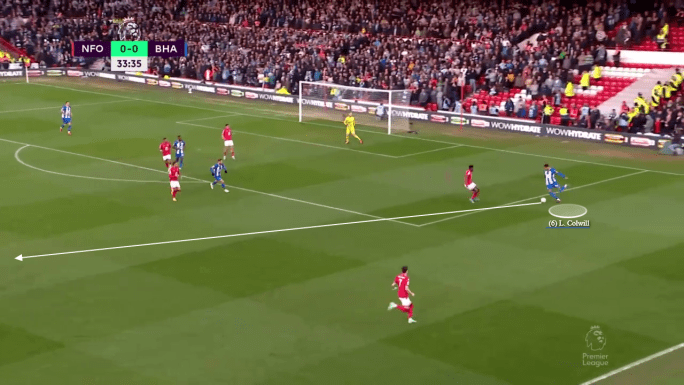
Success of the team and difficulty of league is also measured in the equation when ranking players, to give a more complete insight into a player’s likelihood for success. These scores demonstrate which players have accumulated success at a high level in a successful team, making them more valuable to a potential suitor.
Embed from Getty ImagesIf you’re interested in the specific metrics used for centre-backs in our analyses/player comparisons, simply reach out. We work with pro clubs to establish comprehensive scouting databases based on their ideal prototypes for each role.
CLUBS – SCOUTING DATABASES
We work with clubs through a linkage between data and video analysis, assessing potential prospects around the club’s specific principles of play and needs. In doing so, we create comprehensive databases that continuously allow clubs to identify players that suit their needs, and strategically plan for the future. To discuss what this would entail for your club, reach out.
Now of course, data is not the end point. Players are then assessed through the eye test and video analysis, where player reports can be created for the club. This is the most essential phase of the scouting process. I’ll be providing a few articles about how I use Wyscout and their video clips for my analyses and player comparisons, and how I use the eye test to compare the exact same features I scan for in statistical analyses.
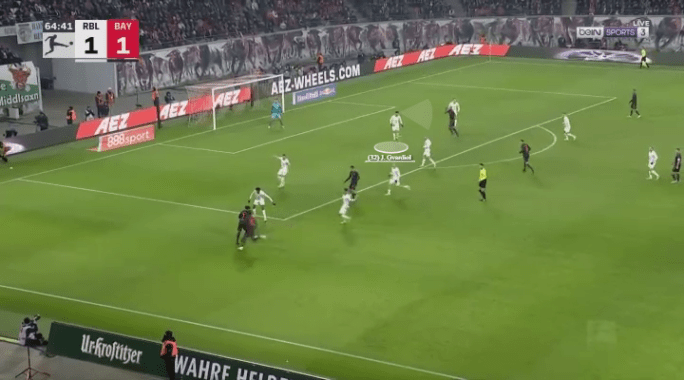
I’ll also be breaking down how I analyze players in all of my player roles in the next few weeks. In the meantime, you can check out a few examples of our ‘Role Continuity Evaluation System’ in action. Thanks for reading and see you soon!
-> Canadian Premier League – Player Power Rankings
-> Explaining the Ball-Playing-Centre-Half – Player Role Analysis
-> Explaining the Sweeper – Player Role Analysis
-> Explaining the Stopper – Player Role Analysis
YOU MIGHT ALSO ENJOY…

Sebastian Berhalter has become the Whitecaps’ most important player
With his all-around quality, it’s abundantly clear. Sebastian Berhalter is the Whitecaps’ most important player right now. His performance against Portland was one of the finest individual performances of any player so far this season, and continues to help cement the ‘Caps as one of the most cutthroat teams in the league.


Benjamin Šeško is United’s best striker in years
With four goals in his last five matches, Šeško earned himself the Premier League’s Player of the Month award for February. This, in just 85 minutes of making an impact off the bench. If he can continue to grow from here, the 22-year-old will almost certainly stake his claim as United’s best striker in years.

Casemiro is leaving, and United still can’t replace him
Casemiro’s been one of the best players in each of Carrick’s matches in charge. In fact, he’s been almost too good. Sunday’s match against Fulham exposed exactly what United will miss when he departs, and why he might be someone they simply can’t afford to lose, even if they must.
At home to Fulham, Casemiro…
Discover more from TheMastermindSite
Subscribe to get the latest posts sent to your email.
 TheMastermindSite