When conducting analysis in any setting, it's important to ensure a balance is met, in every sense of the word. That includes considering and dissecting more than just the in-possession moments, and what the camera wants you to see on first glance. That includes considering both the positives and the areas of improvement, whilst keeping feedback constructive and actionable. It's difficult for an analyst to achieve all of the necessary components of an outstanding analysis in one big bundle, but balance must be met regardless of time or place as part of that package.
Tag: Masterclasses
Recognizing and playing to your teammates’ strengths in football
Each situation in football is unique, and that means every player must endeavour to scan the field at every turn, allowing for appropriate adjustments to each specific situation in the quest to properly perform the next action. But beyond the act of scanning the field, players must have a keen understanding of their own teammates' strengths and weaknesses.
Improving your tactical understanding as a player
Historically, we've tailored our content toward coaches and fans of the beautiful game, attempting to use our content for practical application in the game. But more and more we find ourselves interacting with players wanting to take their tactical understanding to the next level. On the one hand, it's amazing to see players taking initiative, and recognizing the intertwined nature of the tactical side to superiority in all other "corners" of the game. But simultaneously, this points to somewhat of a hole in coaching practice and common dogmas, where the technical and physical components are still prioritized, without enough regard for the tactical elements of football. Here is how to improve your tactical understanding as a player.
Understanding ball, opposition, teammates and space
Nothing can exist in football without perceptions of ball, opposition, teammates and space (BOTS for short if you want!). While there may never be one unequivocally correct answer to any given footballing problem, players can more adequately assess for decision making through muscle memory, experience, automatisms, sheer intelligence, and studying the tips in this article. But those same players, analysts and coaches must also recognize the deeply-rooted tandem bike quadracycle nature of the four elements of the game, and how they all co-exist to work in harmony.
The difference between seeing and understanding in analysis
When it comes to analysis, it's no secret that the goal is to think on a deeper level, scrutinizing over the finer minutia beyond what you see at first glance. But it's also no secret that this skill takes dedicated time and energy to learn. A lack of deep tactical understanding about the game often comes at a cost to coaches and amateur analysts. They are adequately able to perceive events on a football pitch, but they may be unsure of how to change what they are seeing for the better, or even fully comprehend what they are seeing to the level required. Coaches in my Mentorship Program often ask me - "How do you go from seeing to understanding?" Well that, my friends, is what we're after today. In this series of notes, I'm going to give you a series of images and videos, where you can go from seeing, to understanding. If you've been doing analysis for years, no worries, this will still be an excellent way for you to practice and refine your skills.
Goalkeepers in the build-up – a new meaning to the ‘Sweeper Keeper’
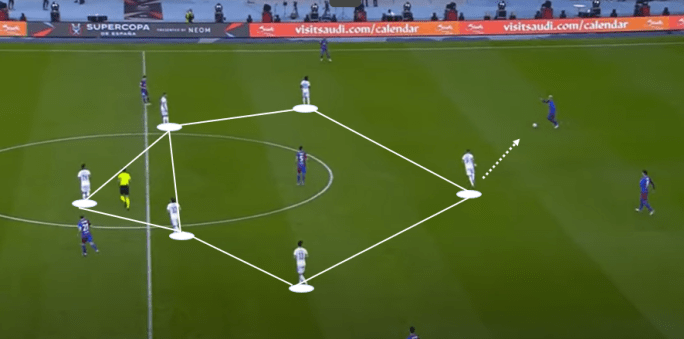
The role of the goalkeeper continues to evolve in the modern game, with keepers becoming better with their feet by the year. Not only are goalkeepers now a crucial part of their team's build-up structures, but they're coming higher and higher out of their penalty areas to contribute. We recently discussed how Robert Sanchez often joins the Brighton defense as an auxiliary centre-back when the Seagulls play out from the back. But Sanchez is not alone in the art. The likes of Alisson, Ederson and Manuel Neuer all perform a similar function for their teams, adding another number by which their team can shift the ball around and make the opposition sweat. But why exactly is this happening and what are the advantages? Let's explore.
How to beat a low-block like Antonio Conte’s Spurs
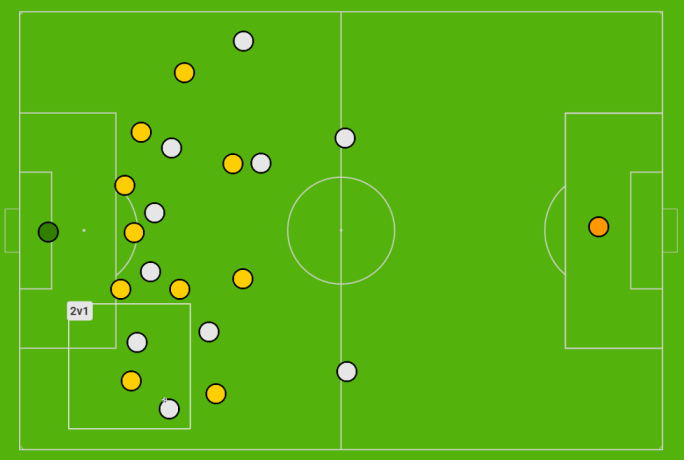
Antonio Conte's Spurs, as expected, have gotten off to a flying start. Conte's team have gone unbeaten in their eight Premier League matches so far, playing some fantastic, easy on the eye football in the process. The variety in their attacking play has helped the team to 14 goals in 8 matches, with just 5 conceded in the process. In our recent analysis of Conte's team, we posited that the team only had one key dilemma to solve - what to do against low-blocks who want to sit very deep against them. As opposition teams sort Tottenham out, Conte's quest to combat the low-block appears to be growing all the more difficult by the match. They failed to claim victory against 10-man Southampton earlier in the week, and yesterday had to wait until stoppage time for Davinson Sanchez's winner. So with that, we take a quick look at how teams like Antonio Conte's can disrupt a low-block and generate scoring chances, taking examples from Spurs' own 1-0 victory against Watford at the weekend.
How to make football graphics with Planet Training
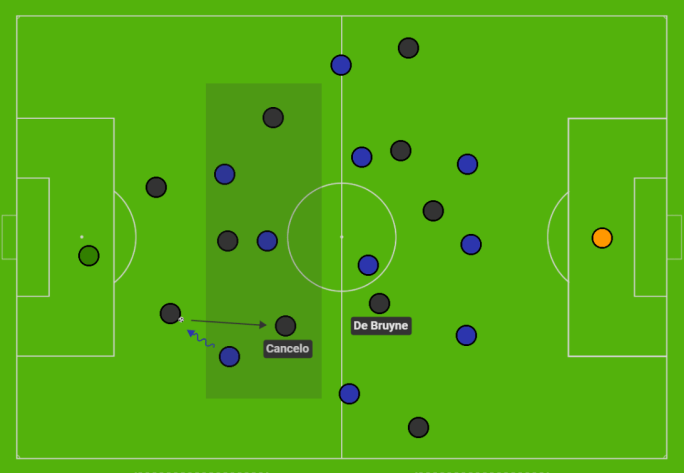
As football content creators, we want to create stunning images that resonate with our viewers and stand out on the page. One of the best websites that allows us to do so is Planet Training, a tool that is more typically used for coaches and club directors to design session plans and club curriculums. Here is a video all about how to make stunning graphics using Planet Training, whatever your purpose.