Throughout his prestigious career, Jorginho has forever been criminally underrated. When moving to Chelsea under the influence of Maurizio Sarri, Jorginho repeatedly became the subject of media conversation over his role in not providing the same defensive gusto as N'Golo Kante, even though he was never meant to. The conversation sparked a new role for Kante that he still plays in to this day, where the Italian midfielder continues to operate as a quintessential 'Deep-Lying Playmaker' (DLP) for the team. Not only that, but it helped to reshape and restructure the conversation about defensive midfielders in the modern game, and the importance of finding players that fit together within a functional midfield unit. Chelsea have done a lot right over the past few years, but the balance they've struck in midfield between Kante, Jorginho and Kovacic has been one of the key highlights.

Tag: Data Analysis
Explaining the Sweeper – Player Role Analysis
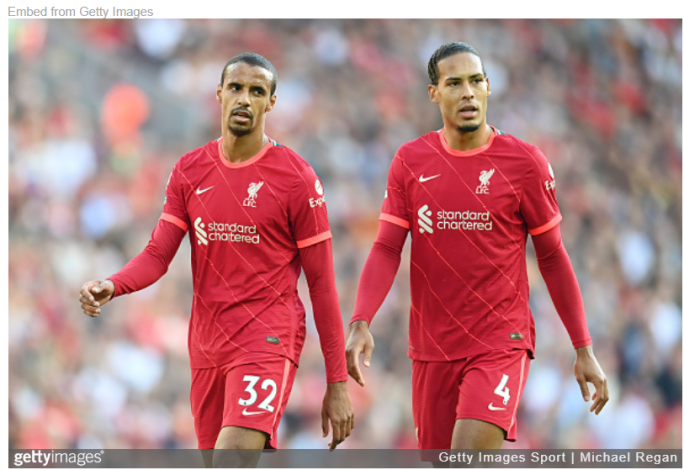
The term 'Sweeper' has existed within the game for decades. The traditional usage encourages the contrasting relationship between one centre-back who steps out (the 'Stopper'), and one that sweeps in behind. The modern game has evolved in such a way where centre-backs typically perform both roles simultaneously, and it's rare to find clear-cut examples of 'Sweeper-Stopper' partnerships. In fact, I'd go as far to suggest that they typically exist more in back-threes in the modern game, with one clear-cut 'Stopper' angling higher than an obvious 'Sweeper' cleaning up the messes in behind. This Player Role Analysis is all about the modern day 'Sweepers', as we break down the tasks, functions and over-arching role of a 'Sweeper' in 2022.
Explaining the Stopper – Player Role Analysis
Over the past few decades, centre-backs have only grown in importance to attacking phases and playing out from the back, becoming some of the preeminent quarterbacks for their clubs. But the 'Stopper' is still alive and well, providing an 'old-school', throwback approach to defending that relishes the physical side of the game. Every team must find the balance in their defensive unit, and sometimes that may mean deploying a rock-solid, proactive defender that can win possession higher up the pitch. It's not the prettiest of roles, but when played correctly, 'Stoppers' can be absolutely imperative to a team's success.
Where should Premier League clubs sign players?
Ahead of the start of the 2022-23 season, we endeavoured to answer the question - where should Premier League clubs sign players? In the process of doing our Premier League Transfer Tax study, we've identified a series of trends that existed within Premier League clubs last season, that can help to inform the business of teams moving forward - including questions of where to sign players. Here is our final piece to this four-part puzzle.
The difference between seeing and understanding in analysis
When it comes to analysis, it's no secret that the goal is to think on a deeper level, scrutinizing over the finer minutia beyond what you see at first glance. But it's also no secret that this skill takes dedicated time and energy to learn. A lack of deep tactical understanding about the game often comes at a cost to coaches and amateur analysts. They are adequately able to perceive events on a football pitch, but they may be unsure of how to change what they are seeing for the better, or even fully comprehend what they are seeing to the level required. Coaches in my Mentorship Program often ask me - "How do you go from seeing to understanding?" Well that, my friends, is what we're after today. In this series of notes, I'm going to give you a series of images and videos, where you can go from seeing, to understanding. If you've been doing analysis for years, no worries, this will still be an excellent way for you to practice and refine your skills.
Explaining the Ball-Playing-Centre-Half – Player Role Analysis
As the name suggests, a 'Ball-Playing-Centre-Half' is a centre-back that excels in possession of the ball, from passing to long passing to carrying to dribbling. They can simultaneously exist as 'Sweepers' or 'Stoppers', providing another interesting asterisk to the role not found in many other positions. Unlike say a fullback or goalkeeper where we have created clearly defined separations and almost polarizations on a style scale, 'Ball-Playing-Centre-Halves' can also be 'Stoppers' or 'Sweepers'.
Explaining the Wing-Back – Player Role Analysis
A wing-back, as the name suggests, is a full-back that operates up and down the wing, holding particular importance in attacking phases. They may contribute to the defensive side of the game, and they may even invert into central areas. But wing-backs do their best work down the by-line, where they can deliver crosses into the box, utilize their trickery and skill to go 1v1, and surge up the field through their dynamic pace and timing of movement into dangerous areas. Here is our latest Player Role Analysis.
Explaining the Inverted Fullback – Player Role Analysis
Fullbacks are not always the flashiest of players, nor do they garner the greatest attention, even despite their importance to creating and generating chances in the modern game. That is precisely why a system like our Role Continuity Evaluation System works on so many levels, as we are able to adequately assess the important characteristics to a player's performance, while minimizing the scrutinization over less important facets of the player's game. Within the system, we break down full-backs into three broad categories: 'Wide Warriors', 'Wing-Backs', and the topic of today's article - the 'Inverted Fullback'. So with that, we explain the tasks, functions and role of an 'Inverted Fullback' and outline some of the very best in the position in 2022.