

Over the past decade, the top four clubs have been relatively unwavering. Manchester United might pop up here and there. Spurs might give someone a run for their money now and then. But it’s predominantly been Manchester City, Arsenal, Chelsea and Liverpool to finish within the top four slots.
Embed from Getty ImagesBut since Unai Emery has entered the frame at Aston Villa, we’ve consistently seen another challenger in the mix for those Champions League places. Now on their eleventh win in a row, Aston Villa are having their best season in over a hundred years. The conversation is no longer about whether or not they can challenge for the top four, but the Premier League title.
Here is an an analysis of Unai Emery’s Aston Villa in 2025-26, and why they are now on track to challenge for the title.
SYSTEM OF PLAY: 4-2-3-1
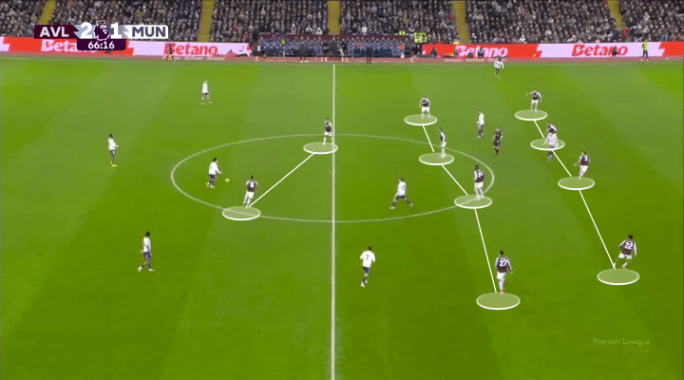
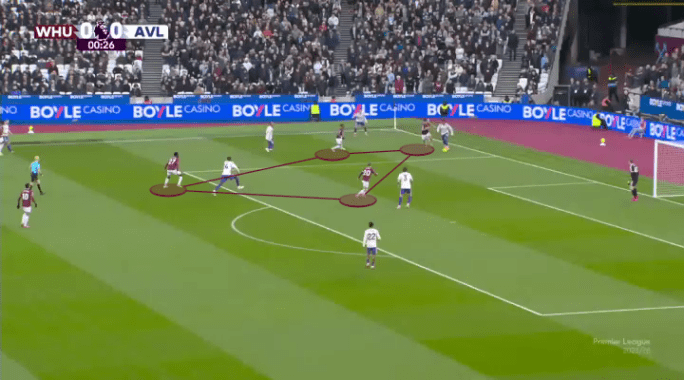
Aston Villa have been resolute in their defensively minded 4-2-3-1 formation, often forming into an even more resolute 4-4-2 in defense.
In defensive phases, the ’10’ will slide up alongside the striker to act as the first line of pressure, as the remaining players form two solid banks of four, leaving minimal space in between the lines.
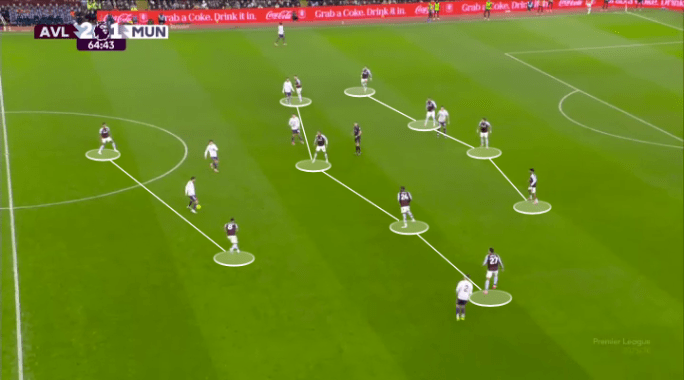
If they can win the ball in their mid to high block within this shape, they are then well set-up to find Ollie Watkins or a player like Morgan Rogers on the break as immediate outlets.
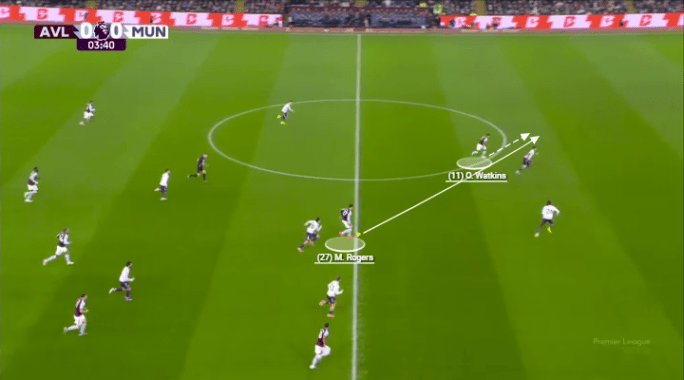
In attack, Youri Tielemans will often act as a frequent operator within the ’10’ slot, giving Aston Villa some variety in terms of how they can rotate and attack. John McGinn and Morgan Rogers often like to play inside, which can allow Ollie Watkins to drift from side to side. It can also allow for vertical transitions on the break, where they can link up in close quarters and create tidy triangulations to race forward.
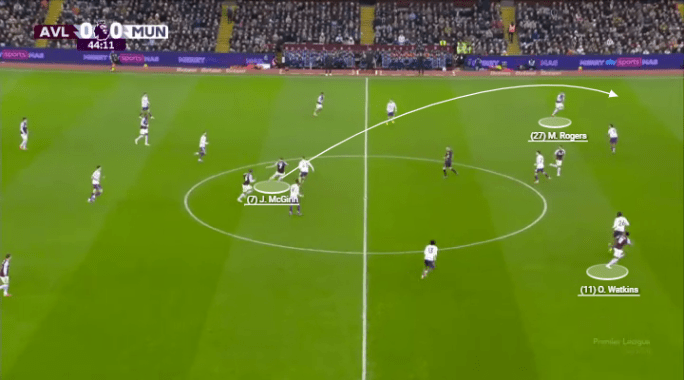
But the defensive part of their game is the most imperative to Emery’s approach. They are incredibly well organized at the back, completing shutting down space through the centre of the pitch, and always moving in harmony.
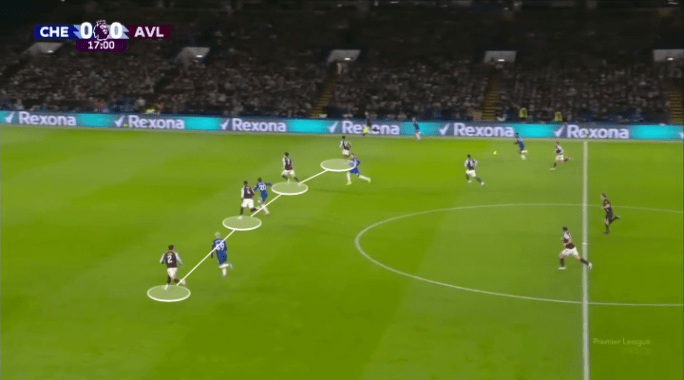
They are yet to concede a goal designated as a “counter attacking” goal, highlighting their adeptness at defending in transition, and their ability to attack well without committing too many numbers forward and leaving themselves exposed at the back.
All of this intuitively makes sense. They haven’t spent an awful lot on their transfers over the past few years, but they do invest in high quality talent through their wage bill.
Embed from Getty ImagesEzri Konsa is firmly one of the best centre-backs in the league. Emi Martinez is one of the best goalkeepers in the league; and the trio of Kamara, Onana and Tielemans form one of the most resolute midfield units of any top side. Add in some incredibly hard working players out wide who know how to do a job like John McGinn, Morgan Rogers and Matty Cash, and you get a side that more than deserves to be where they are.
DEFENSIVE STYLE OF PLAY
Embed from Getty ImagesDespite having the players to do it, Aston Villa aren’t a side that will press with intensity. They prefer to remain compact within their lines of 4-4-2, shuffling with the play until they can win the ball back at the most opportune moment. They don’t throw themselves into challenges, and they don’t expend unnecessary energy to win the ball high up the pitch.
When they do set up to stop the opposition from playing out from the back, they emphasize a “man-to-man” approach. This means that one of the central midfielders may jump to put pressure on the opposition’s ‘6’, as the remaining players set up with the intention of forcing the opposition long.
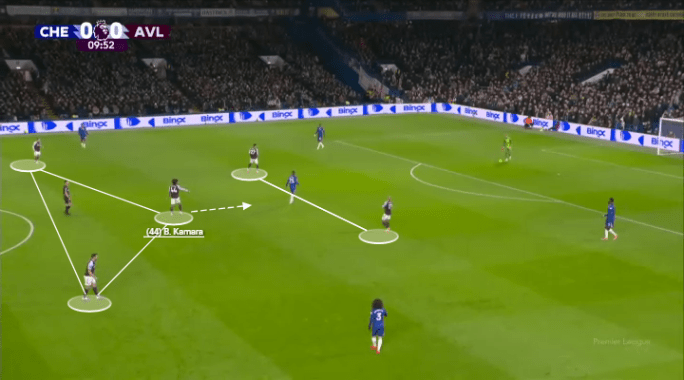
With their organization and compactness, they are incredibly difficult to break down. Opposition sides are forced to play through the wide areas or quickly switch the play from one side to the other, but the Villains are always well set up to react.
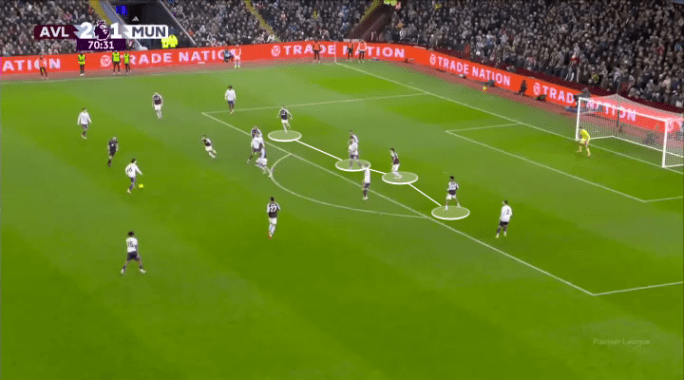
They can quickly shift from side to side without issue, and they are quick to get numbers around the ball in the wide areas, often through the wing-full-back-central midfield connection.
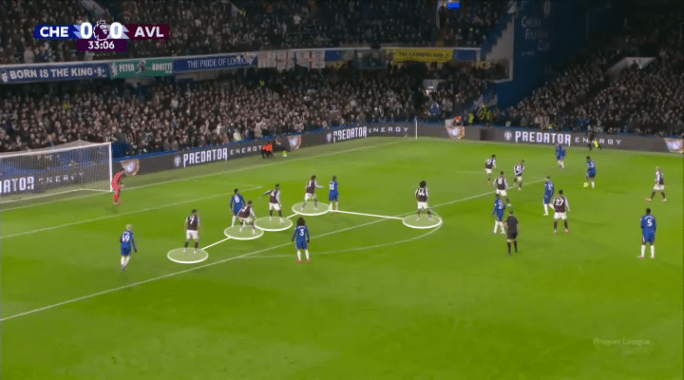
When committing so many numbers at the back, it then limits their ability to break forward. In moments like this, they have to play neat and tidy passes through the centre via the likes of Tielemans and Kamara. Kamara loves to run forward and will travel the length of the field if given the opportunity, but this is a rarity.
Instead, the counter attacking will funnel through Tielemans and McGinn initially, before Rogers and Watkins can find more space to attack higher up the pitch.
This is where Aston Villa drastically differ from the other top sides in the league. They are far from a fluid team in attack, and much more focused on defensive structures. They are great at capitalizing on the few chances that they get in a match, and often great at stopping the opposition from capitalizing upon their chances at the other end.
ATTACKING STYLE OF PLAY
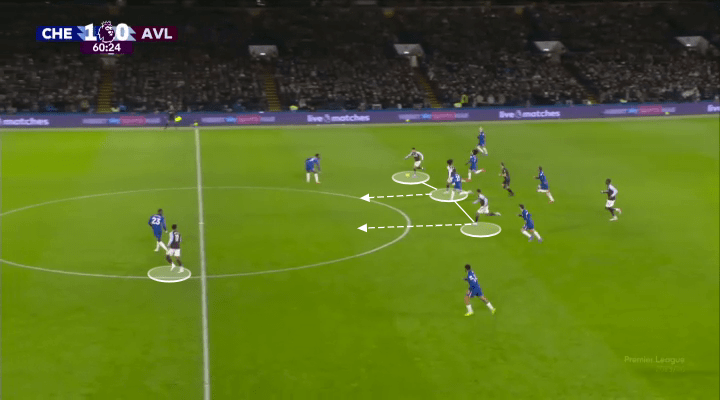
Despite firmly cementing themselves in third this month, Aston Villa have the attacking stats of a mid-table side. They’ve scored 28 goals in 18 games thus far (6th in the league), but their xG has them 14th at 22.6, and their xG per shot (0.11) ranks among the worst in the league.
This would suggest that if they carry on shooting from unideal scoring positions, their form may falter.
But for the time being, they’ve been great at capitalizing on just a few chances in a match, and making their moments to score count. Top scorer Morgan Rogers loves to let one fly from range, and they can trouble any team from either a swift set-piece or counter attack.
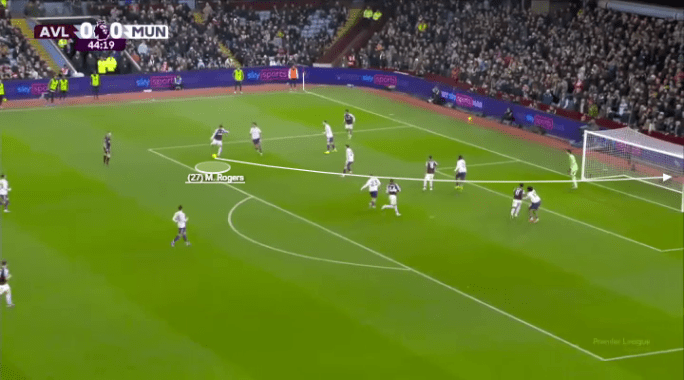
The full-backs will occasionally gallop forward one at a time, especially with Kamara and Onana holding so steadily in the midfield. Ian Maatsen loves to make advancing runs through the half-spaces on the inside of Morgan Rogers, as the England international cuts inside onto his right foot.
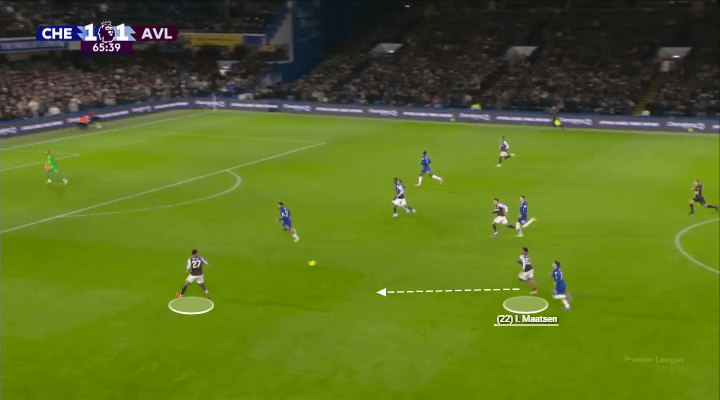
Anyone who saw Rogers against Manchester United knows that this is a trademark of his attacking threat.
Embed from Getty ImagesThe problem that Aston Villa have in possession is that they often try to play out from the back no matter how well they’re being pressed.
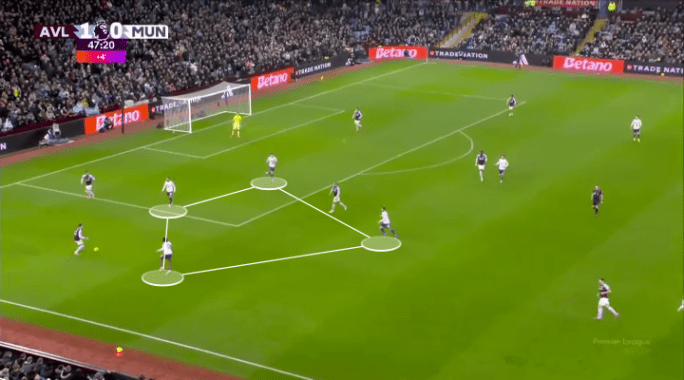
Emi Martinez is quick to find the full-backs in initial build-up phases, where Matty Cash and Ian Maatsen are often then meant to look for the quick ball down the line.

But when up against well organized presses, Villa will persist within this approach and struggle to find that tertiary pass. When they refrain from playing the ball long and out of danger, they often find themselves in trouble.
Emi Martinez can go long and direct into Ollie Watkins, and Villa should be less afraid of losing the ball in pursuit of this option. While it’s commendable that they want to play out from the back, they need to be quicker to change their tune when persistently up against the run of play. Most of the players they’ve picked up over the years from Ross Barkley to Jadon Sancho to Donyell Malen are fantastic counter attacking players.
The Villains will always be best when they can break quickly and get the likes of Tielemans, Sancho or Rogers on the ball.
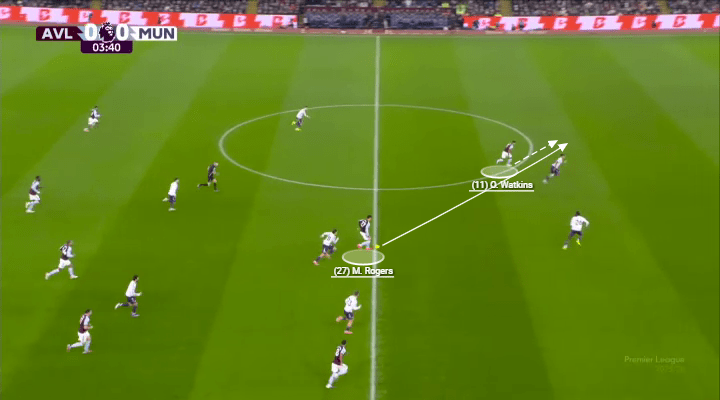
Playing more direct and playing off knock-downs would allow someone like Rogers or Sancho to drive forward through the centre and allow for the variety of movement ahead to take place.
It might not be the best long-term strategy, but it perfectly suits the players they have for the time being, and makes them one of the most clinical teams in the league.
Embed from Getty ImagesSo with that, Aston Villa are currently one of the most difficult sides to play against in the Prem. They have the capability of beating any team in the top flight, and they’ve shown that already with wins against Arsenal, Chelsea and Manchester City.
Thanks for reading and see you soon!
Discover more from TheMastermindSite
Subscribe to get the latest posts sent to your email.
 TheMastermindSite