


For the unfamiliar, Forge FC are the Manchester City of the Canadian Premier League. They play a possession-based 4-3-3, stacked with ball-savvy savants, and a culture that embodies winning. The Canadian Premier League’s been around since 2019 now. Forge have won the Playoffs in four of the five seasons, and lost the final in the one other at the hands of players they recruited to their team immediately after.
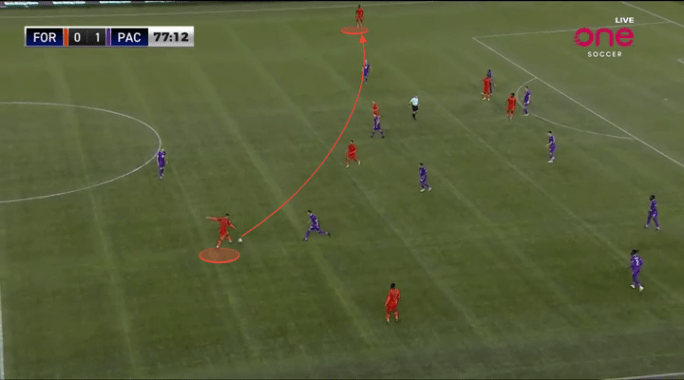
Even at that, you wouldn’t necessarily expect a carbon-copy of the same sort of tactics to spring to life. Not least given the fact that Guardiola’s ideologies this time around are wild, to the say the least. The idea of centre-backs stepping into midfield in build-up to progression phases of possession is peculiar. It forms a nice 3+2 that supports triangulations, rest-defense, and adequate progression through the thirds (often from forcing the opposition to condense the centre and leave more space out wide). But that doesn’t explain why it’s a centre-back making that shift, rather than say a full-back, like Guardiola did in the past.

For coaches like Pep Guardiola and Forge’s best Bobby (Bobby Smyrniotis), it isn’t about developing tactics to fit a specific role on the field. It’s about developing tactics to suit specific players and their strengths. John Stones didn’t join the midfield en route to City’s Champions League win last year because Guardiola thought it would be innovative and fun. He innovated the fun thing so that Stones could continue his excellence of carrying the ball, just higher up the pitch. In doing so, Stones could make his mark closer to goal, in a way that more readily allowed Rodri to control games with his own unique assets (long passing, transitional superiority, etc.).
Embed from Getty ImagesLiverpool have utilized the same approach as a way of accommodating the strengths of their own talent, this time a full-back. They use that same 3+2 to allow Trent Alexander-Arnold space to spray his long-passes in central corridors. It’s all about bringing out the strengths of the talent you have at your disposal.
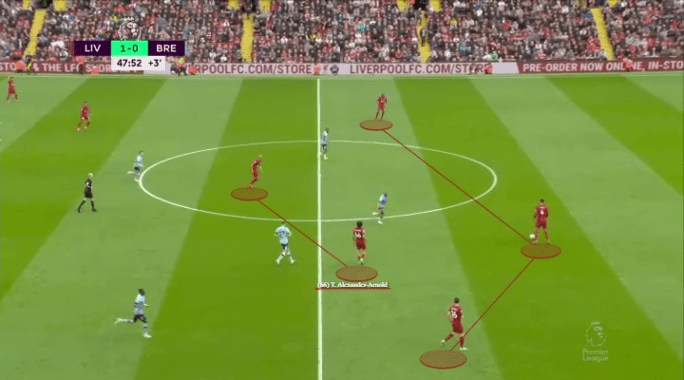
This is where Forge have carbon-copied Pep’s centre-back tactic at a super high level. For the bulk of their time in the CPL, Forge played with probably the best defensive midfielder in the league – Alexander Achinioti-Jönsson. When they lost the 2021 CPL Playoff Final to Pacific, another central midfielder had emerged onto the scene called Alessandro Hojabrpour. He scored the winning goal that day. When Forge brought him into the fold, they had a dilemma. Push Hojabrpour into a box-to-box role in midfield, limiting some of the brilliance he can offer in playing out from the back and responding in transition; OR push Achinioti-Jönsson to centre-back, bringing out the strengths in both.
Embed from Getty ImagesThey ultimately decided on the second option, with the team’s top creator in Kyle Bekker helping to form the 3+2 in build-up phases in a completely conventional way.
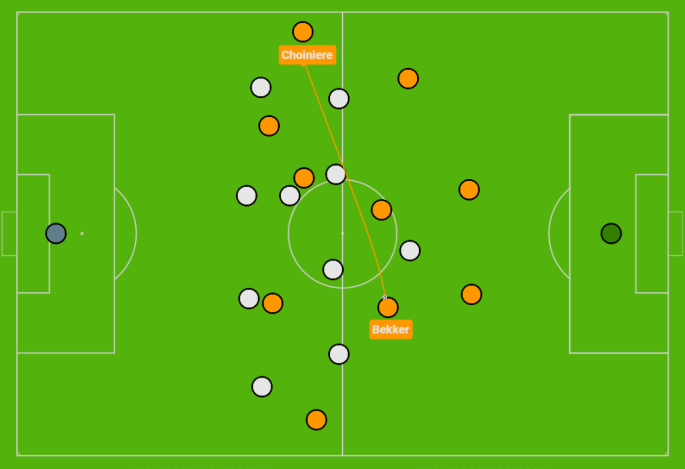
But Forge are stacked with players who can play out from the back, and they don’t necessarily need Achinioti-Jönsson to be a key figurehead in facilitating that process from the deepest place on the pitch. Instead, as Bobby Smyrniotis recognized, you can push him into midfield areas alongside Hojabrpour. In doing so, you can push dangerous creators like Kyle Bekker further forward.
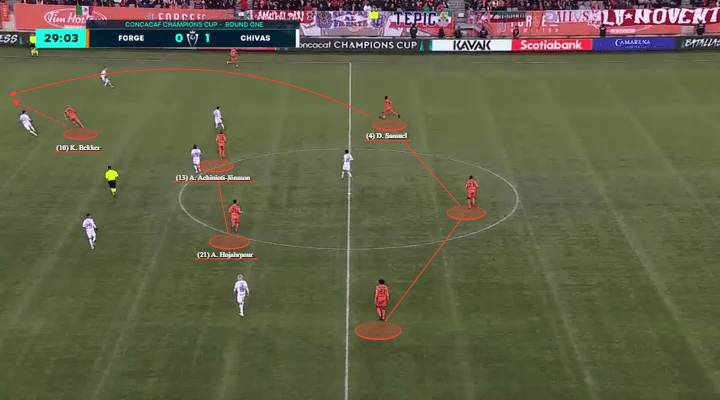
This is the greatest advantage of the centre-back in midfield approach. One, it consumes attention of the opposition, often giving the actual centre-backs within the back-three more time on the ball to make decisions. Secondly and more imperatively, it pushes more dangerous players higher up the pitch.
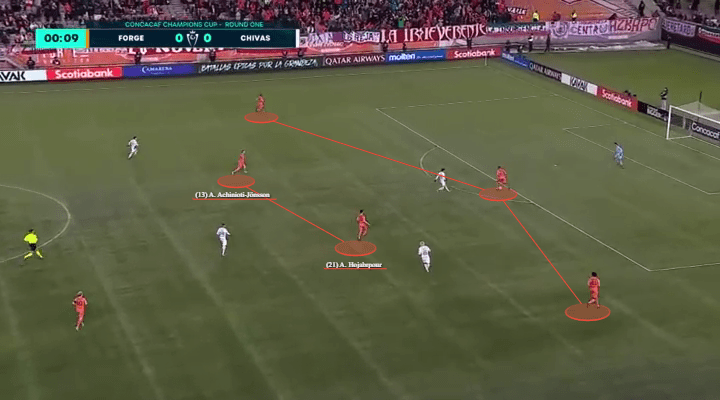
Kyle Bekker can have more freedom to push on and create closer to goal, and even Alessandro Hojabrpour himself can be afforded more room to seek spaces further ahead and spray those beautiful long switches in advanced areas.
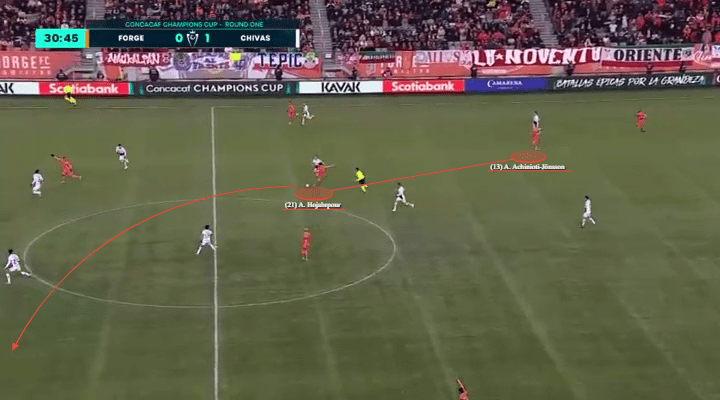
Achinioti-Jönsson is a class act and a nice long passer of the ball, but Alessandro Hojabrpour is that slight cut above with play-making, switching the play, and even dictating tempo. Through allowing him to be part of a double-pivot, you can create more space for him to receive the ball in space, get his head up, and make line-breaking passes that advance the team forward.
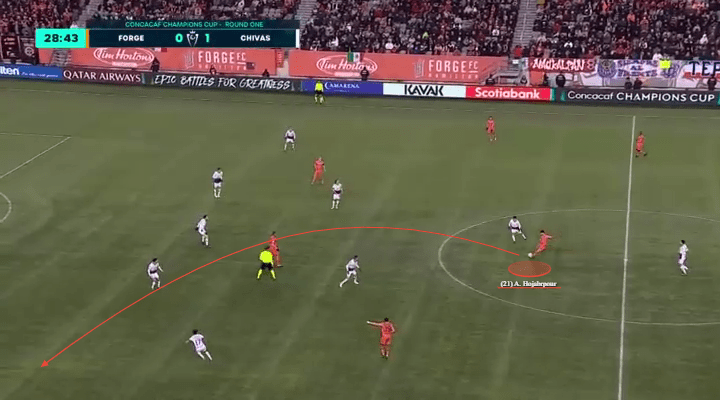
This is exactly what we witnessed when Forge scored their only goal of the game in the first-round CONCACAF Champions League tie against Chivas Guadalajara.
It’s also important to note that this tactic doesn’t work without the other key element to this approach. That’s centre-backs playing out of position at full-back. I discussed that tactical trend in my 2023 send-off: Why centre-backs are becoming fullbacks: The tactical trend that defined 2023. This is becoming extremely prevalent for just about every top team, with two key advantages to playing centre-backs at full-back.
- Centre-backs are typically better in build-up phases than full-backs.
- Centre-backs are typically better defending 1v1 situations than full-backs due to the range of attributes they tend to possess (size, strength, etc.)
This inherently makes them valuable for:
- A 3+2 build-up.
- A 3+2 rest-defense.
If you’re like Man City, that 3+2 can immediately become a 4+2 as the centre-back races back into position, and the advanced central midfielder drops to help.
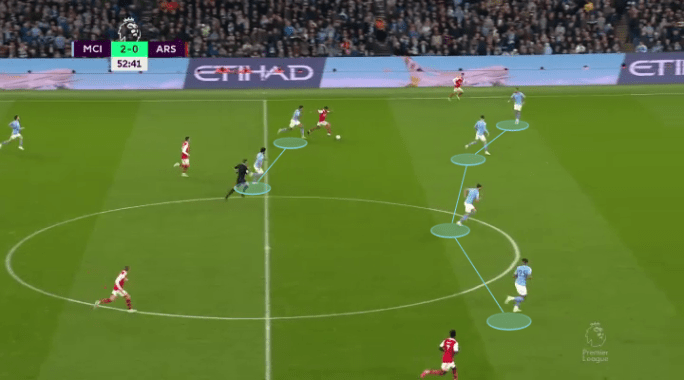
But if even one of your full-backs is attack-minded and meant to gallop forward high into the attacking half, the other piece to this tactic doesn’t work. You could have a centre-back step into midfield and then also have Kyle Walker bombing down the wing. But the rest-defense wouldn’t quite be the same.
This is what Forge have stumbled upon in an Ashtone Morgan-less world. Their previous high-flying wing-back decided to retire. Rather than going out and finding another high-flying wing-back, they simply saw the opportunities within their squad. Namely – the five top-tier centre-backs they had at their disposal. Now they’ve lost their right-back, Rezart Rama, and centre-backs will likely continue to play that role into 2024.
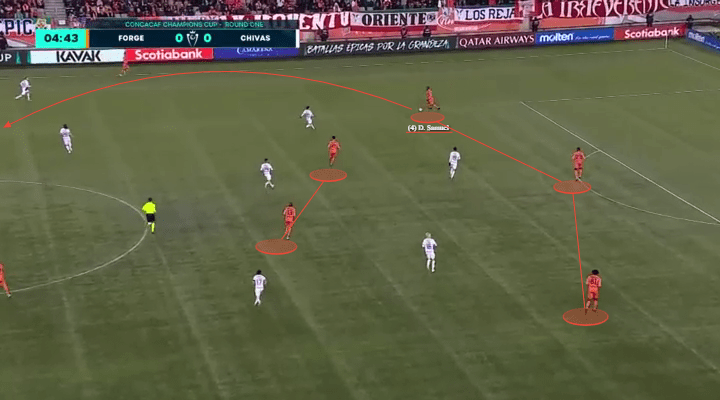
Forge have essentially developed a carbon-copy image of Manchester City’s latest tactical set-up, but they’ve done so in a way that completely brings out the strengths of their players, and the personnel at their disposal. They might not have won their latest Champions League match against Chivas, but signs are already pointing to the Hammers again being one of the most well-organized teams in the CPL. They will have their eyes set on both the Shield and the Playoffs in 2024, and when they already have one of the best squads in the league, playing to the strengths of those players will be the best way to get there.
Thanks for reading and see you soon!
PREVIOUS EDITIONS…

Ali Ahmed: The £1.4 million steal powering Norwich’s revival
Norwich might not be in the hunt for Premier League football next season, but they are slowly rebuilding their squad back to one that can challenge toward the top of the Championship. And in Ali Ahmed, they didn’t just sign a useful squad player. They may have found their next star.


Sebastian Berhalter has become the Whitecaps’ most important player
With his all-around quality, it’s abundantly clear. Sebastian Berhalter is the Whitecaps’ most important player right now. His performance against Portland was one of the finest individual performances of any player so far this season, and continues to help cement the ‘Caps as one of the most cutthroat teams in the league.

Benjamin Šeško is United’s best striker in years
With four goals in his last five matches, Šeško earned himself the Premier League’s Player of the Month award for February. This, in just 85 minutes of making an impact off the bench. If he can continue to grow from here, the 22-year-old will almost certainly stake his claim as United’s best striker in years.
Discover more from TheMastermindSite
Subscribe to get the latest posts sent to your email.
 TheMastermindSite
2 thoughts on “Game of Numbers #37 – Forge FC’s use of centre-backs in midfield like Manchester City”