

In 2022, I established my ‘Role Continuity Evaluation System’, on the basis that players should be assessed by the metrics and traits important to their specific role on the pitch. Through this understanding, players are then classified into what is now 20 different roles, and assessed accordingly to see how they stack up to other players fulfilling the same player type. Here is an explanation of my scouting & analysis system and how I use the system to compare central midfielders.
WHAT ARE YOU TALKING ABOUT, RHYS?
Embed from Getty ImagesFor a full-blown explanation into the origins of my Role Continuity system, see the first article in this series!
How I analyze goalkeepers for pro clubs with Role Continuity
Embed from Getty ImagesThe SparkNotes version? I wanted to create something that did not just assess players based on data. Even more imperatively, I wanted to create something that did not assess all players in all positions based on the same data metrics. What is always more important is the individual roles that players adopt, and how they function within their team. So RCES assesses players based on what is actually important to a player’s role on the pitch.
Embed from Getty ImagesSince we have metrics that are important to each role, players can then be categorized into one-two specific roles through a combination of data and the eye test. The goal is then to provide quality analysis and in-depth player assessments that adequately cover the vast array of different tasks that they are to fulfill within their job description. Those ‘job descriptions’ have been formed via what players in those roles have been asked to do over time, and their repeated perpetuation of reaching higher on certain statistics over others.
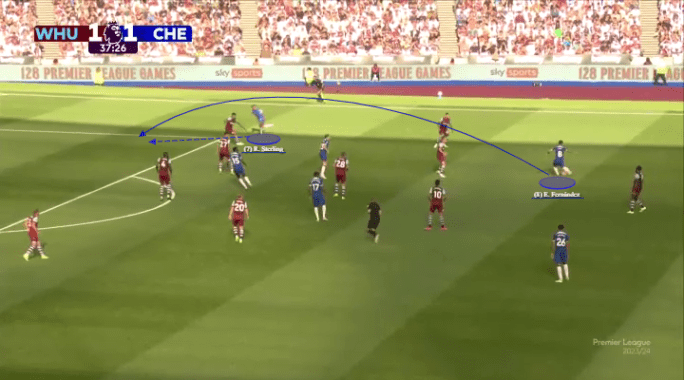
When I first created RCES, it simply had too many different player archetypes. Reducing it down to just twenty roles, often two-three per position, has been key in allowing for better player comparisons. So in this series, I’ll be breaking down how I analyze and compare players within each of the twenty roles, and how I’ve evolved my processes over time. This article is all about central midfielders!
HOW I COMPARE CENTRAL MIDFIELDERS
Embed from Getty ImagesCentral midfielders are the broadest of all categories! That is, we split central midfielders into four different player types (more than any other position). That makes sense, given that some teams play with three of them (the wild ones even four). Take a typical 4-3-3 for example. All teams will construct that midfield three with slight variations. The goal of our system is to then group players based on the closest fit within their data and the context clues from watching matches.
This is the only position where I’ve kept 100% of the original roles. But there’s a reason for these 2023 pieces, and that’s because all my processes have evolved in terms of how I group players. Even for these ‘#8’s’. You see, all four roles are grouped together in my databases and comparisons with at least one other role. Hopefully I don’t lose you here. Let’s start with the easiest two!
Embed from Getty ImagesTempo Setters are those possession-orchestrating ‘#8’s’ that love the ball. Most commonly, they sit alongside a more defensive ‘#6’. But a few feature as part of a possession-heavy midfield alongside a ‘Deep-Lying Playmaker’ operating in the ‘#6’ position. Since they pass their way out of trouble and often combine to control build-up, they are essentially the same archetype as that ‘DLP’. The difference is that they operate in a ‘#8’ role, with theoretically more freedom to be ‘box-to-box’ and go forward. The ‘#6’ for one way or another is usually more reserved in their role.
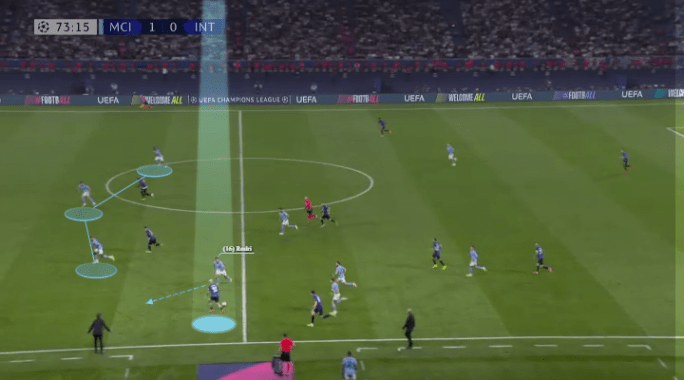
So if they’re essentially the same, you might ask, why separate them? Well, for team construction purposes. Some teams want their ‘#6’ to be defensive and screen the opposition’s striker, as their ‘#8’ gets on the ball and works the magic. Other teams want their #6 to dictate the possession, as their #8 roams higher. Even if the two roles (‘DLP’ and ‘Tempo-S’) are practically identical, they are different positions, and will produce different types of players. As an example, Christian Eriksen plays a deep role for Manchester United, helping to facilitate possession. But you wouldn’t want him as a true ‘#6’, because he lacks the mobility to cover spaces defensively. He’s a tempo-setting ‘#8’ that works best alongside a defensive beast like Casemiro in the ‘#6’ position.
Embed from Getty ImagesThis is important to note in the recruitment process, as some teams are looking for someone to facilitate possession in the ‘6’, while others are looking for an ‘8’. Often times that comes from the players they already have at their disposal. Other times it comes from a manager’s principles of play. A great example would be Leicester City’s recent use of Harry Winks as their ‘Deep-Lying 6’, shifting Wilfried Ndidi (historically a ‘#6’) into more of a box-to-box role as an ‘8’. I’d hazard to guess that most of us would see Ndidi’s defensive quality and do what all managers have done and play him as the ‘6’, with Winks as the ‘8’. But Enzo Maresca clearly wants his ‘6’ to be the one on-the-ball within his build-up schemes, which makes Winks the better fit.
Embed from Getty ImagesWith Youri Tielemans at his disposal, I would guess that Maresca would have left the Belgian in an advanced ‘8’ role, fearing that he’d lose Tielemans’ attacking quality in that more restrictive ‘6’ role. This is why many ‘Tempo Setters’ stay as ‘8’s’ throughout their career. They’re killer ball-players, can control games often times all on their own, but they’re usually not just as savvy on the defensive end as they are in attack.
This has all been to give you an explanation as to why they are different archetypes within our system. One is a ‘6’, one is an ‘8’. But when I’m comparing these players for clubs, I want to see how the ‘DLP’s’ compare against the ‘Tempo Setters’. They’re often lumped together! You can see exactly that within the prototypes in our Canadian Premier League – Player Power Rankings. The data used to assess these players is the same, since they perform the same function.
Embed from Getty ImagesI then just need to point out to clubs which players currently operate like ‘#6’s’ and which play as ‘#8’s’. That can be done through something as small as including their main position in the database (i.e. ‘DM’ or ‘CM’), to something wider like heatmaps. But again, the data references are the same.
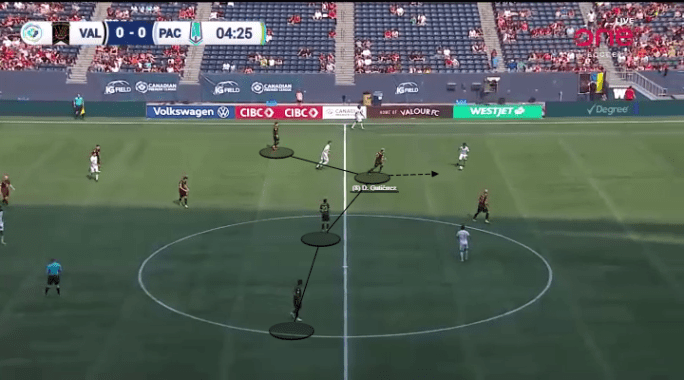
Moving on! One of the most unique roles to my RCES system was the ‘Shuttler’ – a player that I presented as a defensively-minded ‘Box to Box Midfielder’. They’re not the team’s ‘#6.’ They’re not that ‘Midfield Destroyer’ like Casemiro or Denise O’Sullivan. They’re an ‘8’. But they offer less going forward than they do through their off-the-ball shuffling and defensive presence. Scott McTominay is a quintessential ‘Shuttler’. N’Golo Kanté might be the best ever. As managers like Maurizio Sarri recognized, Kanté had impeccable mobility. So why not harness that further forward? Why restrict him to the ‘6’ slot – especially when manager’s like Sarri wanted the ‘6’ to dictate possession? That’s not Kanté! Kanté’s a workhorse.
Embed from Getty ImagesBut at his core, he’s not an attack-minded player. And when we think of ‘Box to Box Midfielders’ we typically think of players that are more attack-minded. The Jude Bellingham’s and Jill Roord’s of this world. N’Golo Kanté is ‘box-to-box’ but he’s not the one you want finishing off moves or really even involving himself that high up the pitch. He’s meant to be defensive in that ‘box-to-box’ persona. Hence the birth of the ‘Shuttler’.
Embed from Getty ImagesNow here’s where I’ve found things starting to get interesting in 2023. Kanté was always a fan-favourite because he was a bit of a unicorn. He was uniquely good at recovering position to thwart attacks. No one ever cared that he offered a bit less on the attacking end. I’m seeing less of that from the ‘Shuttlers’ coming through right now – the likes of Kouadio Koné or Moisés Caicedo. Most of them offer something else beyond a defensive presence. Koné’s an insane dribbler and a genuine attacking contributor, even if he’s supposed to be reserved for Gladbach. Caicedo’s a superemely good forward passer. Don’t forget about Tomáš Souček’s set-piece threat!
Embed from Getty ImagesThe ones that offer less, like McTominay or Fred, are being phased out. The ones that offer more are also being moved around. Caicedo looks like he’ll become an actual ‘6’ for Chelsea. Diego Gutiérrez moved into a more advanced role with Tempo Setting responsibilities this season for Valour. Shuttlers are disappearing across the globe!
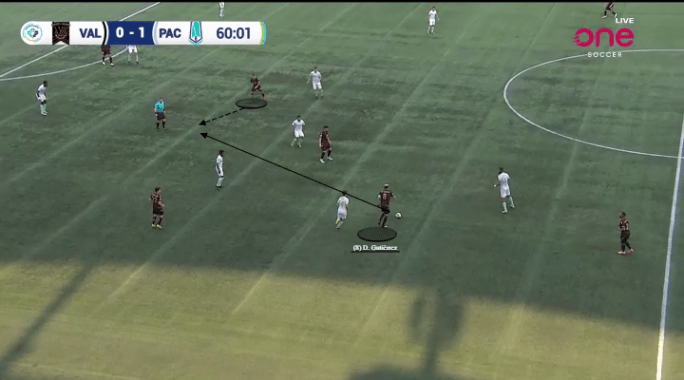
So with that, this role is another one that’s become a sub-type of a wider category. That wider category is the ‘Box-to-Box Midfielder’. Anyone who does not have that box-to-box mobility within their ‘8’ slot on the pitch is treated as a ‘Midfield Destroyer’ if they’re truly still more defensive than ‘Tempo-Setting’. We can compare the Kanté types to our rampaging up-and-down ‘Box to Box Midfielders; but it feels more natural to prioritize a majority of them in that ‘Midfield Destroyer’ category instead.
Embed from Getty ImagesSo now we have two wider categories for ‘8’s’ – ‘Tempo Setter’ and ‘Box to Box Midfielder’. That sums up most of the players clubs are looking for in those ‘8’ roles. Are they more of a passer, or are they more of a runner?
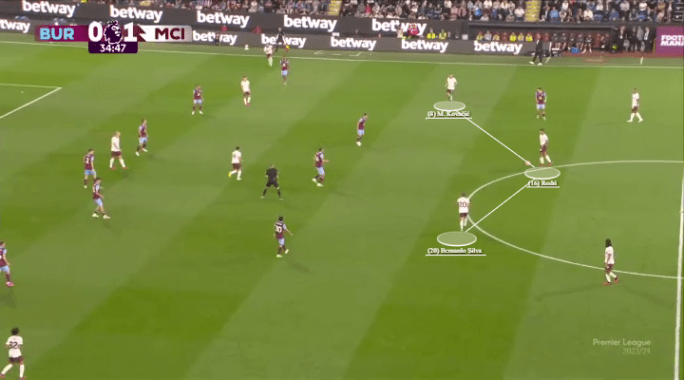
But wait! There’s more. We all know that there’s another type of player that sometimes floats in and out of central midfield. It’s the Bernardo Silva types. They’re not these inherently mobile runners, nor are they the ones passing the ball about the pitch for fun. They’re getting on the ball to dribble and inject magic. Sometimes from a deeper-lying role. We call them ‘Midfield Maestros’.
Embed from Getty ImagesThey’re lumped together with the ‘Creative Ten’s’, since what they offer is ultimately attacking quality. Most in this category have played as a ’10’ or wide player in their careers, even if they’re currently being used as an ‘8’ – like Lucas Paquetá at West Ham United. But others like Aitana Bonmatí or Mateo Kovačić can qualify here too, since they are so dominant in carrying and dribbling past opponents.
Embed from Getty ImagesThat said, most of these players appear to be most effective in the ’10’ role, like Ashley Sanchez at Washington Spirit. You don’t want to restrict a player like that to a deeper role, where they have to defend, and have less of an ability to contribute to attacks.
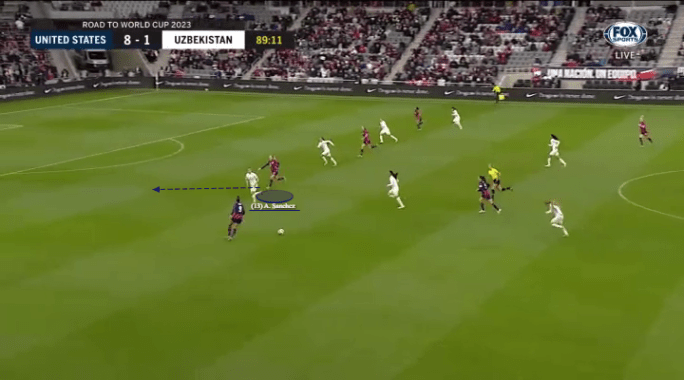
So we have them in the ’10’ comparison, alongside our ‘Creative’ players. One more reason behind that is the fact that those Martin Ødegaard types are operating as their team’s ’10’, even if out of possession the shape becomes a 4-1-4-1 and so people think he counts as some sort of hybrid central midfield ‘8’. He’s a ’10’. He’s a creative one too. Put Bernardo Silva in the ’10’ role. He’d be pretty creative too. They are not too dissimilar.
So in short, comparisons for midfielders are done like this:
1. Midfield Destroyer/Anchor (defensive #6).
2. Deep-Lying Playmaker/Tempo Setter (possession-savvy ‘6’ or ‘8’).
3. Box to Box Midfielder/Shuttler (box to box ‘8’)
4. Midfield Maestro/Creative Ten (attack-minded ‘8’-’10’).
If you’ve somehow made it through this article following along with my train of thought the entire time, you’re incredible. But if you do have any questions, reach out. Perhaps you have a simpler way! This is just the complexity of dealing with the comparisons of central midfielders, and I hope that you’ve gained value by hearing about my separations.
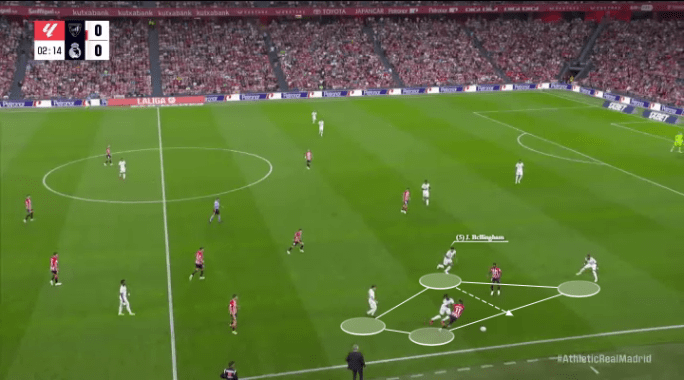
If any young players are reading this, you don’t have to decide which type of player you are. It can (and will) evolve over time as you develop. It’s great to know your strengths and where you need to improve. But this is more important for coaches and analysts to understand how to get the best out of what you offer. In helping everyone on that path, check out a few more explanations into this process. Thanks for reading and see you soon!
-> How I analyze defensive midfielders for pro clubs with Role Continuity
-> Explaining the Tempo Setter – Player Role Analysis
-> Explaining the Box to Box Midfielder – Player Role Analysis
-> Explaining the Shuttler – Player Role Analysis
-> Explaining the Midfield Maestro – Player Role Analysis
YOU MIGHT ALSO ENJOY…

Sebastian Berhalter has become the Whitecaps’ most important player
With his all-around quality, it’s abundantly clear. Sebastian Berhalter is the Whitecaps’ most important player right now. His performance against Portland was one of the finest individual performances of any player so far this season, and continues to help cement the ‘Caps as one of the most cutthroat teams in the league.


Benjamin Šeško is United’s best striker in years
With four goals in his last five matches, Šeško earned himself the Premier League’s Player of the Month award for February. This, in just 85 minutes of making an impact off the bench. If he can continue to grow from here, the 22-year-old will almost certainly stake his claim as United’s best striker in years.

Casemiro is leaving, and United still can’t replace him
Casemiro’s been one of the best players in each of Carrick’s matches in charge. In fact, he’s been almost too good. Sunday’s match against Fulham exposed exactly what United will miss when he departs, and why he might be someone they simply can’t afford to lose, even if they must.
At home to Fulham, Casemiro…
Discover more from TheMastermindSite
Subscribe to get the latest posts sent to your email.
 TheMastermindSite