

At the beginning of 2022, I established twenty-two player roles that footballers often adopt on the pitch. The goal of my ‘Role Continuity Evaluation System’ was twofold. Firstly, I wanted to present an alternative way of evaluating players that could be centered around data, without solely relying on data as the fulcrum to performance assessment. Secondly, I wanted to illustrate how different players add value to their team through what they accomplish within their specific role over time (role continuity). The best teams often construct a nice balance within their starting elevens by deploying different types of players to fit together like a puzzle, and then change those player roles depending on the moment.
Embed from Getty ImagesWe should not punish a keeper for not attempting or completing any dribbles in a match, when that’s not the purpose of their role. Instead, we can highlight specific elements that each footballer has within their job description to more accurately assess how they carried out the actions that actually matter to their team.
Embed from Getty ImagesAs a system that assesses “IQ” based on both data and eye test measurements, it has the potential to be “biased”. This is what many in the data world often try to avoid. However, no decisions in football should be made solely on representations of data. The ‘eye test’ should always be used in tandem, whether that be through video footage or live matches. Doing so helps not only to back up or dispute what the data dilutes, but also helps to bring greater context into those numbers.
Embed from Getty ImagesAs I’ve discovered one year on from creating ‘Role Continuity’ – the player with the highest passing percentage might actually be the worst passer of the ball on the pitch. Meanwhile, the most adventurous, risk-taking, flamboyant, finessed passer on the pitch might show up as the worst passer instead.
One might be playing short, simple, one-yard passes; and the other might be playing risky passes at super opportune moments, attempting to release their teammates in space and create chances. The data would suggest that one deserves a higher ‘rating’ than the other. Our system on the other hand looks at both players, and analyzes how successfully they carried out the tasks of their specific role. The ‘eye test’ and ‘IQ scores’ therefore become the centerpiece for our evaluation system.
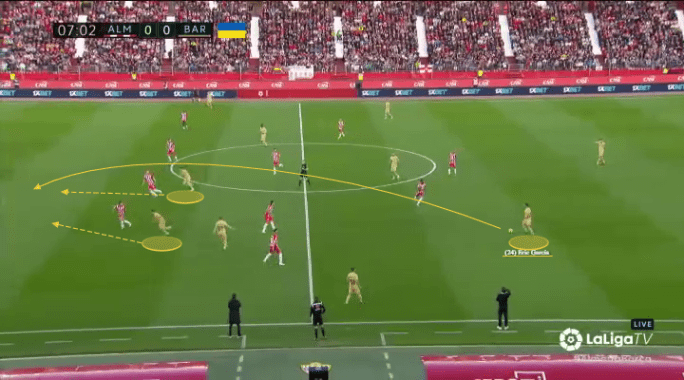
This then requires the world’s number one resource – time!
Although there are certain statistical measurements that help in this quest (like xT or possession-value-added), a machine cannot currently assess greater context into specific numbers and give us those “IQ” scores.
Embed from Getty ImagesAt the start of the 2022 Canadian Premier League season, I watched every game and then assessed hours of footage from 200 players inside the league to give those ‘Player Ratings’ every single weekend. My scores produced similar results to statistical sites like Fotmob and Sofascore. On the one hand, that was validating. On the other hand, it made me think – what’s the point?! IQ scores are naturally higher when players statistically perform well, and for that matter, the IQ scores use statistics as the starting place anyway.
Embed from Getty ImagesI can sustainably watch hours of footage for a player I’m scouting for a club or analyzing for an article; but not on mass – such as for all 200 players inside a league. This presented a crux for role continuity. One of the objectives of the RCES and the presentation of ‘IQ scores’ pertaining to a player’s specific role was to present an alternative to the statistics sites that use data as their sole metric for evaluating players.
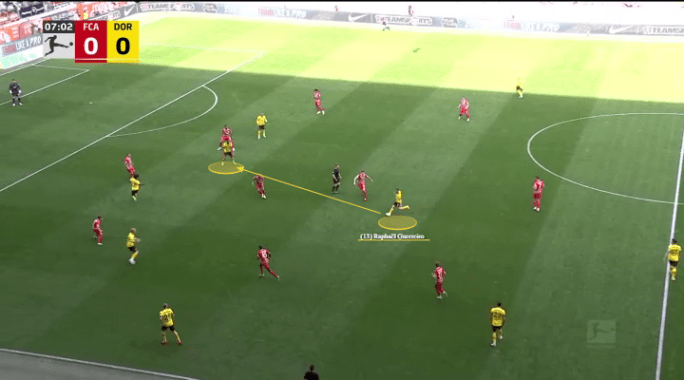
But in creating a less subjective and more sustainable approach to the evaluation model, data must continue to be the centrepiece. As I always preach, we can then use that data to follow-up with an eye test before dissecting deeper or recommending a player to a club. So with that, ‘Role Continuity’ evolved.
Each role always had an emphasis on certain features of their play (data points) that were prioritized over others. To see an example of that in practice, check out my article on the Top 20 Sweeper Keepers – 2022-23.
Embed from Getty ImagesEach role encapsulates specific ‘IQ’ scores for each category (e.g. ‘sweeping’, ‘distribution’, ‘command’, ‘shot stopping’ for a Sweeper Keeper). But now, those ‘IQ’ scores for each category are assessed more attainably through data rather than subjective means.
Embed from Getty ImagesFor example, a keeper’s ‘distribution IQ’ can be assessed through combining the various percentage points around their passes and ball progressions in tandem with the actualities of the numbers they attain. This means that we can still avoid rewarding the keeper who completes 100% of their passes, when both of those passes were one-yard sideways passes. That still doesn’t tell us much into the decision making of the player in question, but it helps to provide the context we crave.
Embed from Getty ImagesIf we then want to follow-up with that goalkeeper and assess the decision making behind those passes, that can be an option. But the “eye test” is no longer a requirement to obtaining those “IQ scores” and assessing for greater context behind the numbers. Instead of the eye, the system is now set up in a way where the numbers are now bringing greater context to one another.
But before you say – “that means your model is just like any other!”, remember that the specific metrics for evaluation are different for each role.
Embed from Getty ImagesOn that note, statistics sites are only creating one score for each player. Our system creates scores in multiple different categories, each weighted differently based on importance, which then go into an over-arching score (e.g. weighted scores on sweeping + command + distribution + shot-stopping = overall score). Other platforms simply prioritize players that spike the highest with their on-the-ball actions; not even for the percentage points around those on-the-ball actions.
This in spite of the fact that we all know at this point that the average footballer spends about 84-88 minutes off-the-ball in any given match. Off-the-ball statistics and insights tell so much more.
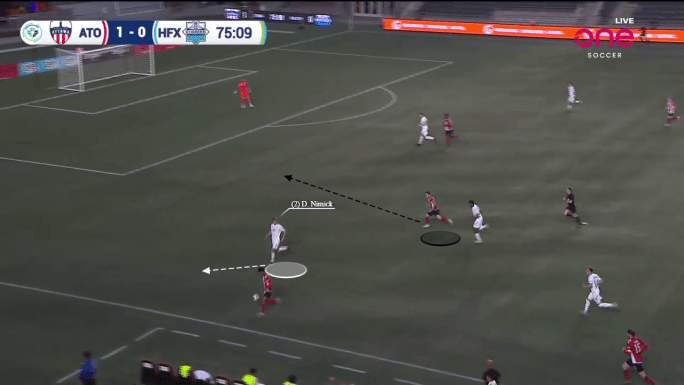
That is, a player will naturally rank higher on WhoScored? (a site I love, don’t get me wrong!) for making seven tackles, than the player who makes two tackles. That holds true even if the difference was 7/14 (50%) vs. 2/2 (100%). That also holds true if the player’s role in the team had nothing to do with making tackles. It would be fantastic if that 7x tackle player were Lionel Messi, but it would also matter a whole lot less than if that player were Joao Pahlinha. That is where our system adds value to the debate.
Embed from Getty ImagesBut there’s also a second way we can add value to the debate. Our model combines statistics like tackle percentage, possession-adjusted tackles, tackles won, tackles lost, fouls conceded, 1v1 duels won, 1v1 duelling percentage, disciplinary record, and ‘dribbled past’, to get a more accurate assessment of whether or not that player with the 7 tackles deserves plaudits or not.
Embed from Getty ImagesIf you’re curious, a range of other defensive actions and percentage points then go into a separate ‘defensive IQ’ score based more around anticipation and off-the-ball defending – such as recoveries, possession-adjusted interceptions, and pressure percentage to name a few! Combining these metrics helps to bring that overarching ‘IQ’ to the centre by providing greater context into the timing and decision making of those numbers in the data.
Embed from Getty ImagesSo while I’d rather it not be a statistical model just like anywhere else, ‘Role Continuity’ can still be used as a gateway into being able to assess players through data as a starting place, and not an end place. For sustainability and replicability purposes, it is now a model that can achieve the same results regardless of user, and one that can be used to assess hundreds of players at once. That’s fun!
Embed from Getty ImagesIn my quest to allow others to use the system if they endeavour, I will be releasing more articles on the subject matter in the coming weeks, and tweaking the words in my “Explaining the __” series, where I broke down each player role last year.
In the meantime, be sure to check out the vast array of articles I’ve written on this subject to now.
-> Evaluating players based on role continuity
-> How I assess ‘player mentality’ through video and data analysis
-> The best role changes of 2022-23 in the Premier League
YOU MIGHT ALSO ENJOY…

Sports Analysis for Journalism & Content Creation – Ebook
I’m sure you’re already familiar with the world of sports media and journalism. You’ve probably grown up watching sports channels, seen Instagram reels, and witnessed the new wave of media begin to replace a lot of the traditional outlets. With that, I want you to think of a typical person that you’ve seen in sports…


Benjamin Šeško is United’s best striker in years
With four goals in his last five matches, Šeško earned himself the Premier League’s Player of the Month award for February. This, in just 85 minutes of making an impact off the bench. If he can continue to grow from here, the 22-year-old will almost certainly stake his claim as United’s best striker in years.

Michael Carrick has given Manchester United their joy back
At the time of Ruben Amorim’s shock sacking, Manchester United sat sixth in the table. There were signs of hope and progress, but also much in the way of disappointment and misalignment. Since Carrick entered the frame at Old Trafford, the Red Devils have won four in a row, closing the gap on City in…

Why Hugo Ekitiké has worked when so many big money signings have flopped
Every summer, Premier League clubs spend £80m–£100m chasing the next superstar forward. Every season, the league humbles them. But Hugo Ekitiké has been the exception. Ten goals, instant adaptation, and a playing style that personifies Liverpool’s identity. Here is why he’s worked when so many other big-money signings have stalled.
Discover more from TheMastermindSite
Subscribe to get the latest posts sent to your email.
 TheMastermindSite
3 thoughts on “The next evolution of my ‘Role Continuity Evaluation System’ one year later”