
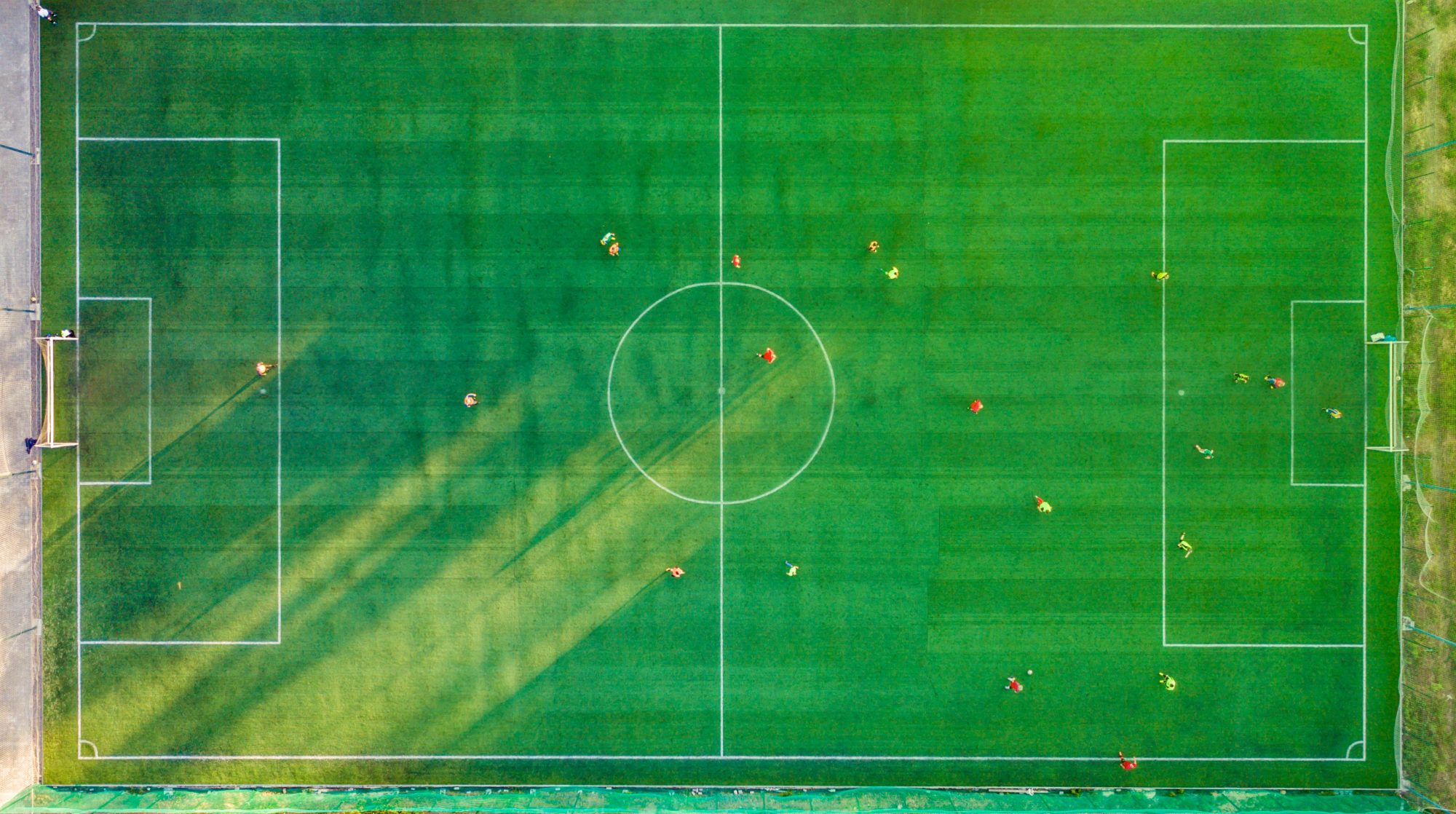

Much is made of formations in the modern world of football, with each and every top team attempting to innovative and reinvent the beautiful game.
One of the most popular formations throughout history is the 4-3-3 formation. Those who view the game with a simplistic mindset would tell you it involves four defenders, three midfielders and three attackers. That certainly appears to be the case on the face of it, but is that how it works in reality? Or is 4-3-3 an amalgamation of several different tactics, effectively killing off the concept of a starting formation?

Firstly, when you look at some of the very best teams that play 4-3-3, many of them do so in a flexible way, involving positional play and rotation. Pep Guardiola loves the 4-3-3, and teams such as Barcelona, Ajax and Real Madrid have used it to free up a maverick type of player and give one specific individual more of a free role in the team. That player is sometimes the striker, and other times it’s one of the central midfielders, given more license to roam and create. Croatia’s World Cup 2018 side is a great example, as they employed the formation to give their star man Luka Modric a free role. On the back of that, they made the World Cup final, and Modric won the Golden Ball. In the semi-final, they played what was truly more of a 4-1-4-1, with Modric and Rakitic firmly in front of Marcelo Brozovic, and they brushed England aside. The switch made little difference to their approach, with Modric still pulling the strings. In fact, most teams that play 4-3-3 (Manchester City) included, rarely ever actually make their shape look like a 4-3-3. A 4-1-4-1 attacking shape is much more common, and the defensive shape is usually some variation of a 4-5-1.
Manchester City currently leans towards a 4-3-3, with Fernandinho or Rodrigo as the holding midfielder, and Ilkay Gundogan and Bernardo Silva/Kevin De Bruyne ahead of him. There is plenty of fluidity to the set up, which allows the more defensively-sound Gundogan to drop alongside the defensive midfielder when the Citizens find themselves under pressure, freeing up the more liberally-attacking Silva to press forward alone. The midfield diamond then changes, with the point in the attacking third, not the defensive one. The Sky Blues employ tactics such as these very well – they’re reigning champions and favorites this year in the latest Premier League betting odds with Ladbrokes. Liverpool, third favorites behind Chelsea, also play 4-3-3 regularly (see more on HowTheyPlay).

Over the years, we have seen a trend towards more defensive players on the field; early formations were usually around the 2-3-5 variety, but football has become more defensive as history has progressed. We’ve seen teams such as Greece (2004) and Leicester City (2016) win trophies with very tight defenses, and a greater promotion of counter-attacking football, something that the 4-3-3 can promote well due to the high position of the front-line. But the formation is also suited towards possession-based football, such as Ajax, Barcelona and Manchester City teams over the last decade. Not only can the formation suit any style of play, it can also be changed on the drop of a dime based on how attacking or defensive a manager wants their players to be. The central midfielders are particularly key to this flexibility, and be split into different layers in multiple different ways. Once that starts to happen, a 4-3-3 can become anything.
Then there’s the question of those wide players. When is a left-winger changed to a left midfielder? Surely, if a wide left player is doing his job, he covers the attacking flanks anyway, so why is he a left-winger? He will still be tracking back, and the purpose of a 4-3-3 is to induce passing triangles, so that brings the full-back into play. This begins to beg the question – is 4-3-3 even a viable formation anymore, or just an overreaching label for a variety of different set-ups to be contained in one comfortable heading?
Whilst the interpretation of the 4-3-3 is very much down to the statisticians, the key takeaway here is perhaps the overall erosion of the formation. Tactically, teams employ such fluid strategies that the lines between attack and midfield have blurred beyond recognition. That started with the Ajax team in 1970, later carried on by the Dutch national side. The formation which started this blurring of the lines? 4-3-3.

Tottenham win the award: Most disastrous season in Premier League history
With one of the highest wage bills in the league, if Tottenham succumb to relegation, this will be one of the most disastrous seasons of any top-flight side.


Picking England’s 2026 World Cup Squad
The World Cup is just a few months away, and Thomas Tuchel already seems to have a clear idea of both his squad and how he wants England to play. His teams are built on energy, physicality, and discipline — players who stick to their roles and execute a system, rather than drift and freelance.
…

Ali Ahmed: The £1.4 million steal powering Norwich’s revival
Norwich might not be in the hunt for Premier League football next season, but they are slowly rebuilding their squad back to one that can challenge toward the top of the Championship. And in Ali Ahmed, they didn’t just sign a useful squad player. They may have found their next star.
Discover more from TheMastermindSite
Subscribe to get the latest posts sent to your email.
 TheMastermindSite
3 thoughts on “Why the 4-3-3 has made football formations redundant”