

The weirdest of the weird proclaim modern football to be boring, because every team endeavours to play the same way.
High-possession, high-pressing, building out from the back, goalkeepers involved in the build-up, inverted this, inverted that, and some degree of positional rotation.
The man credited for starting or popularizing many of these modernizations is Pep Guardiola, who has managed Manchester City since 2016, winning fifteen major trophies along the way. Pep is popular not only for his win record, but for the way that he often changes tactics season by season to match the players at his disposal.
Embed from Getty ImagesHe utilized stellar ball-playing full-backs in central areas during build-up phases throughout much of the late 2010’s. He pushed ‘defensive midfielders’ into attacking phases to get more out of their spatial awareness and attacking acumen. He got his goalkeeper involved in attacking phases. And perhaps most notably, back in 2023, starting pushing central defenders into that central midfield position during the build-up.

All of these innovations were made to get specific outcomes out of not just one player, but the entire team. Pushing John Stones into midfield was meant to get the best out of his ball progression, specifically his ball carrying. But it also benefited the more defensive-minded full-backs he had (like Walker and Gvardiol), that were fantastic at covering ground in transition and were better positioned as part of that back-three to aid in that process.
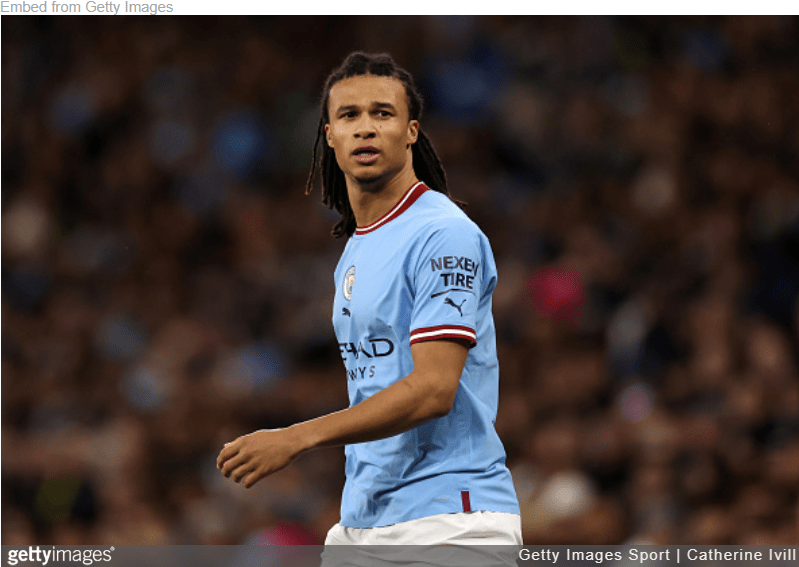

He even then started to play centre-backs as full-backs (like Manuel Akanji and Nathan Ake) to better facilitate that response to defend 1v1 effectively in the wide areas.
It worked for the players at his disposal.
Yet to some extent, the criticism is true. Everywhere you look, teams started playing with this same 3+2 build-up, using centre-backs as full-backs, and even at times, pushing one of their central defenders into midfield areas. Everyone essentially started copying his trend.
And for some teams, it worked!
I loved Forge FC’s adoption of it here in Canada, utilizing one of their best ball-players in Alexander Achinioti-Jönsson back into his regular starting position in defensive midfield, in a time where they had few attacking full-backs and a ton of centre-backs.

It worked for Forge too for exactly the same reason. It brought out the best for their specific set of players.
But that doesn’t mean that the same trend will work for every team up and down every country. Nor that youth teams should focus more on these kinds of rotations rather than teaching fundamental skills.
Take John Stones out of the team, and the approach actually didn’t work as well with Manuel Akanji trying to fill that same role. That in itself speaks to how it needs to work for the players that you have, and how tactical implementations can only become over-complicated if implemented incorrectly.
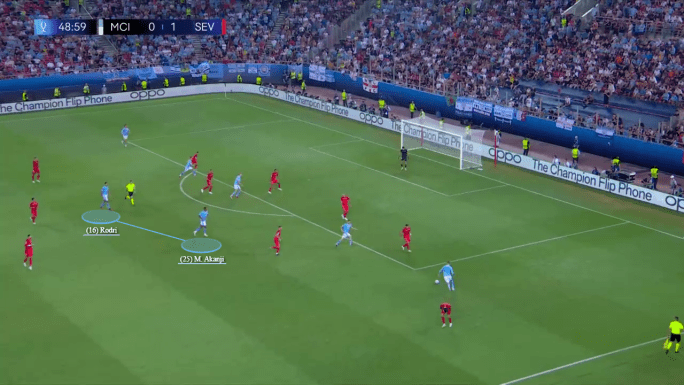
Many teams have witnessed this even in just trying to build out from the back in all these fanciful ways, giving up cheap goals.
So now are these teams not only failing to cater to the players they have at their disposal, but they’re also creating over-complications rather than teaching players how to be better footballers. You then start to see coaches ignoring the individual talents that they have at their disposal, in favour of playing football a certain way that fits their own ideals. That’s a real shame because, again…
Everything you do as a coach of a team has to be shaped and adapted toward the players that YOU have.
This is precisely why Guardiola himself changes his tactics on a season by season basis. It’s why he changes the positions or roles of players on a season by season basis. To get the best out of his entire squad. Not to get the best out of one player (i.e. the John Stones or the Ilkay Gundogan), but to get the best out of everyone in harmony.
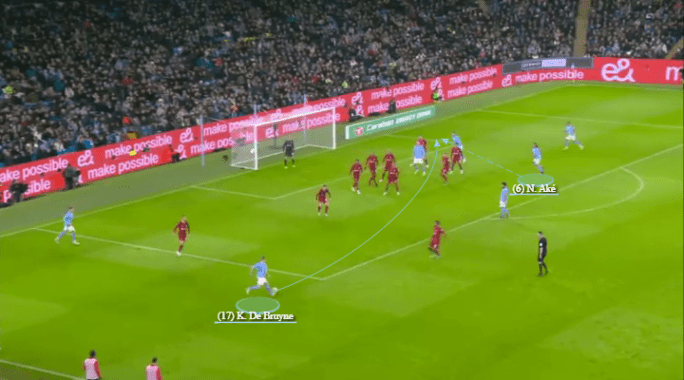
Guardiola is better at that than anyone else that has ever managed a football team. And if youth coaches or managers around the world are going to take anything away from his approach, it shouldn’t just be to copy what he’s doing. It should be to understand that every team is a puzzle that needs to come together in harmony. One piece cannot solve the puzzle alone. The entire eleven to twenty-three pieces on the puzzle board need to come together at once to create the most cohesive structure.
That’s what Pep Guardiola has always done so brilliantly throughout his career, and that is why he’s achieved so much success in his career.
Discover more from TheMastermindSite
Subscribe to get the latest posts sent to your email.
 TheMastermindSite