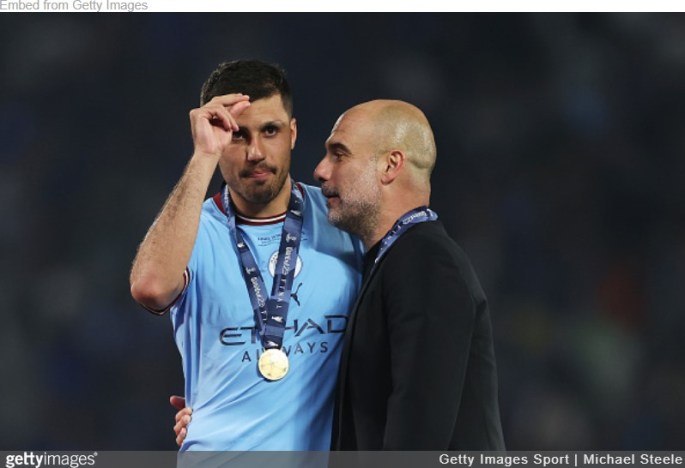
Rodri never needed to redeem himself, but Pep Guardiola likely did after leaving his prized defensive midfielder out of the Champions League final against Chelsea two seasons ago. The Spanish midfielder has been immaculate this campaign, helping to dictate much of City's stellar possession and defensive solidity. Easily the best defensive midfielder in the world at the moment, Rodri has been integral to City's success all season long at the heart of their midfield. It was a perfect ending to the fairytale for the Spaniard to cap off a wonderful season with that decisive Champions League final goal, but his performance was about so much more. Here is the final Game of Numbers for the European 2022-23 season.
Tag: Rodri
Game of Numbers – #2 – Walker & Cancelo Back Where They Belong
Leave it to Manchester City to always be doing something interesting from a tactical perspective. Tactics were bound to change at the Ethiad with a new striker entering the door. City even made strides to accommodate Erling Haaland by purchasing yellow shirts for everybody. But the real tactical change against West Ham United came out from the back, with the re-emergence of an old City favourite that quietly died down in 2021-22. In large part, Bernardo Silva's 'Bernardo Silva Role' meant that the City fullbacks were responsible for inverting less in build-up phases, as the Portuguese playmaker drifted toward the ball to help the Citizens break through central corridors instead.
Explaining the Deep-Lying Playmaker – Player Role Analysis
The 'Deep-Lying Playmaker' is one of the already attributed player types that we have adopted within our system. Also known by its Italian name 'Regista', the 'DLP' is tasked with setting the tempo of the match from build up to progression, all the way to creation. They sit in front of the defensive line as an 'Anchor', but hold a more offensive, progressive and possession-oriented role than the other two 'number 6' types within our 'Anchor' persona. Their role is in both helping create space between the lines, and then breaking lines, recycling play, or even changing the point of attack upon receiving the ball, so that their team can advance up the pitch, beat an opposition's press and seek spaces closer to goal.